
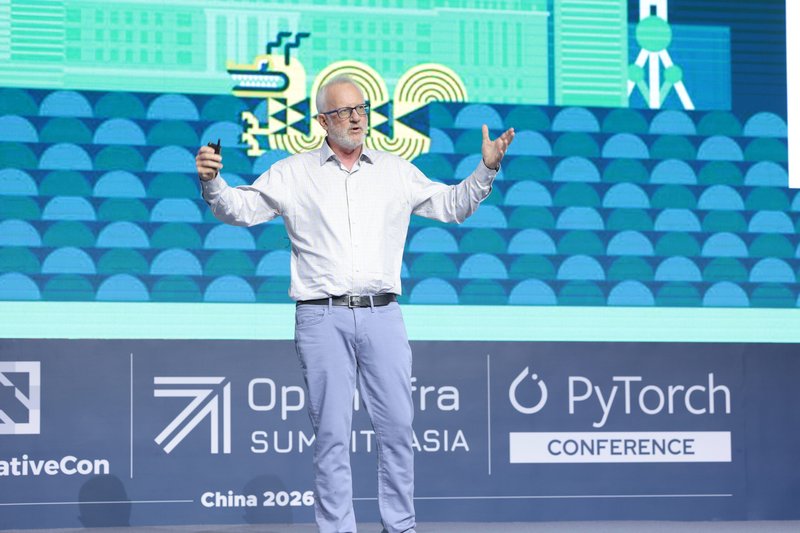
The Call for Proposals for PyTorch Day China 2026 closes November 10 at 23:59 China Standard Time, but the most interesting detail is not the deadline. It is the structure of the five topic areas organizers chose for the December 12 event in Beijing.
Training & post-training, efficient inference & deployment, PyTorch core & hardware acceleration, physical AI, ecosystem. At first glance, it looks like a technical list. In reality, two shifts in focus are evident. First, inference and deployment are no longer an add-on; they are an area with equal standing to training. Second, hardware acceleration is not treated as a niche topic, but as a central element of the framework.
The efficient inference & deployment area explicitly mentions LLM inference, quantization, and deployment strategies. This is not a minor detail: it reflects an ecosystem that must run models on heterogeneous hardware, not only on high-end cloud GPUs. For teams managing self-hosted stacks, this is a structural difference: the discussion moves from training scale to the sustainability of inference on local accelerators.
Hardware is no longer a neutral variable
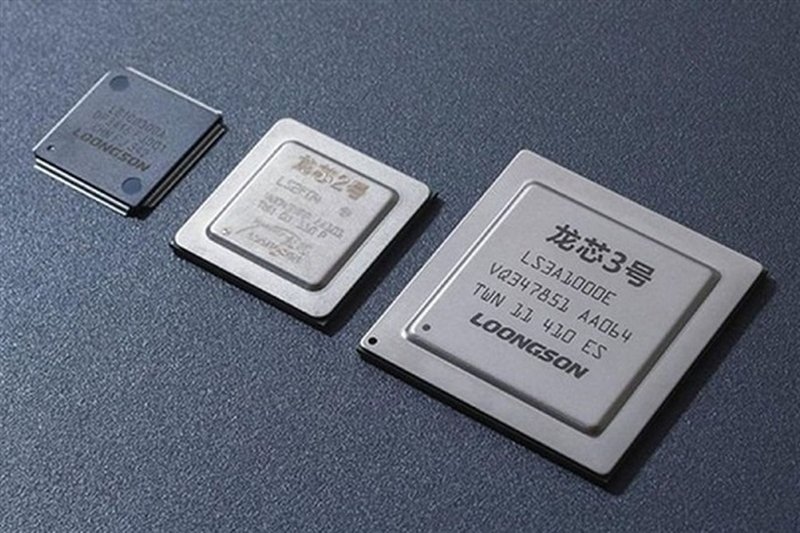
When a conference's focus shifts to compilation, kernel optimization, and profiling, the implicit message is that software must adapt to a wider hardware landscape. This theme carries particular weight in China, where access to certain accelerators is not always a given and the push toward domestic solutions is part of the industrial context. For teams working on on-premise deployment, the direct consequence is that a framework investing in kernels and compilation makes it more plausible to run non-standard hardware without rewriting the entire pipeline.
The inclusion of physical AI should be read the same way. Robotics, intelligent devices, and Vision-Language-Action models expand the perimeter beyond the server: we are talking about edge inference, with constraints on latency, memory, and energy consumption. PyTorch Day China 2026 thus signals that the framework wants to be relevant for workloads that do not live in a data center.
Who gains from this framing? Engineering teams that need to bring models into production without depending on a single cloud vendor; accelerator makers looking for a mature software ecosystem; robotics labs that need integrated training and deployment tools. Who risks falling behind? Approaches that treat hardware as an abstract commodity and deployment as a solved problem.
For teams evaluating on-premise deployment, the trade-offs between hardware control, operational complexity, and operating costs are not resolved by a single conference. AI-RADAR provides analytical frameworks on /llm-onpremise to navigate these constraints.
The November 10 deadline is just the last day to submit. The real stakes are already visible: the next PyTorch Day in China will not be only about models, but about making them work where they are actually needed.


💬 Comments (0)
🔒 Log in or register to comment on articles.
No comments yet. Be the first to comment!