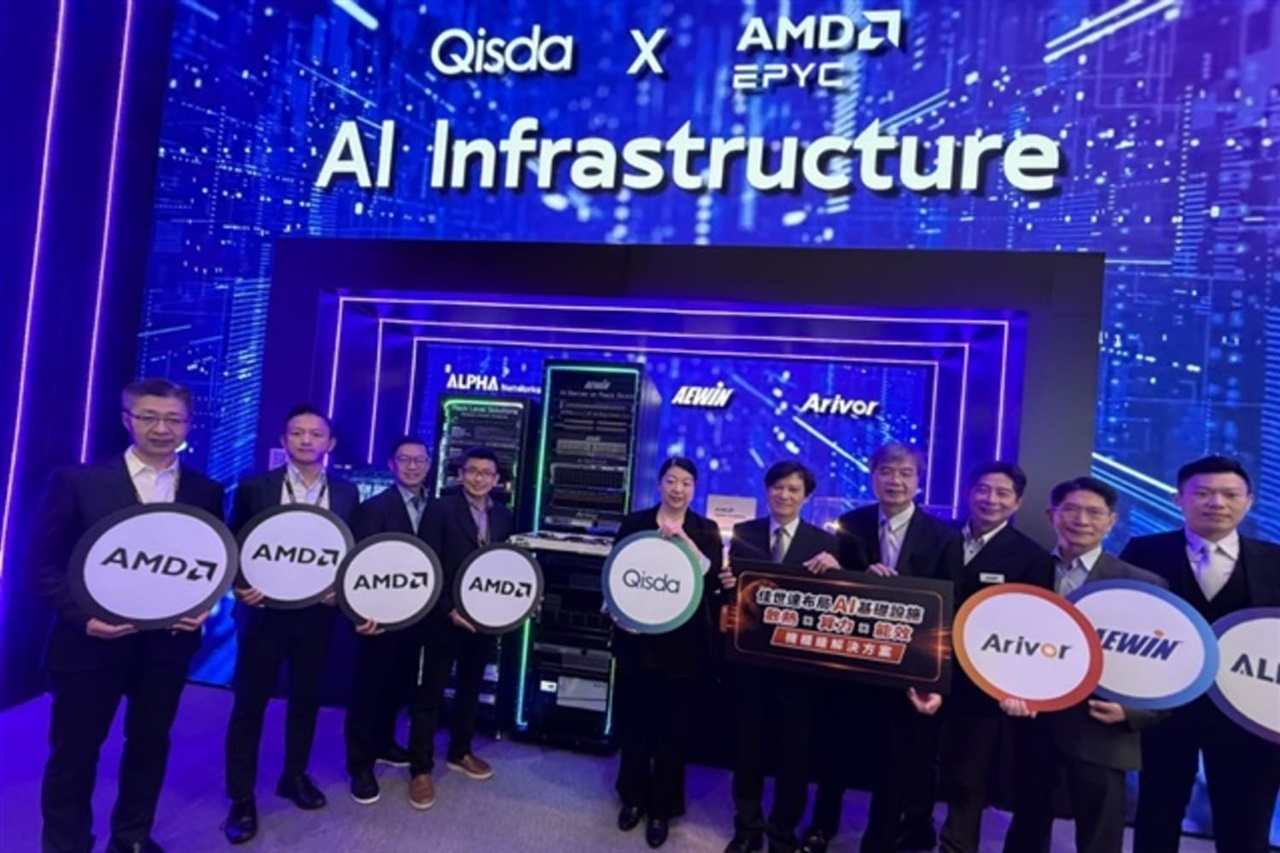
Qisda's Strategic Push Towards AI
Qisda, an established player in the technology landscape, is accelerating its transformation into a provider of artificial intelligence-based solutions. This strategic move underscores a clear direction: to capitalize on the increasing demand for advanced AI technologies, especially within the enterprise segment. The transition is not merely a marketing repositioning but an indication of a commitment to offer products and services that address the complex Deployment and management needs of AI.
The AI solutions market is rapidly evolving, with companies seeking partners capable of delivering not only models and algorithms but also the necessary infrastructure and expertise for effective implementation. A provider's ability to integrate hardware, software, and services becomes crucial for the success of AI projects, particularly when dealing with intensive workloads such as Large Language Models (LLM).
The Context of Enterprise AI Solutions
For enterprises, the adoption of AI, and LLMs in particular, presents a unique set of challenges and opportunities. The choice between cloud Deployment and self-hosted or on-premise solutions is one of the most critical decisions. Many organizations, especially in regulated sectors or those dealing with sensitive data, prioritize the control and data sovereignty offered by on-premise or air-gapped infrastructure. This approach allows them to keep data within their corporate boundaries, complying with regulations like GDPR and ensuring greater security.
However, the on-premise Deployment of LLMs requires significant investments in hardware, such as GPUs with high VRAM and compute capabilities, as well as specialized skills for infrastructure management and the optimization of Inference and training Pipelines. Evaluating the Total Cost of Ownership (TCO) becomes a decisive factor, considering not only initial costs (CapEx) but also operational expenses (OpEx) related to power, cooling, and maintenance.
Implications for On-Premise LLM Deployment
Qisda's focus on AI solutions can have significant implications for companies considering on-premise LLM Deployment. A provider with solid experience in hardware and system integration can greatly simplify the process for customers. On-premise solutions offer advantages in terms of reduced latency, high Throughput, and deep customization, which are essential for critical AI applications.
The challenge lies in offering complete technology stacks that include not only hardware (servers, storage, networking) but also software Frameworks optimized for model Inference and Fine-tuning. This includes managing Quantization, optimizing for different GPU architectures, and the ability to scale infrastructure as needed. For those evaluating on-premise Deployment, analytical Frameworks are available at /llm-onpremise to help assess the trade-offs between cost, performance, and control.
Future Prospects and Challenges in the AI Market
The AI solutions market is poised for further growth, but the complexity of implementations will demand increasingly specialized providers. Companies like Qisda, positioning themselves as integrators of complete solutions, will face the challenge of offering flexibility and scalability. This means supporting hybrid environments, where part of the AI workload resides on-premise and part in the cloud, or providing fully air-gapped solutions for the most sensitive sectors.
A provider's ability to understand and mitigate each client's specific constraints – from the availability of VRAM for large models to the need for high Throughput for real-time applications – will be a key success factor. Qisda's transition reflects a broader trend in the technology sector: the necessity to move from simple component suppliers to strategic partners capable of guiding businesses through the complex landscape of artificial intelligence.










💬 Comments (0)
🔒 Log in or register to comment on articles.
No comments yet. Be the first to comment!