2026: A Turning Point for AI According to Qisda
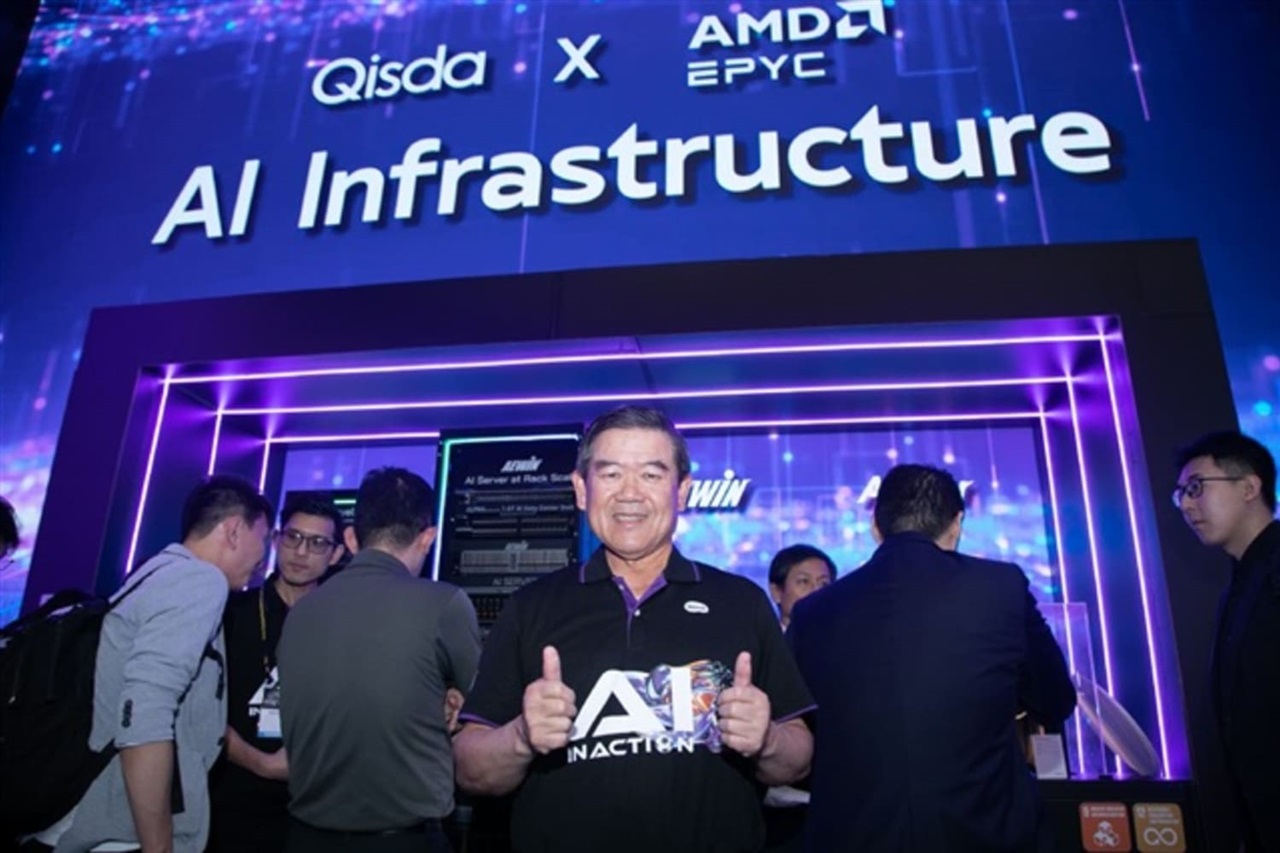
Qisda's chairman recently made a significant prediction for the artificial intelligence sector, indicating 2026 as the year that will witness a decisive acceleration in AI adoption and impact. This statement, though concise, offers a crucial insight for companies planning their medium-term technology strategies. The prospect of an "AI takeoff" suggests that large-scale implementations and deep integration of artificial intelligence into business processes will become a widespread reality in a short timeframe.
For CTOs, DevOps leads, and infrastructure architects, such a forecast is not just a market indicator, but a wake-up call for the urgency of consolidating their AI architectures. The ability to scale, manage complex workloads, and ensure data security will become even more critical as AI proliferates.
The Infrastructure Implications of Accelerated Adoption
An acceleration in AI adoption, particularly of Large Language Models (LLMs), entails increasingly stringent infrastructure requirements. Managing LLMs, both for inference and fine-tuning, demands considerable computing resources, primarily GPUs with high VRAM and throughput. Components like NVIDIA A100s or the more recent H100s, with their memory capacities and interconnects (such as NVLink), become key elements to ensure adequate performance and low latencies.
Planning an efficient deployment involves evaluating factors such as optimal batch size, model quantization to reduce memory footprint, and the adoption of high-performance serving frameworks. The choice between different hardware and software architectures directly impacts not only performance but also the overall Total Cost of Ownership (TCO) of the AI infrastructure.
On-Premise vs. Cloud: The Strategic Choice
Qisda's prediction intensifies the debate over the most suitable deployment strategy for AI workloads. While cloud solutions offer flexibility and on-demand scalability, on-premise or hybrid deployment is gaining traction for companies with specific needs. Data sovereignty, regulatory compliance (such as GDPR), and the requirement for air-gapped environments are decisive factors pushing many organizations towards self-hosted infrastructures.
TCO analysis becomes fundamental in this context. Although the initial investment (CapEx) for on-premise hardware can be significant, long-term operational costs (OpEx), including data transfer and cloud resource usage, can make self-hosted solutions more advantageous for stable and predictable workloads. For those evaluating on-premise deployment, AI-RADAR offers analytical frameworks on /llm-onpremise to assess these trade-offs, providing tools to compare costs, performance, and operational constraints.
Outlook and Challenges for Enterprise AI's Future
The 2026 horizon, as outlined by Qisda, compels companies to accelerate their maturity in AI adoption. The ability to effectively integrate LLMs and other artificial intelligence models into business processes will depend not only on the availability of high-performing models but also on the robustness and efficiency of the underlying infrastructure. Challenges include managing hardware/software complexity, the shortage of specialized talent, and the need to balance innovation with cost control.
In this scenario, choosing a deployment architecture that balances performance, security, scalability, and TCO is no longer an option but a strategic priority. Companies that can anticipate these trends and invest in resilient and flexible infrastructures will be better positioned to capitalize on the transformative potential of artificial intelligence in the next three years.




💬 Comments (0)
🔒 Log in or register to comment on articles.
No comments yet. Be the first to comment!