Qualcomm does not want to be just the king of Snapdragon anymore. With the Dragonfly initiative, the San Diego-based company is reigniting its challenge to the giants of cloud AI silicon, signaling a strategic expansion that draws on its mobile expertise and aims straight at the data center. The move comes at a time when demand for LLM and inference accelerators keeps rising, pushing manufacturers to deliver increasingly specialized solutions.
From mobile to rack: the technical leap
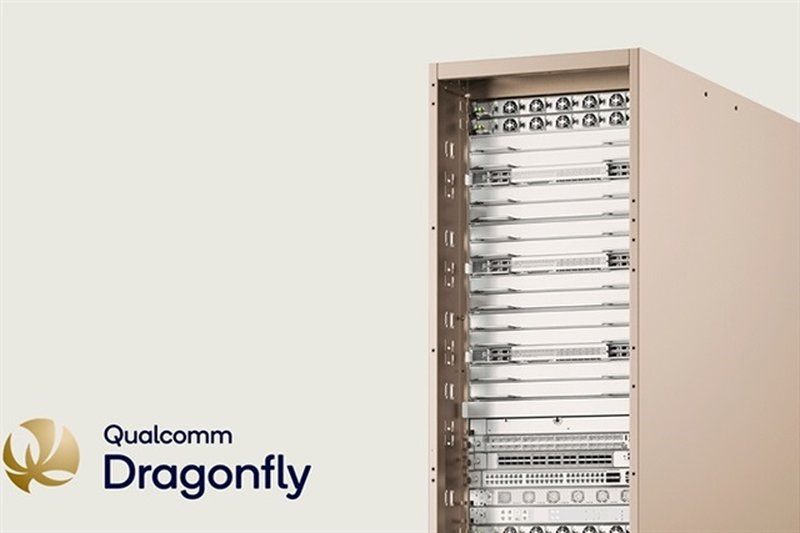
Qualcomm has already proven it can integrate inference capabilities into its smartphone SoCs, with NPUs and AI Engine managing on-device workloads. But cloud logic is different: it demands high throughput, the ability to handle thousands of concurrent requests, and often distributed training. Dragonfly, according to initial signals, represents the attempt to translate the power efficiency typical of ARM-based chips into a rack-ready product. While no details on architecture or performance have emerged yet, the direction is clear: offer a platform optimized for AI inference in the data center, capable of competing with traditional GPUs on metrics like cost per token and energy consumption.
A crowded but not yet saturated market
Today the AI accelerator segment sees NVIDIA dominating with A100 and H100 GPUs, flanked by solutions such as Intel Gaudi chips and products based on AMD architecture. The arrival of a player like Qualcomm – with its carrier relationships and three decades of low-power silicon design experience – could inject interesting dynamics. For any new entrant, the weak point remains the software ecosystem: a platform’s success depends on the availability of frameworks, libraries, and optimization tools. Without mature support for PyTorch, TensorFlow, or widely adopted serving pipelines, even the most efficient silicon struggles to gain traction among system integrators. Qualcomm will likely need to invest heavily on this front to make Dragonfly a real alternative.
What it means for on-premise deployment evaluation
For organizations running self-hosted infrastructure – driven by data sovereignty needs, GDPR compliance, or simply control over operational costs – every new hardware option is a positive signal. The arrival of chips like those promised by Dragonfly can reduce dependence on a single vendor, increase price competition, and open the door to more balanced configurations between performance and power consumption. AI-RADAR has long tracked the trade-offs among TCO, computational power, and ecosystem maturity, especially for those who choose not to delegate inference to third parties. In this regard, Qualcomm’s entry deserves attention: an efficient, well-integrated accelerator could make on-premise deployments viable even for mid-sized organizations, lowering the barriers to adopting LLMs in controlled environments.
A bet yet to be played
It is too early to say whether Dragonfly will become a benchmark or remain an unfulfilled promise. The leap from mobile to cloud has already been attempted by other manufacturers with mixed outcomes. What is certain is that Qualcomm’s move reveals how the AI market is reshaping the balance between silicon producers and those who use it. As demand for LLM computing power continues to climb, every new piece in the accelerator supply chain can influence not only the strategies of major cloud providers but also the choices of those who prefer to keep their data and models under their own control.







💬 Comments (0)
🔒 Log in or register to comment on articles.
No comments yet. Be the first to comment!