
The Warning That Sparks Debate
A semiconductor boom is usually good news for a country. But when demand for AI chips becomes a financial tsunami, the bill must be examined in full. That is the message delivered this week by Kim Yong‑beom, head of policy planning in South Korea’s presidential office: the massive capital influx fueled by the AI chip race risks inflating the housing market, with ripple effects across the entire economy.
South Korea, home to giants like Samsung and SK hynix, sits at the center of the perfect storm: production of high‑bandwidth memory (HBM) and advanced processors is drawing colossal investments. The issue, according to Kim, is not the growth itself but where the money ends up. If the wealth generated by semiconductors flows disproportionately into real estate, it creates a bubble that erodes purchasing power and distorts industrial priorities.
The Chip Supply Chain and the On‑Premise Cost Knot
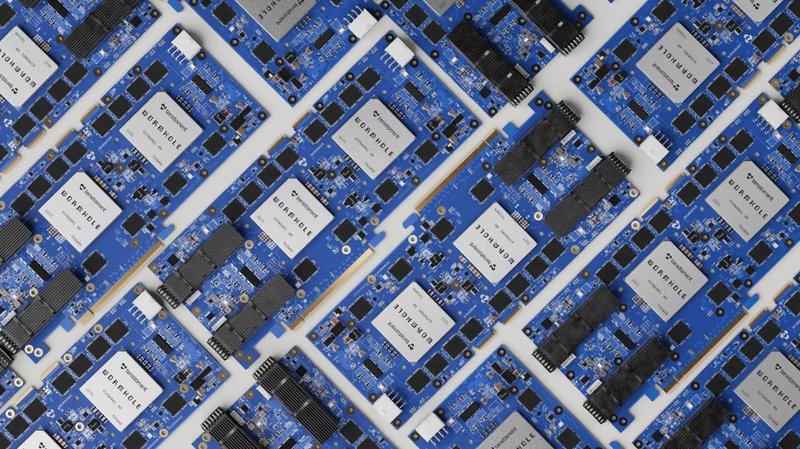
For those observing the market from the perspective of on‑premise deployments, the Korean warning has an immediate reflection. Global demand for GPUs and accelerators for training and inference of Large Language Models is already straining supply chains. Add the distorting effect of capital chasing real estate returns, and the picture becomes more complex: chip manufacturers may have to manage not only technological complexity but also a macroeconomic environment that makes investing in production capacity more expensive.
In practice, part of the extraordinary profits from the sector could be drained into non‑productive assets, slowing the expansion of fabs or process innovation. For anyone evaluating a self‑hosted AI infrastructure, this translates into longer lead times for hardware and a TCO burdened by inflation in board and system prices.
The Hidden Impact on Architecture Choices
Pressure on property prices may seem distant from data center racks, but the links are tighter than they appear. When a corporation channels liquidity into real estate instead of production lines, chip supply struggles to keep pace. Consequently, GPU vendors raise prices, and on‑premise projects become less viable for organizations with limited budgets, pushing them toward cloud or hybrid solutions – with all the implications for data sovereignty and control.
The issue also touches fine‑tuning and local inference strategies: those who need to keep data on‑site, due to GDPR or security constraints, find themselves competing for a scarce resource against much larger players. In this scenario, tools like quantization and framework optimization become mandatory levers to contain VRAM requirements, but hardware cost pressure still threatens margins.
A Wake‑Up Call for Local AI Planning
The alarm raised by Korea is not an isolated problem. It is a symptom of an ecosystem in which the tumultuous growth of artificial intelligence produces economic tremors that go far beyond tech boundaries. For decision‑makers designing on‑premise architectures, it becomes essential to integrate macroeconomic variables such as sectoral inflation and speculative bubbles into their TCO models.
AI‑RADAR will track how these dynamics evolve, continuing to provide analysis on the trade‑offs between hardware, costs, and control. And while Korea tries to prevent the chip boom from turning into a housing bubble, the rest of the world can take notes: how we manage the wealth generated by AI will determine the solidity of the foundations on which we will build the artificial intelligence of the future.







💬 Comments (0)
🔒 Log in or register to comment on articles.
No comments yet. Be the first to comment!