Liquid Cooling Goes Mainstream for AI Servers
Tech Forum 2026 brought to light a crucial transition in the landscape of artificial intelligence infrastructure: liquid cooling is rapidly becoming a mainstream technology for AI servers. This evolution is driven by the necessity to manage the heat generated by increasingly powerful and dense hardware, which is indispensable for training and Inference of complex Large Language Models (LLMs).
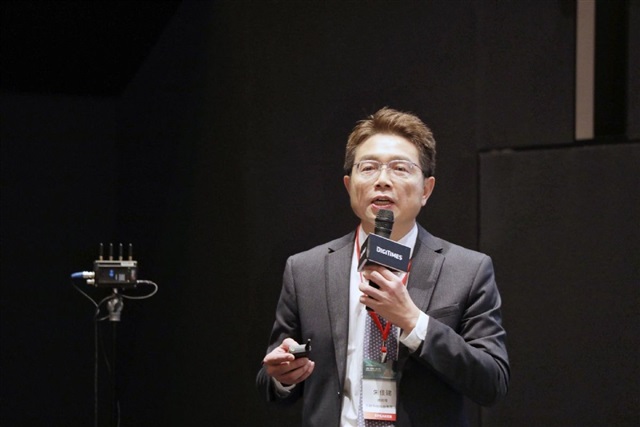
Dr. Clyde Chu, president of META Green Cooling Technology, emphasized how the industry is facing an unprecedented thermal challenge. The exponential increase in computational capabilities required by LLMs mandates new solutions to maintain operational efficiency and system stability, especially in on-premise deployment contexts where space and energy consumption are primary constraints.
The Heat Challenge in High-Density AI Stacks
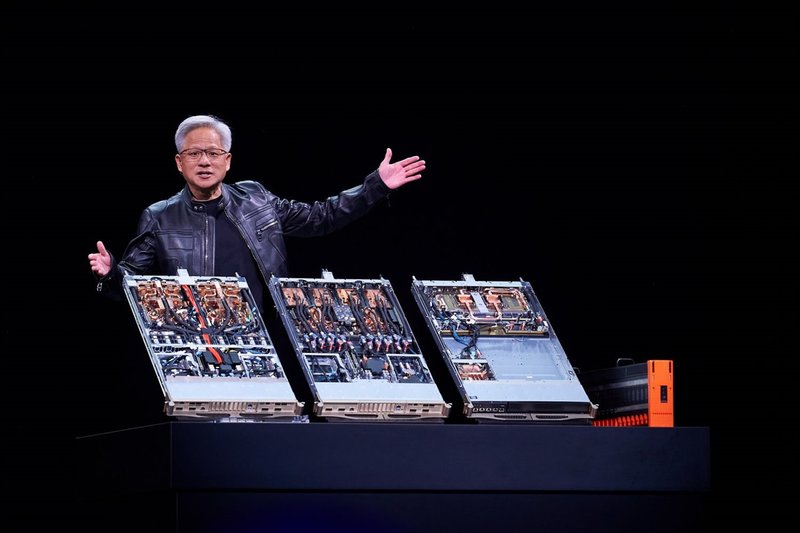
Modern AI accelerators, such as the latest generation GPUs, are designed to deliver extreme computational performance but also generate a significant amount of heat. Units like NVIDIA H100 or A100, for instance, can have a Thermal Design Power (TDP) exceeding 700W per single card, and multiple such cards can be installed in a standard server rack. This leads to rack power densities that far exceed the capabilities of traditional air cooling systems.
Air cooling, while being the most widespread solution, encounters physical limits in dissipating such high thermal loads. It requires large volumes of air, powerful fans, and significant spacing between components, making high-density rack configurations challenging. For LLM training and Inference workloads, where operational continuity and performance are critical, the inability to effectively dissipate heat can lead to performance throttling, hardware failures, and a higher TCO due to energy consumption for cooling.
Implications for On-Premise Deployments and TCO
The adoption of liquid cooling has profound implications for organizations choosing on-premise or hybrid AI deployments. For CTOs, DevOps leads, and infrastructure architects, data center design for AI workloads can no longer overlook advanced cooling considerations. The shift to liquid allows for concentrating more computing power in less space, optimizing data center floor utilization and reducing physical expansion needs.
From a TCO perspective, although the initial investment for liquid cooling infrastructure might be higher, long-term benefits include greater energy efficiency and reduced operational costs. Liquid systems are often more efficient at heat transfer than air, allowing optimal operating temperatures to be maintained with less energy expenditure. This is particularly relevant for companies prioritizing data sovereignty and full control over their AI stacks, opting for self-hosted solutions that require careful infrastructure planning. For those evaluating on-premise deployments, AI-RADAR offers analytical frameworks at /llm-onpremise to assess the trade-offs between efficiency, cost, and operational complexity.
Future Prospects and Technological Trade-offs
The future of AI data centers will see increasing integration of various liquid cooling techniques, from direct-to-chip (which cools the hottest components directly) to immersion (which submerges entire boards or servers in dielectric fluids). Each approach presents its own trade-offs in terms of implementation complexity, cost, maintenance, and efficiency.
The choice of cooling technology will depend on specific factors such as desired power density, reliability requirements, availability of existing infrastructure, and the internal team's expertise. There is no one-size-fits-all solution, and decisions will need to balance performance, TCO, and sustainability. The evolution towards liquid cooling marks a fundamental step in enabling the next generation of AI capabilities, ensuring that hardware can operate at its full potential without compromising efficiency or stability.







💬 Comments (0)
🔒 Log in or register to comment on articles.
No comments yet. Be the first to comment!