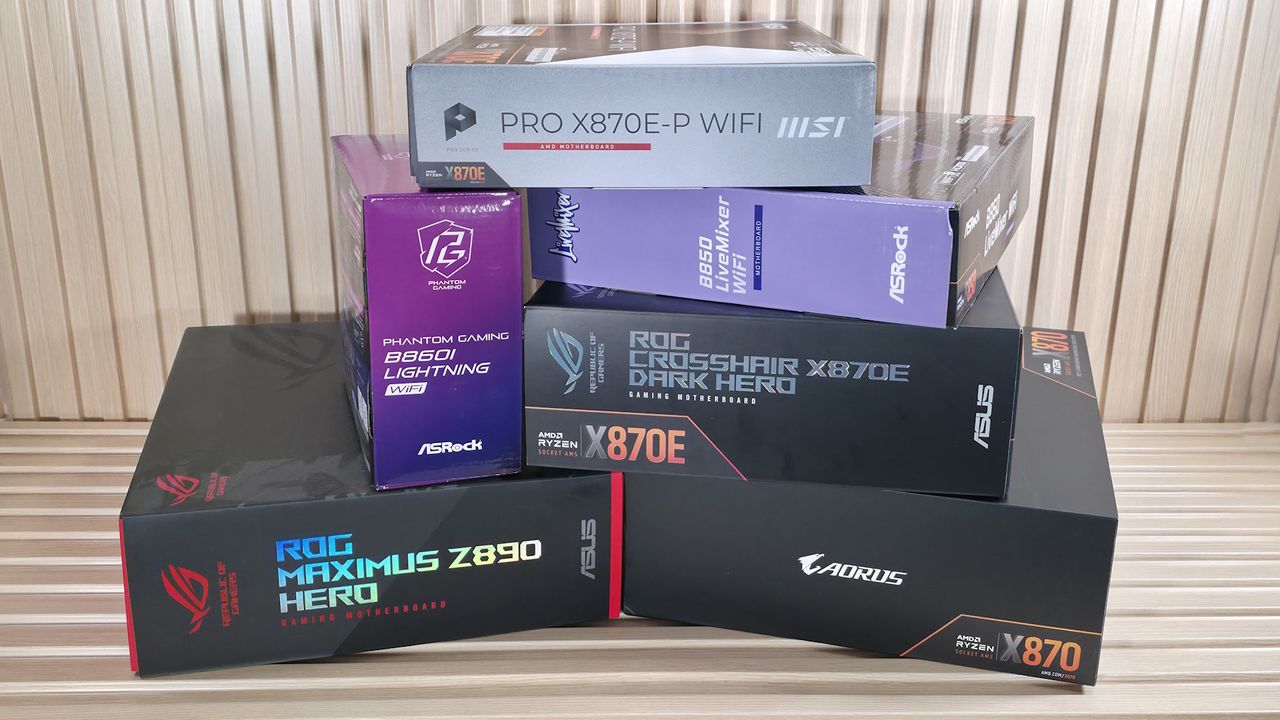
The RAMpocalypse isn't just a gamer's problem
In PC-building slang, the RAMpocalypse is the phase when DRAM prices skyrocket, squeezing budgets and delaying upgrades. Over the last few years the phenomenon has recurred, driven by supply-chain tensions, demand spikes and production cuts. Gamers try to dodge the blow by buying motherboard-RAM bundles or CPU-memory combos, but the issue goes far beyond gaming.
Those building servers for on-premise deployment of Large Language Models know that memory – whether GPU VRAM or system RAM for CPU-based inference – is a strategic bottleneck. Without enough fast memory, low-latency inference or fine-tuning of quantized models becomes impossible. That is why the bundle mechanism, originally a consumer workaround, is turning into a procurement lever for companies investing in local AI stacks.
Why bundles are more than a consumer fad
The principle is simple: distributors pair high-demand components (like DRAM modules) with slower-moving or higher-margin products, such as motherboards, power supplies or even fully pre-assembled systems. The buyer pays an overall price often lower than the sum of the individual parts and, crucially, gets hold of RAM that would otherwise be unobtainable or sold at speculative prices.
For an IT department building compute nodes for a self-hosted inference server, this dynamic changes the game. Purchasing a partially pre-configured rack with guaranteed memory – even including redundant components – can slash lead times and logistic uncertainty. The Total Cost of Ownership (TCO) in this scenario must be reassessed: the upfront cost may be higher due to extra parts, but savings from avoided downtime and delivery certainty can tip the balance.
What it means for on-premise LLM deployments
Deploying models such as LLaMA or Mistral in quantized form on-premise requires careful hardware sizing. A shortage of VRAM forces lower precision (from FP16 to INT8) with potential quality loss; a lack of system RAM makes disk offloading so slow that inference becomes unusable. In a market where DRAM supplies are intermittent, bundles can become the only way to secure enough memory to populate a GPU cluster or a set of serving machines.
This is not theoretical. During recent shortage cycles, enterprise-scale offers often adopted allocation policies: companies buying full systems (bundles at the server level) were given priority for memory supply. For self-hosters, this means asking whether total hardware control is worth accepting bundled packages, or whether it is smarter to wait for a market loosening – a risky bet when projects have tight deadlines.
Broader implications: data sovereignty and the supply chain
Behind the choice of a bundle lies a deeper reasoning about data sovereignty. If a company chooses on-premise LLMs precisely to keep data secure, infrastructure continuity becomes critical. Relying on a single vendor for an entire batch of components can simplify compliance and maintenance but introduces dependency. Conversely, sourcing piece by piece offers freedom but exposes one to global supply-chain whims.
In this light, the bundle phenomenon reveals an uncomfortable truth: the memory market is cyclical, and anyone running AI workloads on-prem must embed “RAM availability” into their capacity planning. It is no longer enough to compare tech specs; you have to read market signals and, when necessary, revise purchasing policies to avoid running dry at the worst time.
AI-RADAR, in its analysis of cloud vs. on-premise trade-offs, has long stressed the importance of assessing total cost while factoring in hardware unavailability risks. The RAMpocalypse lesson is that even the most mundane memory can become the weakest link in the chain. For those designing local LLM deployments, watching price trends and bundling strategies is not optional – it is an integral part of technological sovereignty.






💬 Comments (0)
🔒 Log in or register to comment on articles.
No comments yet. Be the first to comment!