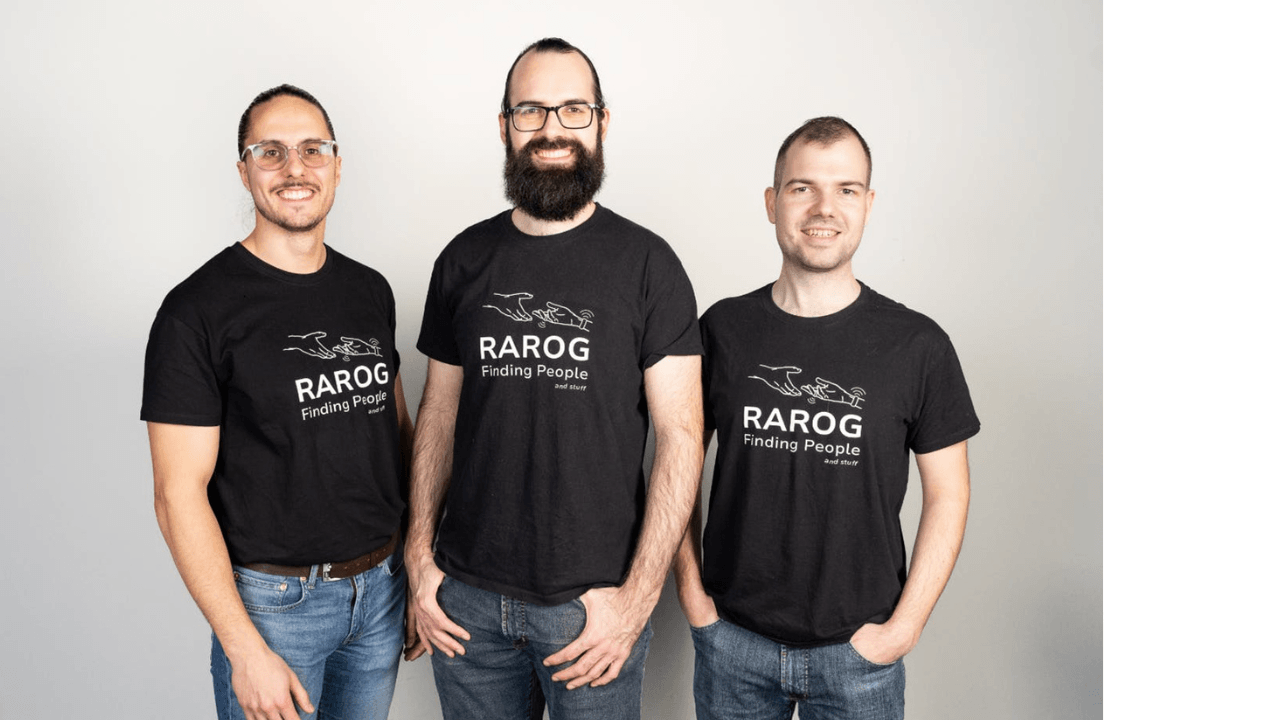
When a person goes missing in the mountains or under rubble, time is the enemy. Traditional searches rely on visual scanning, rescue dogs, or cellular networks: fragile tools, limited by terrain and weather. Swiss startup RAROG offers a different path: a portable system that reads radio signals from smartphones, smartwatches, and fitness trackers, turning them into emergency beacons without any external infrastructure.
The CHF 150,000 round just closed with Venture Kick is not just capital to finalize the product and obtain CE marking. It signals that investors and rescue teams are moving beyond dedicated devices – expensive and uncommon – to embrace “infrastructure-zero” rescue.
The technology exploits short-range radio waves that every personal device already emits to connect to cellular, Wi-Fi, or Bluetooth networks. RAROG intercepts them with a portable receiver that operates independently, without relying on cell towers or the cloud. In places with no network coverage, the system sees what antennas cannot: a body buried in snow, hidden by thick vegetation, or trapped in a collapsed building. In early deployments – from Ireland’s Wicklow Mountains to the Swiss Alps – mountain rescuers are testing an approach that flips the paradigm: stop searching for the person, and start listening to the electronics they carry.
The choice to operate without mobile networks carries heavy implications for the operational sovereignty of emergency teams. In disaster scenarios – earthquakes, floods, blackouts – telecom infrastructure is the first to fail. A detector that works in air-gapped mode restores decision-making power to those in the field, reducing dependency on external providers and shaky connections. It’s a concept akin to on-premise systems in enterprise IT: direct control, minimal latency, no data sent to third parties. Except here the stakes are measured in human lives.
The funding will manufacture the first batch of detectors and grow the team, while ongoing pilots with firefighters and civil protection units mark an expansion far beyond alpine rescue. It’s not just about selling hardware: RAROG is building an ecosystem where any commercial device, with no software modifications, becomes a passive locator terminal. If the project delivers, the real second-order effect will be a collapse in the marginal cost of rescue – every person with a smartphone already owns their own beacon, with nothing new to buy.
Open questions remain: signal range over long distances, receiver battery life, handling false positives in populated areas. But the trajectory is clear: the rescue industry is shifting toward tools that are more distributed, portable, and disconnected from the network. And RAROG, with its €162K, has just switched on a listener that could change how we search for the missing.









💬 Comments (0)
🔒 Log in or register to comment on articles.
No comments yet. Be the first to comment!