
The Rise of Humanoid Robots and the Question of Control
The humanoid robotics sector is experiencing a phase of rapid evolution, with significant advancements on both hardware and software fronts. Increasing attention is being paid to how these complex systems will be integrated into industrial and enterprise environments. In this scenario, a fundamental question arises: who will hold control over the various components that define a humanoid robot, from its physical body to its AI-driven "brain," and the surrounding development ecosystem?
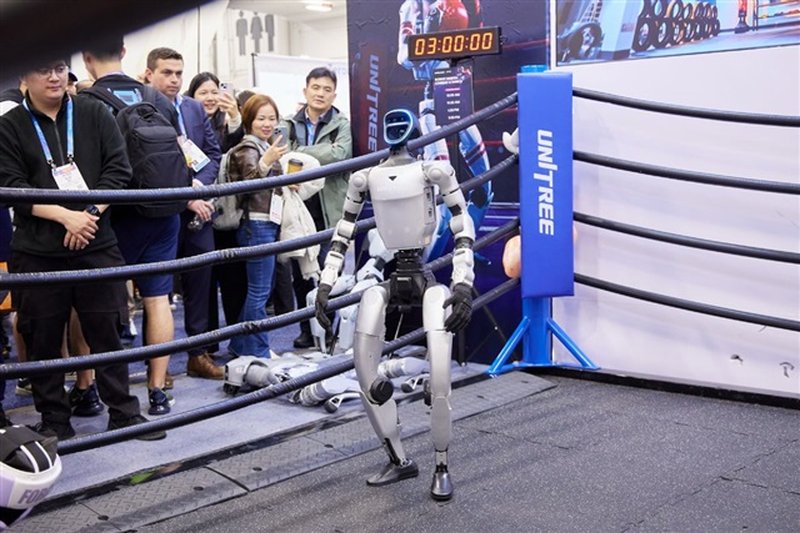
The collaboration or competition between players like Unitree, known for its robotic platforms, and Nvidia, a leader in AI technologies and acceleration silicon, highlights this strategic tension. The question of control is not merely technical; it has profound implications for data sovereignty, customization, and Total Cost of Ownership (TCO) for companies looking to adopt these technologies.
Control in the Robotic Ecosystem: Body, Brain, and Ecosystem
Analyzing the question of control means breaking down the humanoid robot into its constituent parts. The "body" represents the physical hardware: mechanics, actuators, sensors, and structural design. Companies like Unitree position themselves as providers of this physical foundation, essential for motor capabilities and real-world interaction. The choice of base hardware can directly influence the system's performance, robustness, and maintainability.
The "brain," on the other hand, is the domain of artificial intelligence and control software. Here, players like Nvidia offer comprehensive platforms ranging from chips (GPUs) for inference and training, to software frameworks like Isaac Sim for simulation and the development of perception and decision-making algorithms. Control of the "brain" implies the ability to define the robot's behavior, its learning capabilities, and its autonomy. Finally, the "ecosystem" encompasses all development tools, libraries, cloud services (if any), and communities that support the creation, deployment, and management of robots. Reliance on a proprietary ecosystem can limit flexibility and interoperability, creating potential long-term constraints.
Implications for On-Premise Deployment and Sovereignty
For enterprises evaluating the adoption of humanoid robots, the question of control directly translates into strategic deployment decisions. Opting for solutions that allow greater control over the robot's "brain" and, where possible, its "body," can be crucial for ensuring data sovereignty and regulatory compliance. An on-premise or self-hosted deployment of the artificial intelligence driving the robot, for example, allows businesses to keep sensitive data within their own infrastructure boundaries, reducing privacy and security risks.
However, this approach also entails the need to manage complex technology stacks and invest in specific hardware, such as high-performance GPUs, for local training and inference. The choice between a closed and a more open ecosystem will influence the overall TCO, balancing initial costs (CapEx) with operational costs (OpEx) and future flexibility. For those evaluating on-premise deployments, there are significant trade-offs that AI-RADAR explores in detail in its analytical frameworks on /llm-onpremise, especially regarding control, customization, and TCO.
Future Perspectives and Challenges for Innovation
The dynamic between hardware providers and AI platforms in humanoid robotics is set to define the future of the sector. The tension between proprietary solutions, which promise integration and optimized performance, and more open approaches, which foster flexibility and collaborative innovation, will be a central theme. Companies will need to carefully assess whether to prioritize a vertical integration offered by a single vendor or to build modular solutions combining components from different providers.
Maintaining control over their data and the operational logic of robots will be a distinguishing factor for enterprises seeking to fully leverage the potential of humanoid robotics. Transparency and interoperability between the different layers of the robotic ecosystem will become fundamental requirements to avoid vendor lock-in and ensure a sustainable path to innovation in the long term.






💬 Comments (0)
🔒 Log in or register to comment on articles.
No comments yet. Be the first to comment!