SaaS on the Beach: An Exclusive Format for Founders, Bridging Cloud and On-Premise
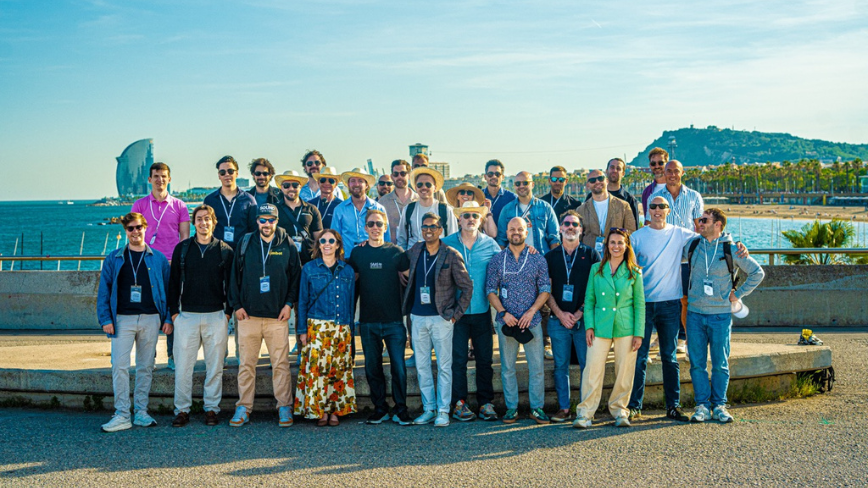
The tech conference circuit continues to grow, with an increasing number of events competing for the attention of professionals and companies. In this crowded landscape, "SaaS on the Beach" distinguishes itself by proposing a diametrically opposite approach: fewer attendees, fewer sales pitches, and a more focused environment. The event, specifically curated for SaaS company founders, will return to Barcelona between May 20 and 21 for its second edition.
This initiative positions itself as a targeted alternative, designed to foster deeper exchanges and meaningful discussions among peers. The goal is to create a space where founders can discuss challenges and opportunities without the background noise typical of large trade shows. For leaders of SaaS companies, the choice of technology infrastructure, particularly for workloads related to artificial intelligence and Large Language Models (LLM), represents a fundamental strategic decision that directly influences product development, cost structure, and regulatory compliance.
Implications for SaaS Founders: Cloud vs. On-Premise for AI
Traditionally, SaaS companies have heavily relied on cloud infrastructure for its scalability, flexibility, and operational cost (OpEx) model. This approach has allowed many to innovate rapidly and reach a broad audience without significant upfront hardware investments. However, with the advancement of AI and the increasing adoption of LLMs, new considerations are emerging that prompt some founders to evaluate alternatives.
Managing complex AI models, especially for intensive inference or fine-tuning workloads, can incur high costs in the cloud, particularly when specific VRAM or throughput requirements are involved. Furthermore, issues related to data sovereignty and regulatory compliance, such as GDPR, make self-hosted or air-gapped Deployment an increasingly attractive choice for regulated sectors like finance or healthcare. The ability to maintain complete control over data and infrastructure becomes a decisive factor in ensuring security and compliance.
TCO Analysis and Infrastructure Control
The decision between cloud and on-premise Deployment for AI workloads is not trivial and requires a careful analysis of the Total Cost of Ownership (TCO). While the initial investment for on-premise hardware (CapEx) can be significant, long-term operational costs, including energy and maintenance, can sometimes be lower than cloud usage fees, especially for predictable, high-volume workloads.
Direct control over hardware, such as GPUs with high VRAM specifications (e.g., A100 80GB or H100 SXM5), allows for optimizing performance and latency for critical applications. This is particularly relevant for SaaS companies developing AI-driven products where every millisecond counts. The ability to customize the local stack, from serving Frameworks (like vLLM or TGI) to orchestration, offers a level of flexibility and optimization that the cloud does not always guarantee.
Future Prospects for SaaS Innovation
For founders attending "SaaS on the Beach," these discussions about AI infrastructure are crucial. The choice of Deployment model will influence not only the scalability and efficiency of their products but also their ability to attract and retain customers who demand stringent guarantees on data privacy and security. The event offers a unique opportunity to explore these dynamics in a private setting.
AI-RADAR focuses precisely on these topics, providing analyses and Frameworks to evaluate the trade-offs between on-premise, hybrid, and cloud Deployment for LLM workloads. Understanding hardware specifications, performance requirements, and cost implications is essential for making informed decisions that support growth and innovation in the SaaS sector, while maintaining data sovereignty and operational control.




💬 Comments (0)
🔒 Log in or register to comment on articles.
No comments yet. Be the first to comment!