Salesforce Taiwan Targets Double-Digit Growth with AI and Services
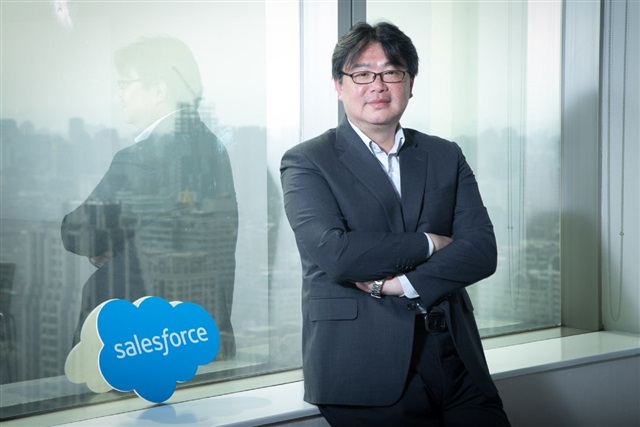
Salesforce Taiwan has announced its goal to achieve double-digit growth, a target the company aims to reach by intensifying its offering of AI-powered applications and services. The announcement, made by General Manager Chia-shen Hsu, underscores the increasing centrality of AI in business strategies globally and, specifically, in the Taiwanese market. This move reflects a broader trend seeing enterprise companies integrate AI into every aspect of their operations, from customer relationship management to internal process optimization.
Expanding into the field of artificial intelligence is not just about developing new functionalities, but also about adapting to the needs of a rapidly evolving market. Companies are seeking AI solutions that can be seamlessly integrated into their existing infrastructures, while ensuring scalability, security, and data control. Salesforce Taiwan's push towards AI highlights how the ability to deliver added value through these technologies has become a critical success factor.
The Role of AI in the Enterprise Context
The adoption of AI applications and services, especially those leveraging Large Language Models (LLM), is redefining the corporate technology landscape. Enterprises face complex strategic decisions regarding the deployment of these solutions. The choice between a cloud infrastructure and a self-hosted or on-premise approach is fundamental and depends on a series of critical factors, including data sovereignty, compliance requirements, and Total Cost of Ownership (TCO).
For many organizations, particularly those operating in regulated sectors such as finance or healthcare, keeping data within their own infrastructural boundaries is an absolute priority. An on-premise deployment or in air-gapped environments offers greater control over security and data residency, aspects that cloud services, while offering flexibility, cannot always guarantee with the same granularity. The evaluation of TCO, which includes initial capital expenditures (CapEx) and operational expenditures (OpEx), becomes a complex exercise that goes beyond a simple comparison of list prices.
Technical Considerations for Deployment
Implementing AI workloads, particularly for LLM Inference, requires robust hardware infrastructure. GPUs with high amounts of VRAM, such as NVIDIA A100 or H100, are often essential for handling large models and supporting adequate Throughput. Hardware choice directly influences latency and processing capacity, critical factors for real-time applications. For those evaluating on-premise deployment, configuring bare metal servers or using Kubernetes clusters for container orchestration are common options.
Aspects such as model Quantization, Fine-tuning for specific domains, and optimization of data Pipelines are crucial for maximizing efficiency and reducing hardware requirements. Careful infrastructure planning allows for balancing performance and costs, avoiding resource waste. The ability to manage these aspects in a self-hosted environment offers companies unprecedented control over their AI technology stack.
Future Prospects and Trade-offs
Salesforce Taiwan's strategy highlights an unequivocal trend: AI is now a pillar for business growth. However, the path to fully harness the potential of artificial intelligence is fraught with technical and strategic decisions. Companies must carefully weigh the trade-offs between the deployment speed offered by cloud solutions and the control, security, and potentially optimized TCO of on-premise implementations.
For those evaluating on-premise deployment, analytical Frameworks are available on /llm-onpremise that can help assess these trade-offs, providing guidance for informed decisions. The ability to balance innovation, costs, and compliance requirements will be decisive for the long-term success of AI strategies, not only for Salesforce Taiwan but for the entire enterprise ecosystem.










💬 Comments (0)
🔒 Log in or register to comment on articles.
No comments yet. Be the first to comment!