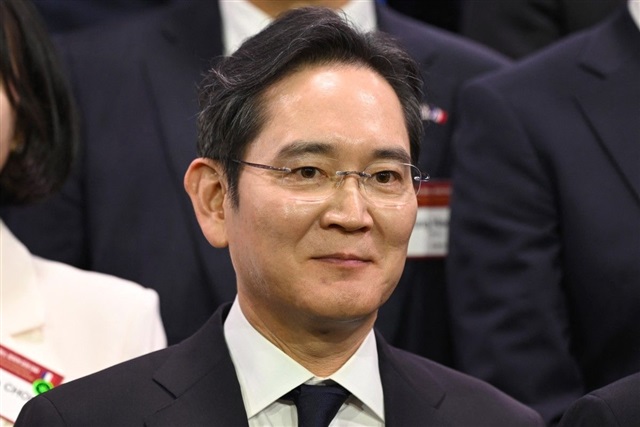
Jae-yong Lee’s trip to Sun Valley is no coincidence. Samsung Electronics’ chairman is headed to what has been for decades the most exclusive informal gathering of global media and tech power brokers, and his confirmed presence comes at a moment when artificial intelligence is reshaping priorities and industrial alliances. There is no official theme — that’s the tradition. But it is fair to assume Lee’s agenda revolves around how Samsung intends to carve out a position in the AI value chain — far beyond supplying memory.
The Large Language Model market is hungry for hardware. Data centers running inference and training consume growing amounts of VRAM, and NVIDIA’s GPUs dominate the landscape. Samsung, however, holds a strategic edge in HBM (High Bandwidth Memory), an essential component in accelerator chips. If the Korean giant has so far played the silent supplier, Lee’s presence at Sun Valley hints at a change of pace. He may be seeking alliances to integrate Samsung technology into turnkey AI solutions, possibly leveraging the foundry division to manufacture custom chips for cloud providers and large enterprises.
For organizations evaluating on-premise deployment of LLMs, the stakes are tangible. Today, self-hosted hardware is almost entirely dominated by NVIDIA, with costs and availability pushing many toward the cloud — often at the expense of data sovereignty. If a vertically integrated behemoth like Samsung were to enter the arena with competitive AI accelerators — perhaps building on internal semiconductor projects and design partnerships — it could trigger market dynamics favorable to those who want to keep data in-house without breaking the bank. The total cost of ownership for inference servers might decrease, not through technological miracles, but simply through competitive pressure on pricing and licensing.
Sun Valley, after all, is the place where relationships are forged outside the logic of press releases. Here, between a hike and a cocktail, executives from Amazon, Microsoft, Google, and Meta can discuss with hardware players what they will truly need in the next two years. For Samsung, the goal could be twofold: secure orders for future HBM generations and, at the same time, present its foundries as an alternative to TSMC for custom AI chip production, in a context where geopolitical tensions make supply chain redundancy a non-negotiable priority.
There is a less visible but equally relevant angle for the on-premise world: Samsung already has an ecosystem of edge devices — phones, sensors, appliances — where local AI is becoming a differentiator. If the company managed to unify its hardware strategy across edge and data center, it could offer homogeneous deployment pipelines, from distributed inference to central servers, easing LLM adoption in hybrid environments under latency or privacy constraints.
Nobody is betting on an imminent Samsung-branded “NVIDIA killer.” Yet the mere fact that the company’s top executive actively participates in symposia historically dominated by software and content is a signal of discontinuity. It means that AI hardware is no longer an ancillary sector but the battleground on which the control of future model infrastructure — and with it, the fate of on-prem LLM deployment — will be decided.





💬 Comments (0)
🔒 Log in or register to comment on articles.
No comments yet. Be the first to comment!