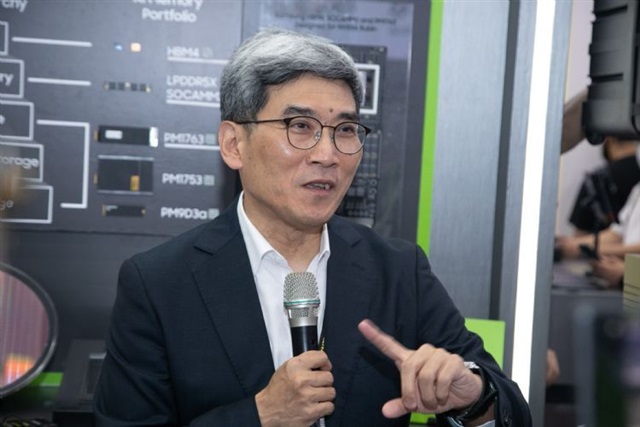
Samsung Signals Next-Generation AI Memory Deployment
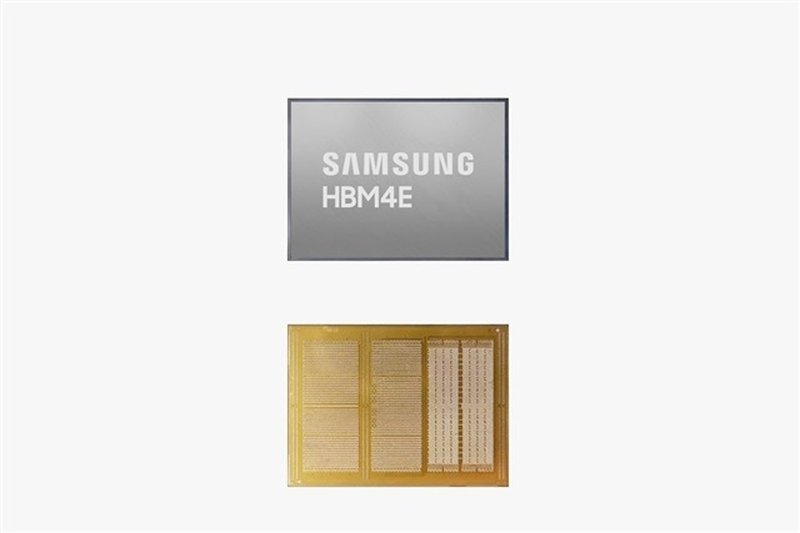
Samsung has recently indicated a significant expansion in the deployment of memory dedicated to artificial intelligence, outlining a clear roadmap for HBM5 (fifth-generation High Bandwidth Memory) and simultaneously developing advanced thermal management solutions. This strategic move underscores the growing importance of high-performance memory to power the complex and intensive workloads typical of Large Language Models (LLMs) and other emerging AI applications.
The AI industry is constantly evolving, with models requiring ever-increasing computing and memory capabilities. The availability of high-bandwidth memory is a critical factor in unlocking new performance frontiers, both for training and inference of AI models. Samsung's vision aligns perfectly with this need, aiming to provide the fundamental components for the next wave of innovation in the sector.
HBM5 and the Cooling Challenges in AI Systems
HBM technology has become a de facto standard for high-end AI accelerators, thanks to its architecture that stacks multiple memory dies vertically, allowing for significantly higher bandwidth and VRAM density compared to traditional memories. The introduction of HBM5 promises further improvements in throughput and capacity, essential elements for managing LLM models with billions of parameters and increasingly larger context windows.
However, increased performance also leads to higher power density and, consequently, greater heat generation. Thermal management thus becomes a crucial challenge. Advanced cooling solutions are indispensable for maintaining operating temperatures within acceptable limits, preventing performance throttling, and ensuring the long-term reliability of components. For on-premise deployments, this translates into more stringent requirements for data center infrastructure, including more efficient liquid or air cooling systems, with a direct impact on Total Cost of Ownership (TCO) and energy efficiency.
Implications for On-Premise Deployments and Data Sovereignty
The advancement of technologies like HBM5 and related thermal solutions has profound implications for organizations evaluating on-premise or hybrid AI deployments. The availability of more performant and reliable memory hardware is a key factor in building self-hosted AI infrastructures capable of competing with cloud offerings in terms of performance and scalability. This is particularly relevant for sectors requiring high standards of data sovereignty, regulatory compliance (such as GDPR), or operating in air-gapped environments.
The choice between an on-premise deployment and a cloud solution often comes down to a thorough analysis of trade-offs between initial (CapEx) and operational (OpEx) costs, infrastructure control, security, and flexibility. Innovation in memory and cooling can tip the scales, making self-hosted solutions more attractive for specific workloads. For those evaluating these scenarios, AI-RADAR offers analytical frameworks on /llm-onpremise to better understand the constraints and opportunities.
Future Prospects and Samsung's Role in the AI Landscape
Samsung's HBM5 roadmap and emphasis on thermal technology position the company as a key player in providing the foundational building blocks for future AI infrastructure. As Large Language Models become more complex and pervasive, the demand for high-bandwidth memory and efficient cooling solutions will only increase. This trend pushes silicon manufacturers to constantly innovate, not only in memory capacity and speed but also in its integration and thermal management within systems.
The success of future AI deployments, whether large-scale in the cloud or in more controlled on-premise environments, will largely depend on the ability of the underlying hardware to support intensive workloads efficiently and sustainably. Samsung's moves in this area are a clear indicator of the direction innovation is taking in the AI memory sector, promising a future of even more powerful and performant AI systems.







💬 Comments (0)
🔒 Log in or register to comment on articles.
No comments yet. Be the first to comment!