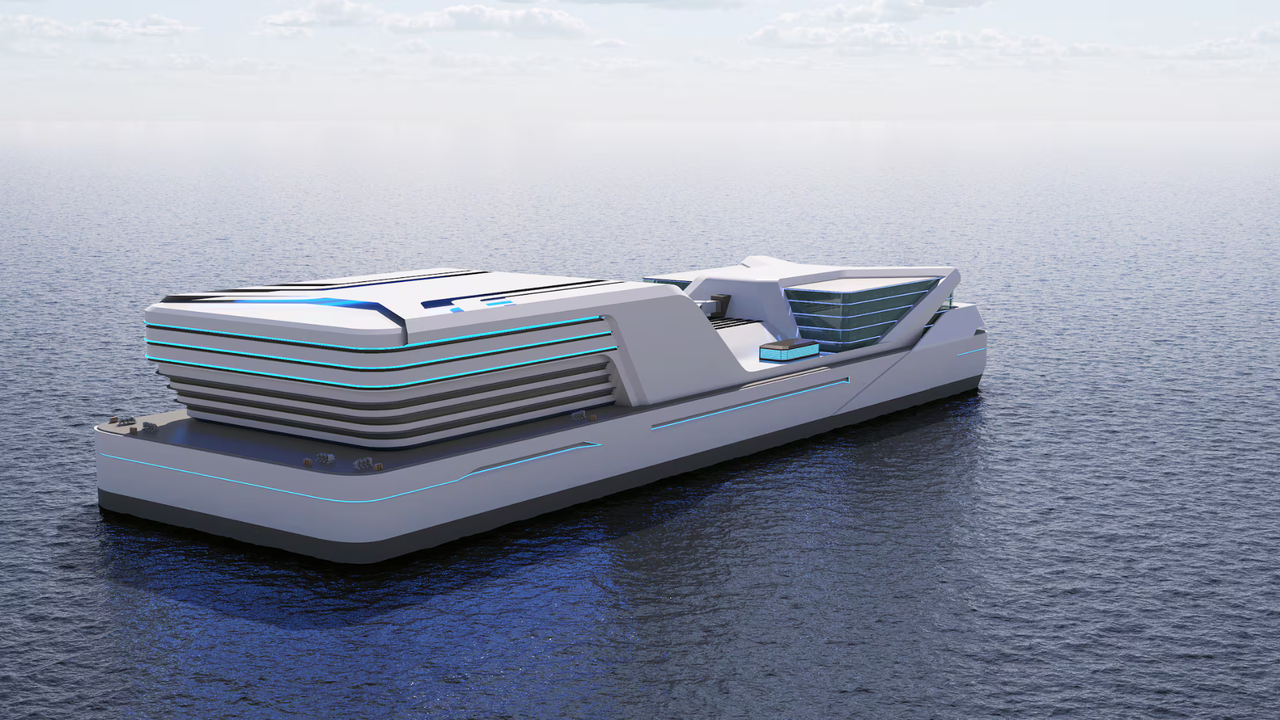
An Alliance for Innovation: Floating AI Data Centers
Samsung Heavy Industries, the South Korean shipbuilding giant, has announced a strategic partnership with Supermicro, a leader in server and storage solutions, and an unnamed Greek shipowner. The ambitious goal of this collaboration is to bring 50-megawatt (MW) floating AI data centers to market. This initiative represents a significant step towards diversifying artificial intelligence infrastructure, proposing a deployment model that deviates from traditional land-based installations or cloud solutions.
The concept of a floating data center is not entirely new, but its specific application to AI workloads and the integration of advanced power technologies make it particularly relevant. The choice of Supermicro as a hardware partner underscores the need for high-density, high-performance systems capable of handling the extreme computational demands typical of Large Language Models (LLM) and other artificial intelligence applications.
Technical Details and Sustainable Power
The core of these floating data centers lies in their ability to generate power autonomously and, potentially, more sustainably. The planned power source consists of solid oxide fuel cells (SOFCs), which operate on liquefied natural gas (LNG). This technology offers several advantages: high energy conversion efficiency, lower emissions compared to traditional diesel generators, and the ability to operate continuously and reliably.
The 50MW capacity is substantial, suggesting the possibility of hosting a large-scale AI infrastructure capable of supporting both intensive training and inference of complex models. The marine environment also offers an intrinsic advantage for cooling, utilizing seawater to dissipate heat generated by the servers, contributing to reduced operating costs and the overall energy footprint.
Implications for On-Premise Deployment and Data Sovereignty
For CTOs, DevOps leads, and infrastructure architects, floating AI data centers open new perspectives for deploying critical workloads. This solution positions itself as a self-hosted and on-premise alternative, offering unprecedented control over hardware and data. The ability to physically locate the data center in specific territorial waters can resolve complex challenges related to data sovereignty and regulatory compliance, crucial aspects for sectors such as finance, defense, or public administration.
Furthermore, the isolated nature of these platforms makes them ideal for air-gapped environments, where security and protection from external attacks are paramount. The Total Cost of Ownership (TCO) analysis for such an infrastructure must consider the initial CapEx costs for construction and deployment, balancing them against potential OpEx savings related to energy and cooling, as well as intangible benefits in terms of control and security. For those evaluating on-premise deployments, AI-RADAR offers analytical frameworks on /llm-onpremise to assess complex trade-offs between self-hosted and cloud solutions.
Future Prospects and Operational Challenges
While the idea of floating AI data centers is fascinating, its large-scale implementation presents significant challenges. The logistics of construction, transport, and maintenance in a marine environment require specialized expertise and considerable investment. The resilience of hardware and network infrastructure must be guaranteed against adverse environmental conditions, while physical and cyber security take on new dimensions in a mobile context.
Despite these complexities, the potential is enormous. These data centers could serve as computing hubs for edge computing in remote areas, support scientific research offshore, or act as mobile disaster recovery infrastructures. The initiative by Samsung, Supermicro, and the Greek shipowner highlights a growing trend towards innovative and flexible infrastructure solutions, designed to meet the increasingly specific and stringent demands of the artificial intelligence landscape.








💬 Comments (0)
🔒 Log in or register to comment on articles.
No comments yet. Be the first to comment!