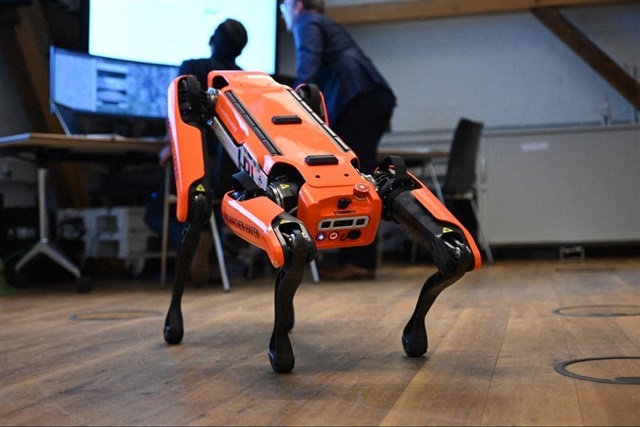
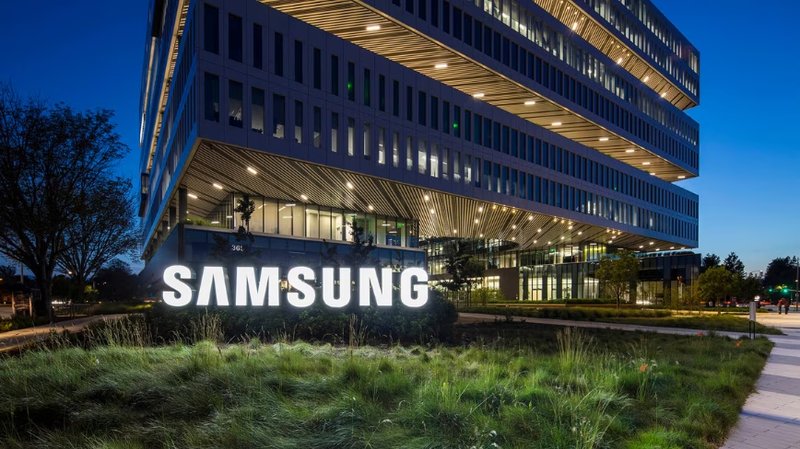
Humanoid robotics is going through an unprecedented acceleration phase. It is no longer just a research field: industrial giants, startups, and investors are betting on bipedal machines capable of moving through real environments, making autonomous decisions, and operating in increasingly unstructured settings. Against this backdrop, Samsung Electronics is reportedly weighing its options regarding its stake in Boston Dynamics, a company that has become a global icon of advanced robotics.
The news, first reported by AFP, contains no financial details or concrete timelines, but it sounds a strong signal. The Korean multinational, which had invested in the robotics firm now owned by Hyundai, might decide to offload its stake as the humanoid AI race heats up. And in this race, compute hardware – and where it runs – makes all the difference.
Thinking on their feet
Unlike a chatbot, a humanoid robot cannot afford to wait for a cloud response. It must perceive its environment, plan movements, and react in real time. This shifts the AI inference center of gravity toward the edge and local deployment: any network delay can translate into a misstep, quite literally.
For hardware designers and on-premise deployers, the challenge is clear: GPUs with large VRAM and high bandwidth are required, often more than one per node, in configurations optimized for low-latency inference. This is no longer just about rackmount servers, but about compact, passively cooled modules that can be integrated into the robot's body or placed in nearby edge units. Solutions such as NVIDIA Jetson AGX Orin or systems leveraging discretized GPUs with INT8 or FP16 quantization are becoming the norm for running ever-larger models in real time.
Humanoid AI thus amplifies the classic on-premise trade-offs: full data control, minimal latency, and independence from connectivity versus hardware costs, maintenance complexity, and space/energy constraints. For a company aiming to develop autonomous robots, choosing between hybrid cloud and fully on-device inference becomes a strategic decision, not just a technical one.
Sovereignty and data: the robot as a fortress
A humanoid robot operating in a factory, a hospital, or a public space continuously collects video, audio, and telemetry streams. It is a goldmine of sensitive data. GDPR and similar regulations often require this data to remain confined within controlled environments. On-premise or completely air-gapped deployment then becomes not an option but a compliance requirement.
Real-time operating systems, containerization, and local orchestration (Docker, K3s, often on compact integrated server hardware) allow the entire AI pipeline to run locally, from sensor pre-processing to motor planning. For those evaluating such solutions, AI-RADAR provides analytical frameworks at /llm-onpremise to help weigh trade-offs between performance, TCO, and regulatory constraints.
What changes if Samsung steps back
Samsung's potential exit from Boston Dynamics is more than a portfolio choice. It tells a story of a sector where competition is shifting from mechanical hardware alone to the ability to integrate powerful and reliable AI directly on board. Boston Dynamics has built its reputation on agile and spectacular robots, but the future belongs to those who can combine that mechanics with models trained and optimized to run locally, without compromising on safety.
Samsung, with its semiconductor division, is one of the few players capable of producing both high-bandwidth memory (HBM) and the logic chips needed for this purpose. Its divestment could signal a different strategy: no longer a robot maker, but a component supplier for third-party robotics. Or perhaps it is simply an acknowledgment that the value in humanoid robotics today lies more in silicon and embedded software than in owning an iconic brand.
Ripple effect on infrastructure
If the humanoid AI race keeps accelerating, demand for on-premise computing systems for robotics will grow alongside cloud demand. It is not hard to imagine dedicated edge data centers, perhaps at manufacturing sites, with GPU racks for continuous fine-tuning of control models and federated learning. The supply of enterprise-grade GPUs – already tight for traditional datacenters – could face further pressure.
In this landscape, coolly assessing the Total Cost of Ownership (TCO) of a local AI infrastructure, including energy consumption, hardware refresh cycles, and maintenance, becomes a core competency for any company aiming to bring humanoid robots to market or integrate them into its processes. This is no longer science fiction: it is the next challenge for IT departments.





💬 Comments (0)
🔒 Log in or register to comment on articles.
No comments yet. Be the first to comment!