AI Demand Boosts the NAND Market
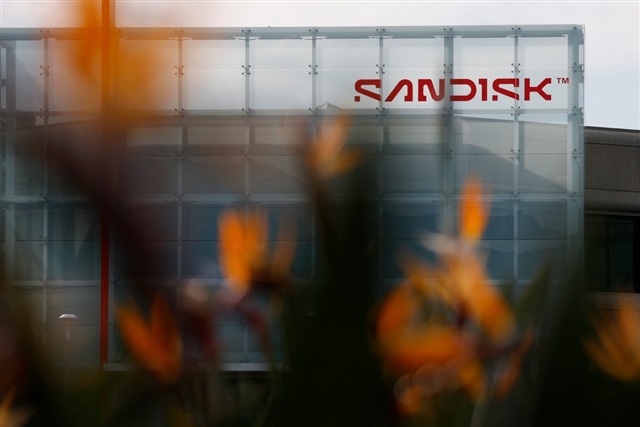
SanDisk, a key brand in the storage sector and part of Western Digital, announced its third fiscal quarter 2026 results, highlighting significant growth in demand for its NAND solutions. This surge is primarily attributed to the exponential expansion of artificial intelligence, which requires increasingly high-performance storage infrastructures capable of managing unprecedented data volumes. The need to process and store massive datasets for the training and inference of Large Language Models (LLM) is transforming the storage landscape, making NAND a critical component for the evolution of AI.
Concurrently, the company is implementing a strategy aimed at reshaping its profit model. This is achieved through the establishment of long-term agreements, which seek to stabilize the supply chain and ensure greater revenue predictability in a traditionally volatile market. For CTOs, DevOps leads, and infrastructure architects, these market dynamics are fundamental for planning and optimizing resources dedicated to AI workloads.
The Crucial Role of NAND Storage in AI Infrastructures
Artificial intelligence applications, particularly those involving complex LLMs, significantly depend on storage speed and efficiency. NAND, with its solid-state architecture, offers lower latency and higher throughput compared to traditional hard disk drives (HDDs), characteristics indispensable for accelerating training and inference phases. During LLM training, for example, data must be read and written rapidly to feed GPUs, and any storage bottleneck can slow down the entire process, increasing operational time and costs.
Furthermore, managing vast datasets of embeddings and the need for rapid access to pre-trained models or knowledge bases require storage solutions that can sustain intensive loads. For companies evaluating on-premise deployments, the choice of high-performance NAND solutions is a decisive factor in ensuring that the infrastructure can effectively support the computational demands of AI, while maintaining control over data and performance.
Implications for On-Premise Deployment and TCO
The stabilization of the NAND market, fostered by the long-term agreements mentioned by SanDisk, has direct implications for on-premise deployment strategies. Greater predictability in the supply and pricing of storage components allows companies to more accurately plan CapEx investments and estimate the Total Cost of Ownership (TCO) of their AI infrastructures. Opting for self-hosted solutions with quality NAND storage means investing in performance and reliability, crucial factors for mission-critical workloads.
For organizations prioritizing data sovereignty, regulatory compliance (such as GDPR), or the need for air-gapped environments, high-performance local storage is a non-negotiable requirement. The ability to keep data within their own infrastructural boundaries, without relying on external cloud services, is a significant competitive advantage. However, it is essential to balance the required performance with associated costs, carefully evaluating the trade-offs between different storage configurations and their long-term implications. For those evaluating on-premise deployments, AI-RADAR offers analytical frameworks on /llm-onpremise to evaluate these trade-offs in a structured manner.
Future Prospects and Challenges for AI Storage
The continuous growth in demand for artificial intelligence suggests that the role of NAND storage will become even more central. The evolution of LLMs, which are becoming increasingly larger and more complex, will require constant innovations in storage technologies to support ever more stringent throughput and latency requirements. Silicio providers and storage solution manufacturers will need to continue investing in research and development to meet these emerging needs.
Future challenges include optimizing storage density, reducing power consumption, and integrating new architectures that can further improve performance for AI workloads. For businesses, the ability to scale their AI infrastructures efficiently and sustainably will largely depend on the availability of cutting-edge storage solutions that can balance cost, performance, and reliability in the long term.









💬 Comments (0)
🔒 Log in or register to comment on articles.
No comments yet. Be the first to comment!