The Impact of Power Semiconductors on GPU Cooling
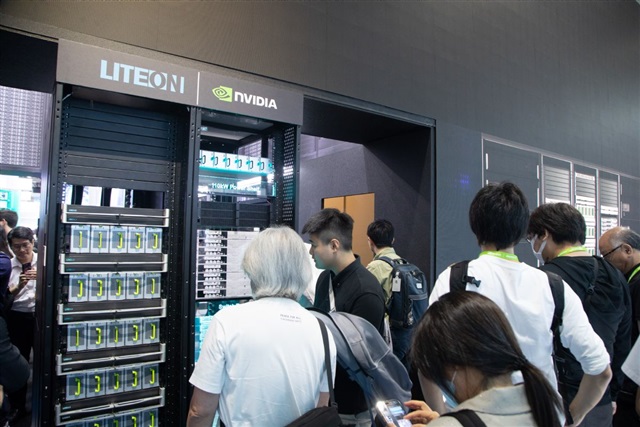
In the artificial intelligence landscape, GPUs represent the beating heart of every infrastructure, both for training and inference of Large Language Models. Their processing capacity is directly proportional to the amount of heat they generate, making cooling one of the most significant challenges in data center design and management. In this context, power semiconductors emerge as a critical element, whose efficiency directly influences the ability to maintain GPUs at optimal operating temperatures.
The race to reduce resistance in these components is not just a matter of energy efficiency, but a decisive factor in unlocking new heights of performance and sustainability. Every milliohm less of resistance translates into less energy dissipation in the form of heat, lightening the load on cooling systems and allowing GPUs to operate under less stressful conditions. This technological advancement is fundamental for the evolution of AI architectures.
The Key Role in Energy and Thermal Efficiency
Power semiconductors, such as MOSFETs and devices based on gallium nitride (GaN) or silicon carbide (SiC), regulate the flow of energy to GPUs. When current passes through these components, some energy is lost due to internal resistance, converting into heat. Reducing this resistance means less energy is wasted and less heat is generated by the GPU's own power delivery system.
This not only improves the overall system efficiency but also reduces the amount of heat that active cooling systems (like fans, liquid cooling) need to remove. For organizations investing in AI infrastructure, superior thermal efficiency translates into lower energy consumption for cooling and, potentially, extended hardware lifespan, reducing long-term maintenance and replacement costs.
Implications for On-Premise AI Infrastructure
For CTOs, DevOps leads, and infrastructure architects evaluating on-premise deployments, advancements in power semiconductors have direct and significant implications. More efficient thermal management allows for increased compute density within racks, enabling more GPUs to be installed in a limited physical space. This is particularly advantageous for self-hosted data centers, where space and power are valuable resources.
Furthermore, improved thermal efficiency contributes to a more favorable TCO (Total Cost of Ownership). Lower energy costs for cooling and increased hardware reliability reduce operational expenses. For environments requiring data sovereignty or air-gapped configurations, optimizing on-premise hardware is crucial for maximizing performance and minimizing operational constraints. AI-RADAR offers analytical frameworks on /llm-onpremise to evaluate these trade-offs and support informed decisions.
Future Prospects and Constant Trade-offs
Continuous innovation in power semiconductor technology is a silent yet powerful driver for the evolution of AI. Research focuses on materials and architectures that can offer even lower resistance and greater efficiency at high temperatures. However, every improvement comes with trade-offs, often related to manufacturing costs, design complexity, and compatibility with existing technologies.
Companies developing and deploying AI solutions must consider these advancements as an integral part of their infrastructure strategy. The choice of components, including power semiconductors, will directly influence the ability to scale, operational sustainability, and competitiveness of their AI platforms. The challenge remains to balance performance, efficiency, and cost—a dynamic equilibrium that defines the future of Large Language Models deployments.







💬 Comments (0)
🔒 Log in or register to comment on articles.
No comments yet. Be the first to comment!