
The Interdependence of Hardware and Artificial Intelligence
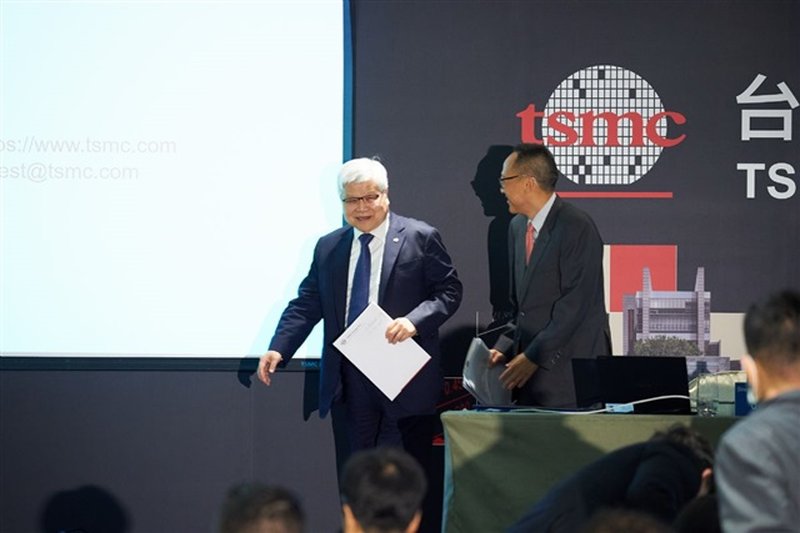
Taiwan's president recently reiterated how semiconductors and artificial intelligence (AI) represent the pillars of the country's global prosperity. This statement, though concise, underscores a fundamental truth for the entire global technology ecosystem: the close interdependence between the ability to produce advanced silicon and the capacity to develop and implement cutting-edge artificial intelligence solutions.
Taiwan, with its leadership in chip manufacturing, is at the heart of this dynamic. The availability of high-performance semiconductors is an indispensable prerequisite for powering the computational workloads required by Large Language Models (LLM) and other AI applications, directly influencing companies' ability to innovate and maintain their competitiveness in the global market.
Silicon as the Foundation for On-Premise AI
For organizations evaluating the deployment of LLMs and other AI solutions, the availability and specifications of silicon are critical factors. Hardware, particularly GPUs with high VRAM and computing power, is the foundation upon which inference and fine-tuning infrastructures are built. The choice between a cloud deployment and a self-hosted or bare metal architecture largely depends on the ability to access these resources and manage their Total Cost of Ownership (TCO).
An on-premise infrastructure, powered by state-of-the-art semiconductors, offers companies granular control over performance, latency, and throughput. This is particularly relevant for workloads requiring low latency or handling large volumes of sensitive data. The ability to optimize hardware for specific AI pipelines, for example through quantization or the use of dedicated frameworks, is directly linked to the quality and availability of the underlying silicon.
Data Sovereignty and Infrastructure Control
The centrality of semiconductors for AI also has direct implications for data sovereignty and compliance. Many companies, especially in regulated sectors such as finance or healthcare, prefer to keep their data and AI models within controlled environments, often air-gapped or self-hosted. This choice is driven by the need to adhere to stringent regulations and mitigate risks related to security and privacy.
Control over the entire technology stack, from hardware to software, becomes a strategic asset. The ability to directly procure and manage semiconductor-based infrastructure allows companies to define customized security policies and ensure data residency. For those evaluating on-premise deployments, AI-RADAR offers analytical frameworks on /llm-onpremise to assess the trade-offs between initial capital expenditures (CapEx), operational expenditures (OpEx), and the benefits in terms of control and security.
Future Prospects and Supply Chain Challenges
The Taiwanese president's statement highlights the strategic nature of the semiconductor industry not only for Taiwan but for the entire global economy. The resilience of the silicon supply chain is crucial for sustaining AI innovation and ensuring that companies worldwide can continue to develop and deploy advanced solutions. Disruptions in this chain can have significant repercussions on hardware availability, costs, and the deployment timelines of AI projects.
Looking ahead, the continuous evolution of Large Language Models and the growing demand for computational capabilities will require increasingly powerful and efficient semiconductors. The ability to manage these challenges, both at the production level and in terms of infrastructural deployment, will be a decisive factor for the technological prosperity of nations and the competitiveness of enterprises.







💬 Comments (0)
🔒 Log in or register to comment on articles.
No comments yet. Be the first to comment!