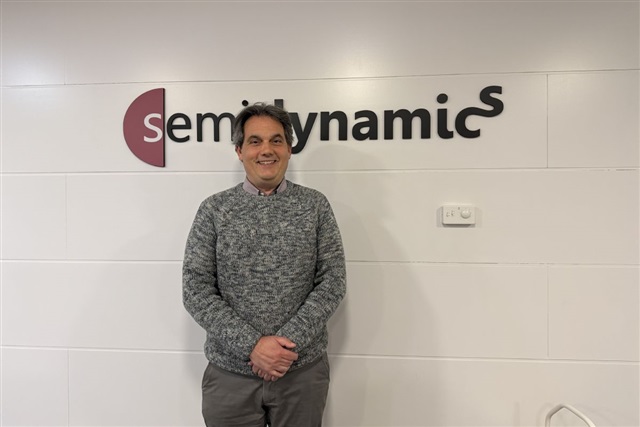
Semidynamics Expands: Rack Solutions for AI Inference
Semidynamics, a company traditionally focused on System-on-Chip (SoC) design, has announced a strategic expansion of its offering, introducing rack-level solutions. This evolution aims to address a rapidly growing market segment: memory-intensive AI Inference. The transition from individual components to complete integrated systems marks a significant step for the company, positioning it as a provider of comprehensive infrastructure for demanding AI workloads.
The expansion into rack-level solutions is particularly relevant for organizations seeking alternatives to cloud services for their artificial intelligence workloads. It offers the ability to maintain direct control over hardware and data, a crucial aspect for sectors with stringent compliance and data sovereignty requirements.
Technical Details and Implications for Inference
The focus on memory-intensive AI Inference is a direct response to the needs of Large Language Models (LLM) and other complex AI models. These models require significant amounts of VRAM and high memory bandwidth to handle large context windows and process a high number of Tokens per second. While efficient for edge computing and embedded applications, SoC solutions are often insufficient for the scale and performance demanded by data center deployments.
Rack-level solutions, in contrast, are designed to host a greater number of accelerators and to integrate more robust memory systems, capable of meeting the demands of models that can exceed hundreds of billions of parameters. This approach allows for the optimization of Throughput and reduction of Latency, critical factors for real-time AI applications and for processing large volumes of data.
On-Premise Deployment Context and TCO
Semidynamics' introduction of rack solutions aligns perfectly with the growing trend towards on-premise and self-hosted deployments for AI. Companies, particularly those operating in regulated sectors such as finance or healthcare, are increasingly inclined to keep their data and models within their own infrastructure for reasons of security, compliance, and data sovereignty. Air-gapped environments, where external connectivity is limited or absent, benefit enormously from these dedicated hardware solutions.
From a Total Cost of Ownership (TCO) perspective, the initial investment in rack-level hardware can be amortized over time, offering a predictable cost compared to cloud-based operational expenditure (OpEx) models. For those evaluating on-premise deployments, significant trade-offs exist between cloud flexibility and the long-term control/cost of proprietary infrastructure. AI-RADAR offers analytical frameworks on /llm-onpremise to evaluate these trade-offs, highlighting how solutions like those from Semidynamics can represent a valid option.
Future Prospects and Strategic Trade-offs
Semidynamics' expansion reflects a broader trend in the artificial intelligence industry: the need for increasingly specialized hardware. While general-purpose GPUs continue to dominate, the emergence of solutions optimized for specific phases of the AI lifecycle, such as memory-intensive Inference, offers CTOs and infrastructure architects new levers to optimize performance and costs.
The choice between different hardware architectures and deployment models (cloud, on-premise, hybrid) becomes a complex strategic decision. Solutions like those proposed by Semidynamics enrich the landscape of available options, enabling companies to build robust and performant local stacks, aligned with their specific security, control, and budget needs. This competitive scenario stimulates innovation and offers greater flexibility in the design of future AI infrastructures.





💬 Comments (0)
🔒 Log in or register to comment on articles.
No comments yet. Be the first to comment!