This is not a simple market rebound. The shipment recovery of Sonix Technology, a Taiwanese system-on-chip designer, is rooted in two sectors that are currently reshaping AI architecture: digital healthcare and drones. And the strategy the company is weaving around unmanned aerial vehicles is not a side bet, but the litmus test of a broader shift.
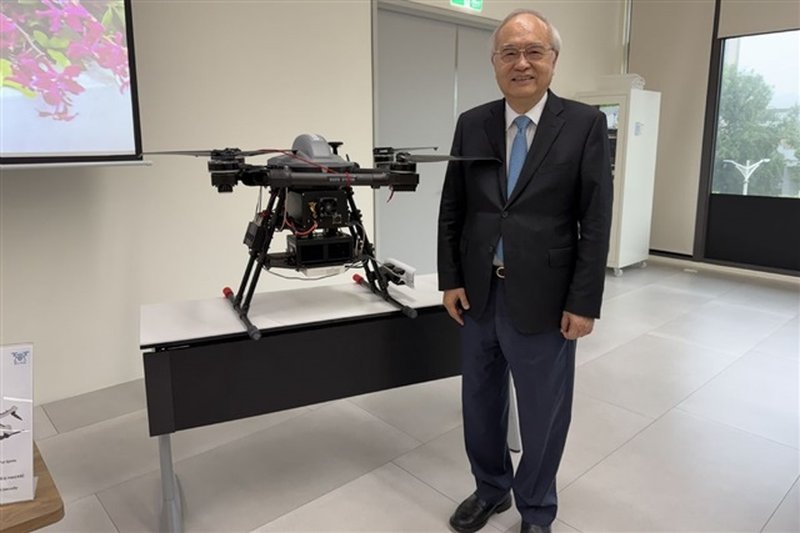
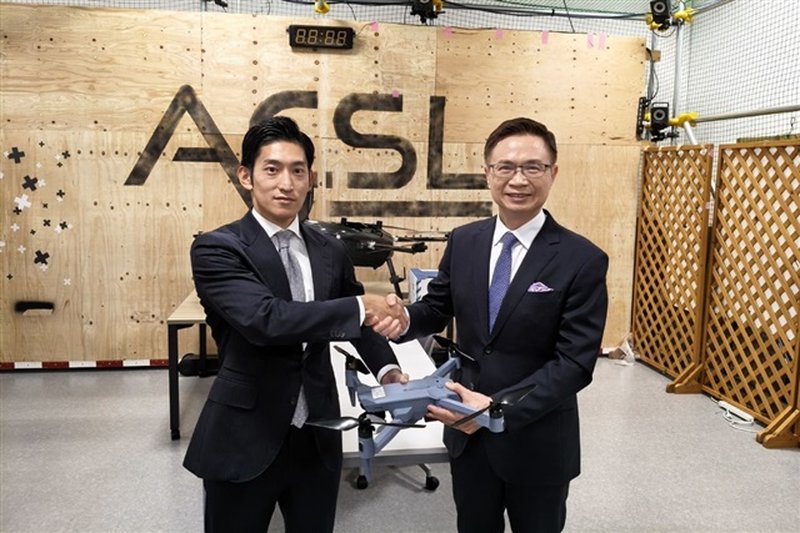
According to DIGITIMES, demand for components for medical equipment and multimedia devices is fueling a return to growth after an uneven period. Meanwhile, the drone roadmap – systems that require real-time video processing, autonomous navigation and visual recognition – is carving out an increasingly significant space in the company’s financials.
For those involved in deploying AI models away from the cloud, the news resonates immediately. The chips Sonix is investing in are designed to run locally: microcontrollers and signal processors that handle video streams, detect anomalies in clinical settings, or keep a drone airborne without sending every frame to a remote server. It’s the classic edge scenario, where network latency is unacceptable and data sovereignty becomes a requirement, not a preference.
A medical device analyzing an x-ray in an operating room cannot wait for a cloud round-trip, just as a drone overflying a critical area must make decisions in real time, often in environments with intermittent or no connectivity. In these contexts, Total Cost of Ownership isn’t just measured in dollars per GPU, but in transmission operational costs, data exposure risks and overall system energy consumption.
Of course, edge architectures don’t compete in raw power with centralized training clusters. But the growth of Sonix – along with other fabless companies in the same tier – reminds us that AI inference is not a monolith: there’s a long tail of applications where optimized models, often quantized to INT8 or built with lighter architectures, run effectively on hardware with limited thermal footprint and memory resources. Here, hundreds of GB of VRAM aren’t needed; a few megabytes, a few watts of power and deterministic, predictable token processing suffice.
The regulatory aspect, too, is becoming a silent accelerator. In healthcare, GDPR and similar norms push toward on-device processing to minimize personal data movement. The same holds for drones used in surveillance or industrial inspection: keeping the video stream local reduces the attack surface and simplifies compliance. It’s no surprise that silicon designers are embedding neural accelerators directly into the SoC, essentially turning inference into a system service rather than an exotic workload.
In this light, Sonix’s numbers are more than a financial indicator. They tell the story of a hardware ecosystem gearing up for distributed AI, where models migrate to the periphery and the cloud remains the aggregation point for training and coordination. For those evaluating on-premise or self-hosted deployments, it’s worth watching not just server racks but also these frontier components: they define the real limits of what can be moved out of the data center.





💬 Comments (0)
🔒 Log in or register to comment on articles.
No comments yet. Be the first to comment!