
The European Tech Investment Landscape
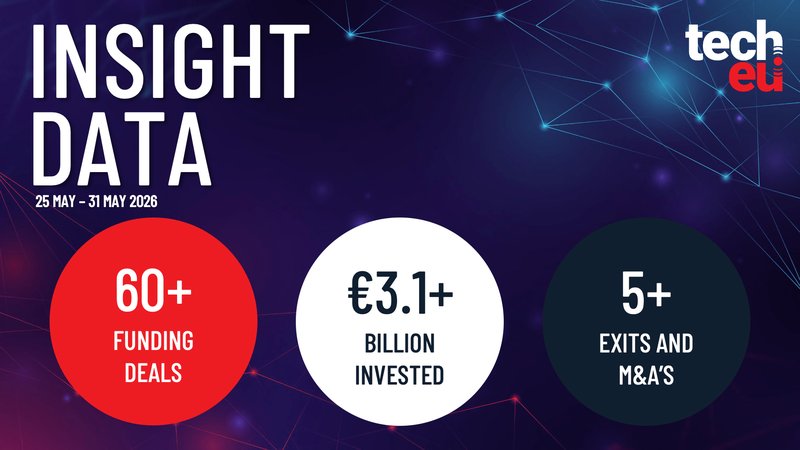
The European technology sector continues to show intense activity, with significant investments and developments outlining the continent's strategic priorities. In the past week, the market recorded over 75 funding deals totaling more than €1.9 billion, alongside several acquisitions and mergers. These movements not only reflect the vitality of the ecosystem but also highlight a growing focus on key sectors such as artificial intelligence, infrastructure, and data sovereignty.
Among the most notable financings, Stegra secured a €1.4 billion rescue package for a European green steel plant, while CamGraPhic obtained €211 million from the European Union to develop graphene technology aimed at accelerating AI data transfer. Wayve, active in the AI field, received a £44 billion investment from chip giants, underscoring the enormous perceived potential in artificial intelligence and its enabling infrastructures.
Infrastructural and Hardware Innovation for AI
The evolution of infrastructure and hardware represents a fundamental pillar for the advancement of artificial intelligence, especially in contexts requiring high performance and control. CamGraPhic's graphene technology, funded with €211 million, promises to revolutionize AI data transfer, a critical aspect for the efficiency of Large Language Models (LLM) and other intensive workloads. High throughput and low latency are essential for inference and training of complex models, making these innovations crucial for on-premise and hybrid deployments.
Concurrently, attention is also shifting to advanced cooling solutions. Calyos, for example, is integrating passive thermal technology into Europe's defense stack, an initiative that highlights the importance of robust and efficient systems for high-security and potentially air-gapped environments. Thermal management is a decisive factor for TCO and the sustainability of AI infrastructures, directly influencing the lifespan and performance of hardware, such as GPUs with high VRAM, in critical deployment contexts.
Data Sovereignty and Strategic Autonomy in AI
Data sovereignty and reducing reliance on external providers are becoming strategic priorities for Europe. Accenture and Google Cloud have unveiled a center in Brussels to accelerate sovereign AI adoption, an initiative aimed at ensuring that AI data and models remain under the control of European entities, complying with regulations like GDPR. This approach is fundamental for organizations that must balance innovation with stringent compliance and security requirements.
In this direction, Project Mercury, launched by Locai Labs and Civo in the UK, aims to end the country's reliance on foreign AI. Another significant initiative is Europe's construction of its first “kill-switch proof” cloud recovery stack, offering greater resilience and control over data, mitigating risks related to outages or external interventions. These developments underscore the growing preference for self-hosted or hybrid solutions that guarantee autonomy and control over AI workloads, a central aspect for CTOs and infrastructure architects evaluating deployment options.
Future Prospects for AI Deployments
The expansion of key players like OpenAI, which will move into its first permanent London office with the capacity to more than double its headcount, indicates the continued growth of the LLM sector. However, for companies operating in regulated sectors or with high-security needs, adopting public cloud solutions for AI presents significant challenges. The push towards sovereignty and infrastructural autonomy suggests that on-premise or hybrid deployments will continue to gain traction.
Evaluating the TCO, which includes not only initial CapEx costs for hardware (GPUs, servers) but also operational expenses for energy, cooling, and maintenance, becomes crucial. For those evaluating on-premise deployments, AI-RADAR offers analytical frameworks on /llm-onpremise to understand the trade-offs between control, security, and operational costs. The European landscape is clearly investing in a future where AI is not only powerful but also controlled and resilient, addressing the needs of a market increasingly aware of the risks associated with external dependence.






💬 Comments (0)
🔒 Log in or register to comment on articles.
No comments yet. Be the first to comment!