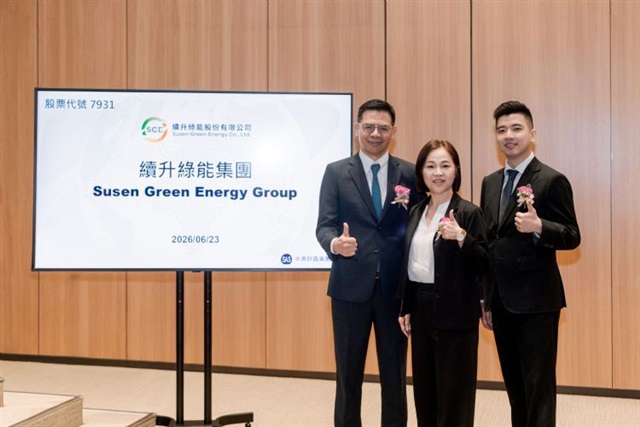
Sunrise’s announcement is no bolt from the blue but rather a confirmation of a trend reshaping IT infrastructure boundaries. The company is building an integrated energy platform designed to absorb the impact of AI workloads, which are pushing data centers toward unprecedented power densities. At stake is far more than just the electricity bill—we are talking about cooling capacity, power distribution, and ultimately the feasibility of large-scale on-premises projects.
Why energy is becoming the real bottleneck
GPU clusters for training and inference, especially those using configurations with eight or more accelerators per node, can exceed 10–15 kW per rack. In on-prem deployments—where you cannot rely on hyperscaler elasticity—this means rethinking the entire power chain: from UPS units to liquid cooling, every link must be sized to endure sudden peaks. The integration promised by Sunrise aims for unified control over these variables, using software that orchestrates generation, storage, and dissipation in real time.
What an integrated platform brings to the table
Instead of managing UPS, chillers, and solar arrays separately, an integrated approach makes it possible to modulate consumption according to computational load. If a wave of inference requests drives power draw sky-high, the system can tap into local batteries or shift non-critical loads, preventing blackouts or expensive tariff spikes. For those running self-hosted LLMs, this translates into more predictable TCO and operational continuity that a traditional setup simply cannot guarantee.
The impact on on-prem architectural choices
It is not just an efficiency matter. Having an intelligent energy platform changes the criteria used to design a private AI infrastructure. Fewer thermal constraints mean more GPUs can be crammed into tight spaces, accelerating time-to-value for fine-tuning projects or low-latency inference. Moreover, granular control over energy flows eases compliance with environmental regulations and ESG reporting—an increasingly important factor in enterprise tenders. AI-RADAR reminds readers that for on-prem investments, energy sizing is every bit as strategic as silicon selection.
Beyond the rack perimeter
Sunrise’s move fits into a market where AI compute demand is growing by double digits, driven by ever-larger models and expanding enterprise use cases. Companies that choose to keep data in-house—for sovereignty or cost control—will need sophisticated energy management tools; otherwise, they risk ending up with infrastructure that is either undersized or loaded with unused capacity. In this light, an integrated platform is no longer a nice-to-have but an indispensable building block for putting AI into production without fear of blackouts or runaway costs.





💬 Comments (0)
🔒 Log in or register to comment on articles.
No comments yet. Be the first to comment!