Supermicro cuts it short: no investigation underway, just transparent cooperation with Taipei authorities. The clarification comes at a time when geopolitical tension turns any uncertainty in the semiconductor supply chain into a potential hurdle for those planning on-premise Large Language Model deployments.
For organizations running their own servers — from banks to public institutions, to labs that train models — component continuity is a prerequisite. Supermicro doesn't manufacture GPUs, but integrates NVIDIA, AMD, and Intel boards into its modular servers, often chosen for local inference precisely because they offer manageable TCO without sacrificing bare-metal configuration flexibility. Any supply disruption, even just for regulatory checks, would affect the ability to scale on-premise clusters, exactly as demand for LLM inference compute keeps rising.
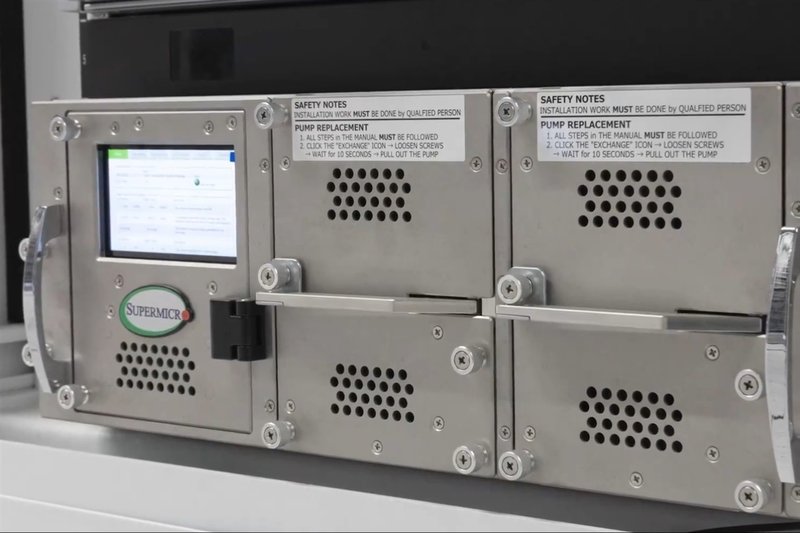
The Taiwan link is no coincidence. The island remains a critical hub in the production of AI server components: not only advanced chips, but also motherboards and high-density cooling systems, where Supermicro plays a prominent role. The company's statement should be read as an attempt to reassure partners and, at the same time, as a reminder of the fragility of high-tech supply chains.
For organizations evaluating self-hosted architectures, such episodes reignite the debate on data sovereignty and actual hardware autonomy. Having full control of the software stack, from serving frameworks to model quantization, is not enough if physical components remain exposed to turbulence that lies beyond the data center perimeter. It's a well-known trade-off: on-premise reduces reliance on cloud providers, but concentrates risk on supply chain availability and compliance.
Supermicro, for its part, emphasizes cooperation with institutions as a signal of reliability, in a market where transparency with local authorities has become a kind of operational certification. No additional technical data emerges from the note, but the message is clear: the production machine keeps moving. Whether that will be enough to maintain the confidence of those in Europe and Asia who are planning to expand their AI labs, with one eye on compliance checklists and the other on import costs, remains to be seen.






💬 Comments (0)
🔒 Log in or register to comment on articles.
No comments yet. Be the first to comment!