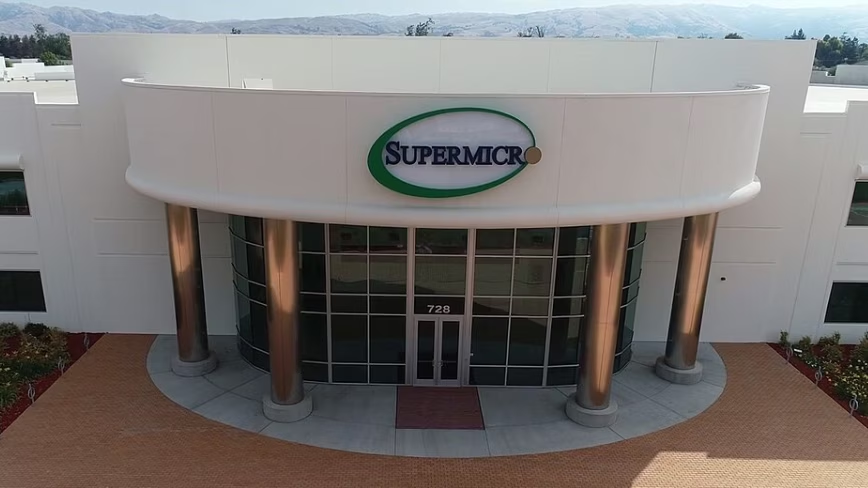
Supermicro and the AI Infrastructure Race
Super Micro Computer, known as Supermicro, is preparing for a significant financial operation to support its growth in the artificial intelligence sector. The company has announced plans to raise $7 billion through a package of equity offerings. The primary goal of this capital injection is to purchase essential components for its AI servers, a rapidly expanding market segment.
This strategic move comes at a time of unprecedented demand for AI-dedicated hardware. Supermicro revealed that it has received orders totaling approximately $39 billion in recent weeks. These orders come from over 20 customers and pertain to its advanced AI servers, including its Data Center Building Block Solutions. The ability to fulfill such a high volume of requests is crucial for maintaining the company's position in a highly competitive market.
Supply Chain Challenges and "Building Block Solutions"
The need to raise capital for component purchases highlights the supply chain pressures characterizing the AI hardware sector. The production of high-performance servers, particularly those optimized for Large Language Models (LLM) workloads and complex model training, requires constant access to GPUs, high-bandwidth VRAM, and other specialized components. The availability and cost of these resources can directly impact a supplier's ability to meet demand.
Supermicro's "Data Center Building Block Solutions" represent a modular approach to data center infrastructure construction. This design allows customers, often CTOs and infrastructure architects, to configure and scale their on-premise environments with greater flexibility. For companies prioritizing data sovereignty and direct hardware control, these solutions offer a path to build or expand their AI computing capacity without relying entirely on external cloud services.
Financial and Strategic Implications for Deployment
An investment of this magnitude, both from the supplier and customer side, raises significant questions regarding Total Cost of Ownership (TCO) and Capital Expenditure (CapEx). For organizations evaluating the deployment of LLMs and AI workloads on-premise, purchasing advanced servers like those offered by Supermicro represents a considerable initial CapEx. However, this can translate into lower TCO in the long run compared to the recurring operational costs of cloud services, especially for intensive and predictable workloads.
The decision to invest in self-hosted infrastructure is often driven by the need to ensure regulatory compliance, data security, and low latency. For those evaluating on-premise deployments, complex trade-offs exist between flexibility, costs, and management. AI-RADAR offers analytical frameworks on /llm-onpremise to evaluate these aspects and support informed decisions, highlighting the constraints and opportunities of each approach.
The Future of On-Premise AI Infrastructure
The massive wave of orders received by Supermicro is a clear indicator of the direction many companies are taking: a robust investment in dedicated AI infrastructure. This trend underscores the growing importance of on-premise and hybrid solutions for AI workloads, where direct control over hardware and data becomes a critical factor. A company's ability to manage and scale its AI infrastructure internally can offer significant competitive advantages in terms of performance, security, and cost.
In a rapidly evolving technological landscape, the availability of suppliers like Supermicro, capable of offering scalable and high-performance hardware solutions, is fundamental. Their ability to finance and meet such high demand will be an important barometer for the health and direction of the AI infrastructure market, especially for organizations aiming to build their artificial intelligence capabilities with a focus on sovereignty and efficiency.








💬 Comments (0)
🔒 Log in or register to comment on articles.
No comments yet. Be the first to comment!