An Unexpected Discovery at the Core of Human Movement
Science, at times, reveals its most fascinating secrets through serendipitous discoveries. Such is the case with recent research, published in Nature Communications, which has brought to light a hidden and previously unknown rule of human behavior: the spontaneous tendency to turn counterclockwise when moving in crowds. This phenomenon, observed with surprising consistency, challenges expectations and suggests the existence of a deeper biological principle influencing how we navigate spaces.
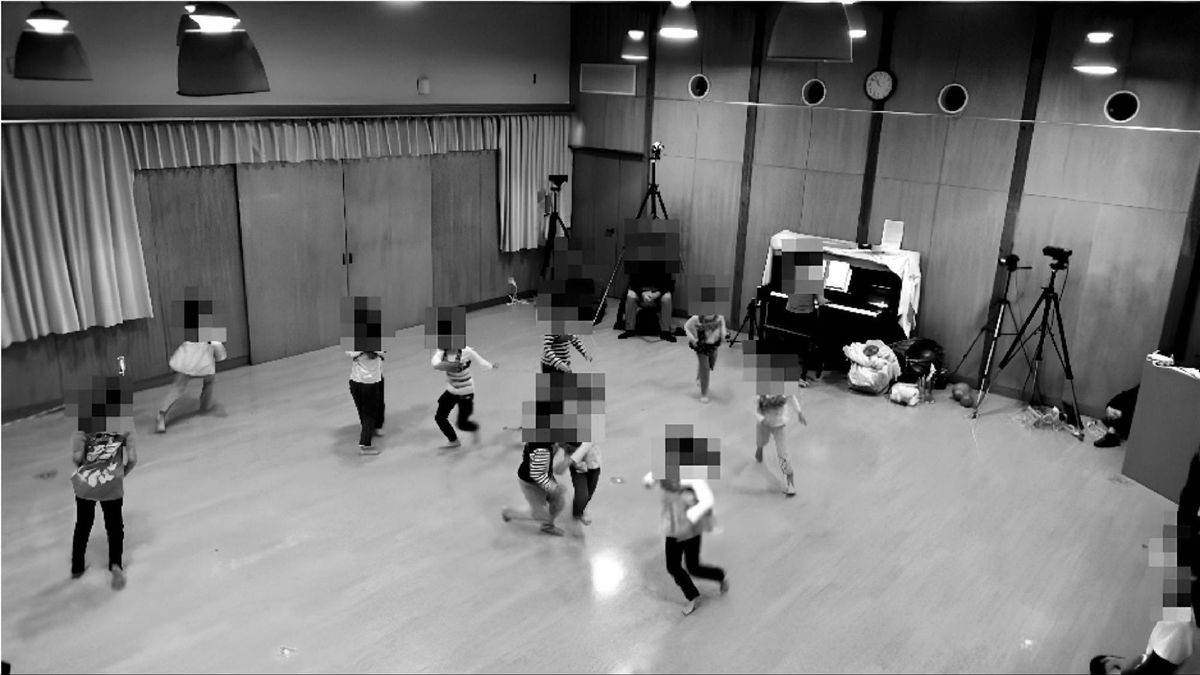
The discovery emerged almost by accident. During the Covid-19 pandemic, a team of researchers led by Iñaki Echeverría Huarte, a professor specializing in pedestrian dynamics at the University of Navarra in Spain, was studying pedestrian movements. The goal was to provide useful guidance for social distancing measures. However, video analysis revealed an unexpected and consistent pattern: people tended to rotate counterclockwise whenever they changed direction. This observation transformed a public health project into an investigation of a fundamental aspect of human behavior.
A Robust Individual Bias, Independent of Culture
Initially, researchers wondered if this preference might be influenced by cultural or environmental factors. Iñaki Echeverría Huarte, along with study co-author Claudio Feliciani, a professor of crowd dynamics at the University of Tokyo, decided to extend their investigations. They conducted a series of experiments in both Spain and Japan, convinced that cultural differences or varying avoidance behaviors might reverse the direction of rotation. To their surprise, the counterclockwise bias persisted across all examined contexts.
This result reinforced the hypothesis that the phenomenon is not a learned or culturally specific behavior, but rather an intrinsic trait. Further analysis showed that this preference manifests whether people are walking alone or as part of a group, suggesting it is an individual bias rather than a collective phenomenon that only emerges in crowd settings. Feliciani emphasized the robustness of this tendency, while clarifying that, to define it as a “universal law,” further research is needed, especially in more complex scenarios such as emergency evacuations or extremely dense crowds.
Biological Roots and Practical Implications
To better understand the nature of this bias, researchers analyzed the movements of hundreds of participants, including adults, teenagers in schoolyards in Spain, and nursery school children in Japan. They accounted for individual variables such as handedness (left or right), age, and local social etiquette. In every situation, the preference for counterclockwise rotation remained evident. Interestingly, nursery school children showed an even stronger bias, a finding that strongly suggests it is not a learned behavior but something biologically rooted, likely biomechanical in nature.
Feliciani noted that this type of symmetry-breaking motion is unusual in the animal kingdom; most animals show no such clear directional bias, making humans a rare case. Although the exact cause remains unclear, a better understanding of its origins could have significant practical applications. For example, it could influence the design of high-traffic public spaces such as airports, museums, shopping centers, and other areas where the fluidity of people's movement is crucial. Huarte is already working on follow-up studies using virtual reality to delve deeper into the matter, hoping to uncover more details about how we process locomotor information and use it to move.
Future Prospects: Optimizing Spaces and Understanding Behavior
The discovery of this counterclockwise bias not only enriches our understanding of human behavior but also opens new avenues for environmental optimization. Imagining airports or train stations designed with this innate tendency in mind could improve people flow, reduce congestion, and enhance safety. For architects, urban planners, or those responsible for managing large events and infrastructure, this data offers valuable insights for creating more intuitive and efficient spaces.
This study is a prime example of how unexpected behaviors can hide in plain sight, waiting only to be discovered through careful observation and rigorous methodology. As Feliciani concluded, the real value of these discoveries lies in their ability to stimulate further research into how our brains process motor information and translate it into movement. It is a reminder that, even in the most mundane aspects of our existence, science can still reveal fascinating and useful mysteries.




💬 Comments (0)
🔒 Log in or register to comment on articles.
No comments yet. Be the first to comment!