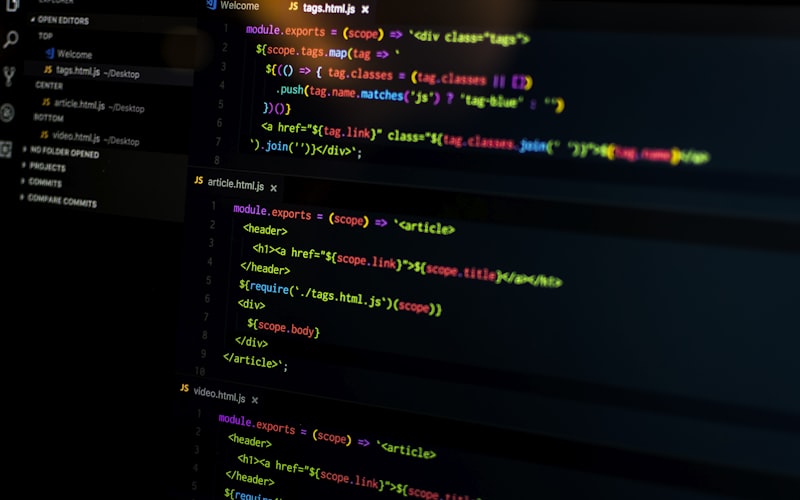
The Advance of AI-Assisted Software Development
The software development industry is undergoing a profound transformation, driven by the increasing adoption of artificial intelligence-based tools. These systems, capable of generating code, suggesting solutions, and automating repetitive tasks, are redefining work methodologies and productivity expectations. Their integration into development pipelines is now a consolidated reality, with an impact extending from the design phase to testing and deployment.
This change is not without its complexities. While the effectiveness of such tools is widely recognized, questions and, at times, a sense of discomfort arise among developers. The speed with which these technologies evolve and integrate into daily workflows raises ethical, control, and dependency issues, requiring careful evaluation by organizations.
"Vibe Coding": Effectiveness and New Challenges
The concept of "vibe coding" describes an approach to software development where artificial intelligence acts as an intuitive co-pilot, assisting the programmer in an almost predictive manner. This methodology, based on LLMs' ability to understand context and generate relevant code snippets, has proven surprisingly effective. Its adoption can significantly accelerate development times, reduce errors, and allow teams to focus on more complex and innovative aspects of projects.
However, the effectiveness of "vibe coding" also brings new challenges. Reliance on external tools, often cloud-based, raises concerns about data sovereignty and intellectual property security. Companies must carefully evaluate where source code data resides and how it is managed, especially in sectors with stringent compliance requirements. This drives the search for solutions that allow maintaining control over critical assets.
Implications for On-Premise Deployment and Data Sovereignty
For organizations operating in regulated environments or requiring granular control over their data, the adoption of AI-assisted development tools necessitates strategic reflection on deployment. Using LLMs for code generation, refactoring, or security analysis can occur via third-party cloud services, but this implies transferring sensitive data outside the corporate perimeter. This scenario is often unacceptable for those prioritizing data sovereignty and compliance.
The solution for many entities is to explore on-premise or hybrid deployments for Large Language Models dedicated to development. Running LLMs locally, on self-hosted or air-gapped infrastructures, allows for complete control over code and training data, mitigating privacy and security risks. This choice involves investments in specific hardware, such as GPUs with adequate VRAM, and expertise for managing local stacks, but offers a predictable TCO and the assurance of adhering to internal and external regulations. For those evaluating on-premise deployment, AI-RADAR offers analytical frameworks on /llm-onpremise to assess trade-offs between costs, performance, and control.
The Irreversible Future of Machine Learning in Development
The impact of machine learning on software development is now irreversible. The capabilities offered by LLMs are destined to become a standard, and companies that do not adapt risk losing competitiveness. The challenge is no longer whether to adopt AI, but how to do so strategically, securely, and efficiently. This means not only integrating the right tools but also training teams and adapting infrastructures to support this new era.
Decisions regarding infrastructure, deployment, and data governance will become increasingly central. Organizations will need to balance productivity benefits with security, compliance, and control requirements. The ability to implement and manage LLMs in controlled environments, such as on-premise, will be a distinguishing factor in ensuring that AI-driven innovation occurs in compliance with principles of sovereignty and resilience.






💬 Comments (0)
🔒 Log in or register to comment on articles.
No comments yet. Be the first to comment!