Synopsys and Taiwan's Strategic Role in AI Silicon
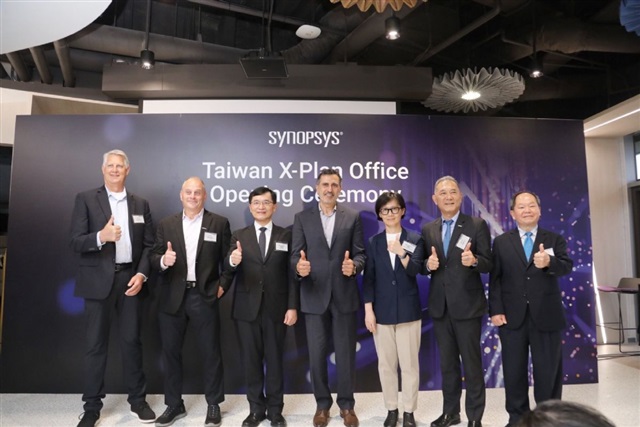
Synopsys, a global leader in the Electronic Design Automation (EDA) sector, is celebrating a significant milestone: 35 years of presence and operations in Taiwan. The company has reaffirmed its commitment to the region, announcing its intention to continue with targeted investments. This announcement, reported by DIGITIMES, underscores Taiwan's centrality in the global semiconductor ecosystem, a vital hub for innovation and chip production.
Synopsys's position is strategic. EDA tools are the backbone of modern chip design, from CPUs to GPUs, ASICs to NPUs. Without advanced design software, the development of new generations of silicon would be impossible. Continuous investment in an area like Taiwan, which hosts major foundry and semiconductor manufacturing players, is a clear signal of the importance of maintaining innovation at the source of the technological value chain.
The Impact of EDA Tools on On-Premise LLM Hardware
The electronic design tools provided by Synopsys are indispensable for creating the hardware that powers Large Language Models (LLM). The ability to design chips with increasingly higher specifications – such as greater VRAM, optimized throughput, and lower latency – is directly linked to the effectiveness of EDA tools. For companies evaluating on-premise LLM deployment, the availability of high-performance hardware is a critical factor.
A self-hosted infrastructure for LLMs requires GPUs with ample memory capacity (e.g., A100 80GB or H100 SXM5) and high-speed interconnects. Silicon design optimization, made possible by EDA tools, directly impacts the Total Cost of Ownership (TCO) of on-premise solutions, improving energy efficiency and reducing long-term operational costs. These trade-offs between performance, cost, and energy consumption are central to deployment decisions for CTOs and infrastructure architects.
Data Sovereignty and Local Hardware Development
The growing focus on data sovereignty and regulatory compliance (such as GDPR) is prompting many organizations to consider on-premise or air-gapped LLM deployments. In this context, the ability to access hardware designed and manufactured with high security and control standards becomes fundamental. Investments in sectors like EDA contribute to strengthening the entire silicon supply chain, making options for local infrastructures more robust.
The capability to develop and produce advanced chips in strategic regions like Taiwan, supported by companies like Synopsys, offers greater resilience and control over the underlying technology. This is particularly relevant for sensitive sectors such as finance, defense, or healthcare, where data management and security are absolute priorities. A robust and localized hardware ecosystem can reduce dependence on external suppliers and ensure greater decision-making autonomy.
Future Outlook: Innovation and LLM Deployment
Synopsys's continued investments in Taiwan not only consolidate its leadership position but also lay the groundwork for future innovations in semiconductors. These advancements are essential to support the growing demand for computing power for training and inference of Large Language Models. The ability to design increasingly efficient and powerful chips is a prerequisite for the widespread adoption of advanced AI solutions, both in the cloud and on-premise.
For companies evaluating the best deployment strategies for their LLM workloads, understanding hardware evolution is crucial. Significant trade-offs exist between self-hosted and cloud-based solutions, covering aspects such as TCO, data sovereignty, and specific performance. AI-RADAR offers analytical frameworks on /llm-onpremise to help evaluate these options, providing a neutral perspective on the constraints and opportunities of each approach.







💬 Comments (0)
🔒 Log in or register to comment on articles.
No comments yet. Be the first to comment!