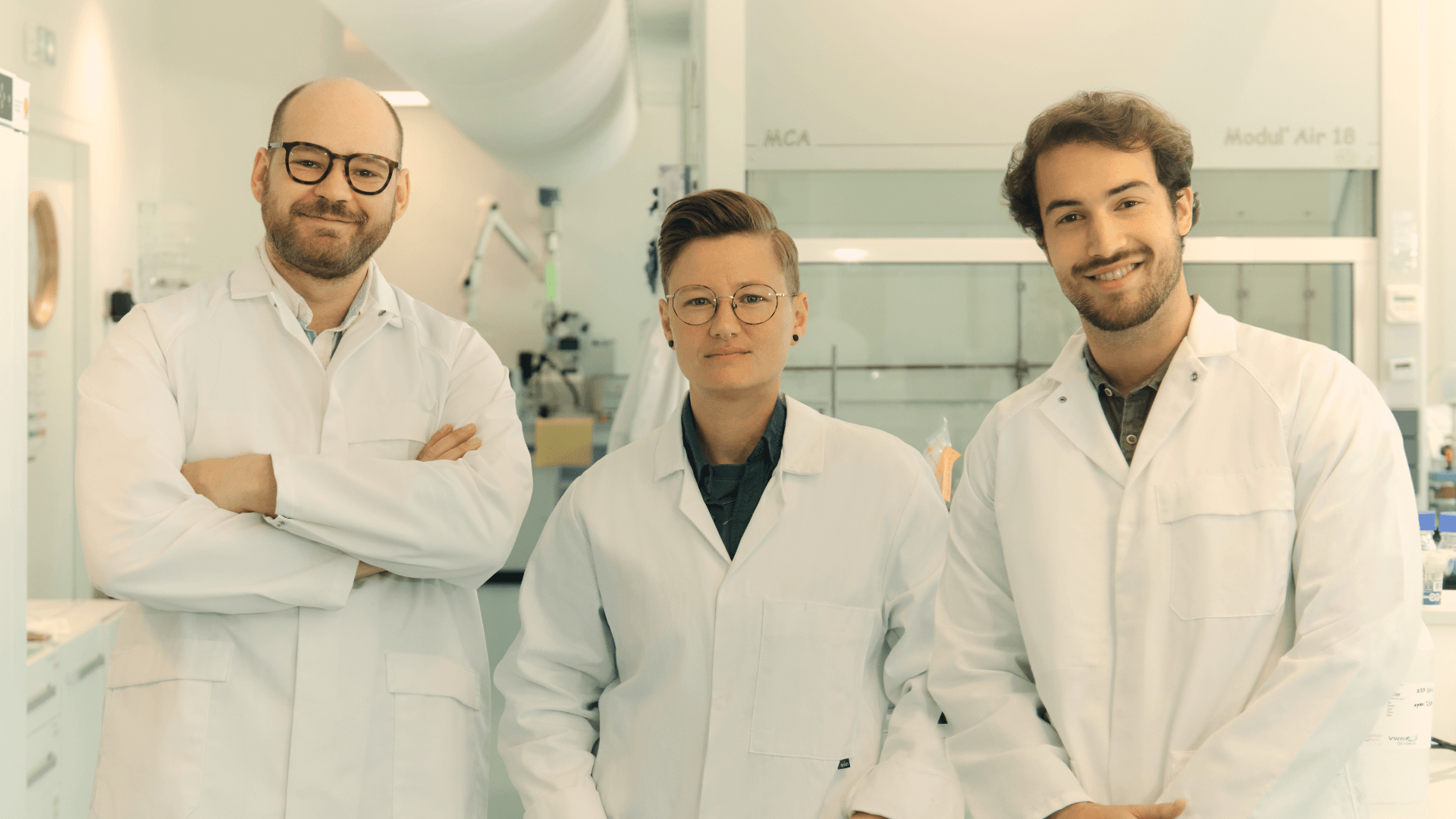
Paris-based startup Syntetica has raised $30 million in a Series A round led by the Ecotechnologies 2 fund, managed by Bpifrance on behalf of the French government, with participation from SWEN Capital Partners, lululemon, MAS Holdings, EQT Ventures, and the family offices of Peugeot, Etam, and Indorama Ventures’ largest shareholder. The funding will go toward building a first commercial demonstration plant in Clermont‑Ferrand, in partnership with Michelin’s Centre for Sustainable Materials, and taking the technology from lab bench to processing hundreds of tonnes of textile waste per year.
The promise lies in a patented process that recycles both Nylon 6 and Nylon 6,6 from mixed post‑consumer textiles without prior separation. For decades, the industry has considered mixed nylon too complex and expensive to recover at scale: separation requires extra plant infrastructure and degrades the quality of the regenerated fiber. Syntetica bypasses the bottleneck by treating both polyamides in a single reactor, recovering high‑value materials from streams that were previously sent to incineration or landfill.
The presence of brands such as lululemon and Victoria’s Secret – already customers of the startup – is not mere financial adhesion. Apparel manufacturers are beginning to lock in access to circular raw materials well before they become commodity inputs. This is a second‑order signal: early movers in securing regenerated nylon not only shield themselves from future extended producer responsibility regulations but can also exert pressure on competitors still tied to virgin, petroleum‑derived nylon. Recycling, in other words, ceases to be a CSR line item and becomes a competitive lever in the supply chain.
The decision to build the demonstrator in France, backed by Bpifrance and the European Innovation Council, tells another story. Europe is testing a scaling model for deep‑tech ventures that require heavy industrial capex: patient public capital, co‑investment from private players, and territorial anchoring. It is no coincidence that the infrastructure partner is Michelin, the tire giant that has turned its materials center into a circular‑economy hub. The project signals that polymer chemistry is becoming a sovereignty asset: controlling nylon regeneration means reducing dependence on imports of chemical precursors and positioning as a sorting hub for supply chains that stretch from fashion to automotive and specialty chemicals, as already outlined in Syntetica’s roadmap.
For those watching industrial deployment dynamics, the operation reveals a familiar trade‑off. The technology works in the lab, but scaling it demands a physical plant, with all the execution risks that entails – from textile‑collection logistics to feedstock variability. The fact that public funds absorb part of the first‑plant risk shows how strategic Europe considers it to avoid yet another process innovation being industrialized elsewhere. The success of the demonstration plant, expected in the coming years, could reshape investment flows into chemical recycling technologies, which have so far been hindered by the lack of facilities able to handle post‑consumer waste rather than clean manufacturing scrap alone. If the model holds, Syntetica’s $30 million bet will be remembered not just for the volumes of nylon recovered, but for changing the scale at which the textile industry calculates the value of what it throws away.






💬 Comments (0)
🔒 Log in or register to comment on articles.
No comments yet. Be the first to comment!