
Taiwan’s presence at VivaTech 2024 marked a turning point. No longer just chips, accelerator boards, or barebone servers, but end-to-end solutions ready for local inference and training. That was the message the Asian delegation delivered to capture European demand, increasingly focused on keeping data and models within trusted boundaries.
From component suppliers to solution orchestrators
For years, Taiwan’s hardware industry was the silent engine of AI: servers with NVIDIA GPUs, high-density motherboards, cooling systems. Now companies and consortia are bringing to the show floor full stacks that include orchestration software, pre-trained models, and fine-tuning pipelines. The goal is to offer European partners not raw building blocks but integrated environments for running LLMs in self-hosted mode.
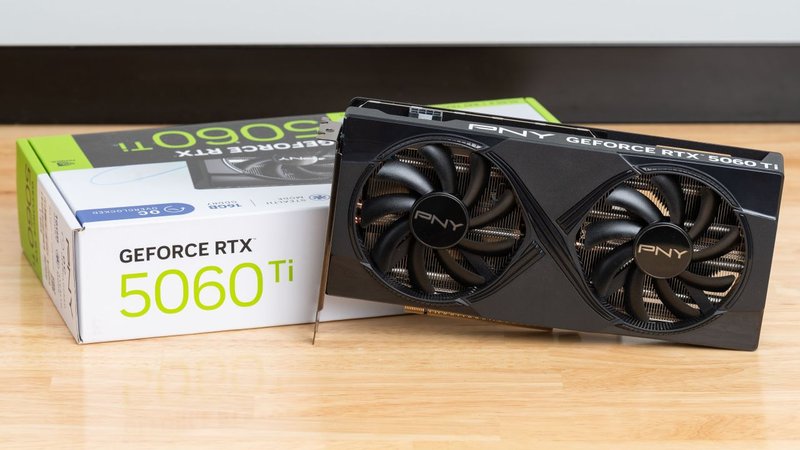
The move is both technical and commercial. Europe has a hunger for industrial AI that struggles with dependence on US hyperscalers. GDPR rules, EDPB guidelines, and growing attention to sovereignty are pushing enterprises and public administrations to evaluate on-premise or proximity cloud deployments. Taiwan, leveraging a vertically integrated manufacturing ecosystem, is trying to fill this gap with turnkey packages spanning GPU choice (often NVIDIA L40S or H100 with NVLink) to the serving platform.
Why Europe doesn’t want to send data “halfway around the world”
This shift taps into a real trend. In manufacturing, healthcare, and finance, on-premise architectures are coming back into focus. It’s not just about privacy: there’s a need to reduce latency, keep medium-term TCO under control, and ensure business continuity even without cloud connectivity. Taiwanese end-to-end solutions can include certified hardware, stacks like vLLM or TensorRT-LLM for optimized inference, and quantization tools to run models even on GPUs with limited VRAM.
The on-premise deployment dilemma: what changes for organizations evaluating local LLMs
For IT decision-makers, the Taiwanese proposal introduces an interesting piece of the puzzle. Having a single contact for hardware and software reduces integration risks, but doesn’t answer the key questions: what is the real cost of hosting a 70-billion-parameter model in-house? What trade-offs between accuracy and speed does INT8 or FP8 quantization impose? And how do you maintain an air-gapped cluster?
AI-RADAR provides an analytical framework on /llm-onpremise to weigh these trade-offs, comparing TCO variables, VRAM requirements, and the real scalability of self-hosted models. VivaTech’s presence signals that the hardware supply chain is trying to bridge the gap between components and ready-to-use solutions, but the final choice always requires a granular examination of inference performance, compatibility with existing frameworks, and true scalability.
Beyond VivaTech: a market seeking equilibrium
Europe has never hidden its ambition for technological autonomy. Interest in Taiwanese solutions isn’t merely about price but about architecture: deploying AI where data lives, without cloud intermediaries. The real challenge will be turning announcements into concrete offerings that speak the language of European system integrators—certifications, SLAs, and integration with Kubernetes platforms and software-defined storage. End-to-end is a starting point, not a finish line, and the contest will be won by the ability to adapt to a continent that wants to decide where and how to run its own models.






💬 Comments (0)
🔒 Log in or register to comment on articles.
No comments yet. Be the first to comment!