Taiwan Accelerates Science Park Expansion Amid TSMC Growth
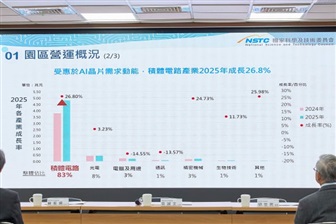
Taiwan has initiated a significant acceleration in the expansion of its science parks, a strategic move driven by the exponential growth of TSMC (Taiwan Semiconductor Manufacturing Company), which is pushing current production capacities to their limits. This initiative underscores the island's central role in the global semiconductor supply chain, a sector fundamental to technological innovation across all domains, from consumer electronics to artificial intelligence.
The decision to expand existing infrastructure reflects the need to support the continuously growing demand for advanced chips. For companies operating in the artificial intelligence sector, particularly those planning on-premise Large Language Models (LLM) deployments, TSMC's production capacity is a critical factor directly influencing the availability and cost of necessary hardware.
The Crucial Role of TSMC and the Demand for Silicio
TSMC is the world's largest contract semiconductor manufacturer, an irreplaceable player in the production of cutting-edge chips that power much of modern technology. From CPUs to the latest generation Graphics Processing Units (GPUs), essential for LLM training and Inference, global reliance on TSMC is profound. Its ability to innovate and produce at scale is a pillar for the advancement of AI.
The demand for high-performance silicio has exploded in recent years, driven by the widespread adoption of artificial intelligence and the need to process ever-increasing volumes of data. This has put pressure on the entire semiconductor industry, making chip availability a limiting factor for many companies seeking to scale their AI operations. The expansion of science parks in Taiwan is a direct response to this pressure, aiming to ensure that production capacity can keep pace with market needs.
Implications for On-Premise AI Infrastructure
For organizations prioritizing on-premise AI deployments, the semiconductor supply chain situation has direct and significant implications. The limited availability of advanced GPUs, largely produced by TSMC, can translate into longer waiting times and higher costs for acquiring the necessary hardware. This directly impacts the Total Cost of Ownership (TCO) and Capital Expenditure (CapEx) for building local data centers or upgrading existing infrastructure.
The choice of a self-hosted infrastructure is often motivated by data sovereignty requirements, regulatory compliance, or the need for air-gapped environments. However, these strategic decisions must contend with the realities of the hardware market. Fluctuations in the supply chain can delay projects, affect scalability, and complicate long-term planning. Understanding silicio production dynamics is therefore crucial for CTOs and infrastructure architects evaluating the best deployment strategies for their AI workloads.
Future Outlook and Deployment Strategies
The expansion of science parks in Taiwan represents a long-term investment to stabilize and increase semiconductor production capacity. While the effects will not be immediate, these initiatives are essential to ensure the sustainability of global technological growth. For businesses, this means that AI infrastructure planning must consider not only immediate technical specifications but also macroeconomic and geopolitical trends that influence resource availability.
Evaluating the trade-offs between on-premise deployments and cloud solutions remains a complex decision. While the cloud offers immediate scalability and flexibility, considerations of TCO, data sovereignty, and control can push towards self-hosted solutions. AI-RADAR offers analytical frameworks on /llm-onpremise to help organizations evaluate these trade-offs, providing tools for an in-depth analysis of the constraints and opportunities associated with each approach. TSMC's ability to meet the global demand for silicio will continue to be a key factor in these strategic decisions.








💬 Comments (0)
🔒 Log in or register to comment on articles.
No comments yet. Be the first to comment!