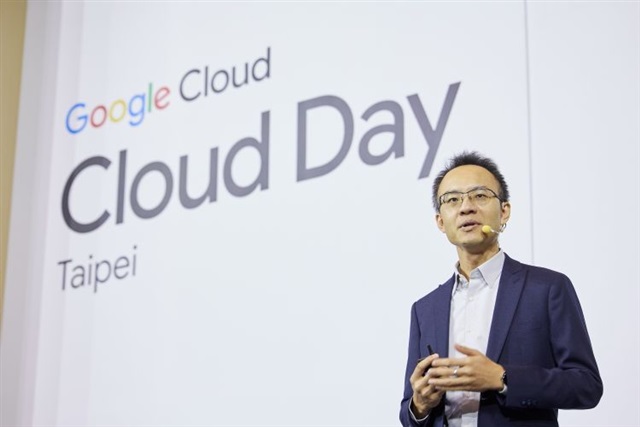
Taiwan is not just the factory that builds the chips powering global AI – it's also an industrial microcosm where artificial intelligence is leaving the labs and entering real production lines. The observation from Harry Lin, head of customer solutions architect at Google Cloud Taiwan, signals a turning point: companies on the island are completing the journey from proof of concept to production deployment, and how they do it could become a template for enterprises worldwide.
Why Taiwan? The density of advanced manufacturing, semiconductors, and digitized supply chains creates an environment where AI isn't an academic exercise but a tool for competitiveness. Moving to production, however, means confronting constraints that can be ignored during experimentation: latency, reliability, operational costs, and, increasingly, control over data location. And this is where the cloud-only model starts showing its structural cracks.
Production-grade AI requires stable, predictable inference, often on locally generated data streams. Pushing everything to the cloud introduces bottlenecks and data transfer costs that, on an island as densely connected as Taiwan yet geopolitically exposed, become immediately visible. It's no accident that several Taiwanese enterprises are evaluating hybrid or on-premise architectures for the inference layer, keeping the cloud for training and orchestration. This choice doesn't stem from TCO alone, but from the need to keep industrial data under their own jurisdiction – a hot topic when commercial partnerships span the globe and privacy regulations multiply.
This shift has implications far beyond the Strait. Taiwan acts as a litmus test for the rest of the world: if moving into production here challenges the centrality of the cloud, the same will happen elsewhere as AI stops being a bet and becomes a business utility. Infrastructure vendors know this; they are multiplying offerings for local deployment, from pre-configured GPU servers to software stacks that simplify self-hosting of LLMs.
Who wins and who loses? The biggest gains go to organizations that embrace a mixed approach early, gaining flexibility and reducing lock-in to a single cloud provider. Hardware makers for inference, from specialized chips to appliances, see an expanding market. For pure cloud providers, the risk is erosion of their grip on the most valuable phases of the AI lifecycle, unless they integrate genuine hybrid solutions.
The Taiwanese lesson is clear: AI in production isn't a linear upgrade from the pilot phase but a paradigm shift in infrastructure. For anyone thinking about how to run LLMs in the enterprise, ignoring these dynamics could mean building on foundations already showing cracks.







💬 Comments (0)
🔒 Log in or register to comment on articles.
No comments yet. Be the first to comment!