New Geopolitical and Technological Horizons
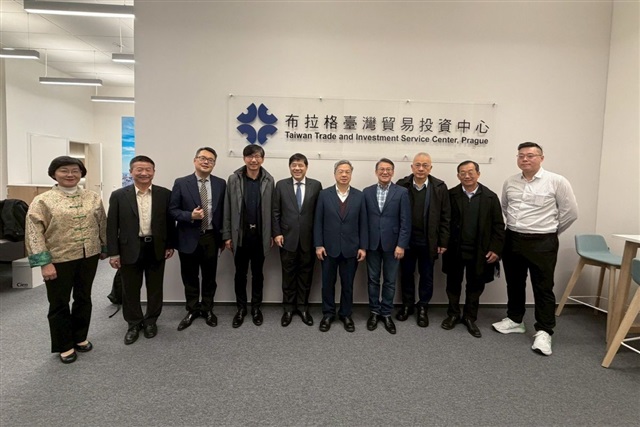
Taiwan is strengthening its ties with Central and Eastern European countries, with a significant expansion of Taiwanese firms into nations like the Czech Republic and Poland. This strategic move, while primarily economic and diplomatic in nature, carries significant implications for the global technological landscape, particularly for the supply chains of critical artificial intelligence hardware.
Taiwan's presence in the semiconductor sector is of strategic importance worldwide. An expansion of its companies into new regions can signify a diversification of sources and increased resilience for the procurement of essential components, a crucial aspect for enterprises aiming to build and manage robust, locally controlled AI infrastructures.
The Context of AI Supply Chains
Reliance on a few geographical sources for the production of silicon and high-performance hardware components has highlighted vulnerabilities in global supply chains. For companies developing and deploying Large Language Models, reliable access to state-of-the-art GPUs, with ample VRAM and high computing capabilities, is fundamental. Models like LLMs require immense computational resources for both training and inference, making hardware availability a critical factor.
The expansion of Taiwanese firms into Central and Eastern Europe could help mitigate some of these risks, offering new avenues for procurement and potentially reducing lead times and logistical costs. This is particularly relevant for organizations that prioritize on-premise deployments, where direct management of hardware and the supply chain is a key element for control and security.
Implications for On-Premise Deployments and Data Sovereignty
For CTOs, DevOps leads, and infrastructure architects, the choice between cloud and on-premise deployments for AI workloads is complex and driven by factors such as Total Cost of Ownership (TCO), data sovereignty, and compliance. A strengthened Taiwanese presence in Europe could facilitate access to specific AI hardware solutions, making self-hosted deployments more attractive.
The ability to acquire quality hardware more easily and with local support can lower the entry barriers for establishing private data centers or air-gapped environments dedicated to LLMs. This is crucial for sectors such as finance, healthcare, or public administration, where the protection of sensitive data and compliance with regulations like GDPR are absolute priorities. AI-RADAR offers analytical frameworks on /llm-onpremise to evaluate these trade-offs, providing tools for informed decisions on on-premise deployments versus cloud alternatives.
Future Prospects and Strategic Considerations
This evolution in relations between Taiwan and Central and Eastern Europe could mark the beginning of a new phase for AI infrastructure development in the region. Greater hardware availability and more localized technical support could stimulate innovation and the creation of internal expertise, reducing reliance on external providers and strengthening technological autonomy.
Deployment decisions for LLMs will continue to be a balance between performance, cost, and control. The expansion of Taiwanese firms into Central and Eastern Europe represents a factor to be carefully considered in long-term AI infrastructure strategies, offering new opportunities to optimize TCO and ensure data sovereignty in a constantly evolving technological landscape.







💬 Comments (0)
🔒 Log in or register to comment on articles.
No comments yet. Be the first to comment!