
Taiwan Boosts AI for Global Competitiveness
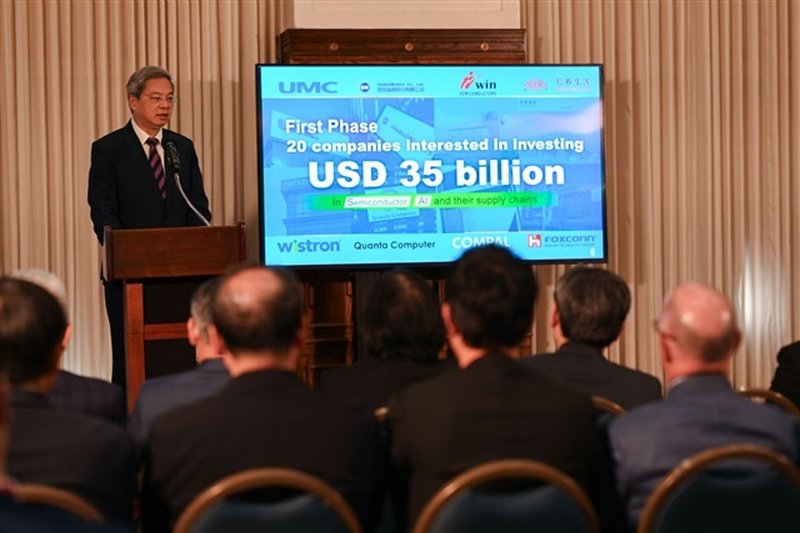
Taiwan has announced its intention to significantly increase investments in artificial intelligence (AI) and strategically important industrial sectors. The primary goal of this initiative is to strengthen the island's competitive position in the global technological and economic landscape. This move reflects a growing worldwide awareness of the transformative role AI plays not only in technological innovation but also in economic security and national sovereignty.
Investment in AI is not limited to the development of algorithms or models alone but encompasses the entire technological pipeline, from basic research to practical implementation. For nations like Taiwan, which are already leaders in silicon and semiconductor manufacturing, enhancing AI capabilities means consolidating a crucial competitive advantage. This strategic approach aims to create a robust ecosystem capable of attracting talent, stimulating research, and fostering the adoption of advanced AI solutions across various industrial sectors.
The Foundations of AI: Infrastructure and Control
The large-scale adoption of artificial intelligence, particularly Large Language Models (LLMs), requires an extremely powerful and resilient computing infrastructure. Decisions regarding the deployment of these technologies are fundamental and often involve an evaluation between cloud and self-hosted solutions. For sensitive or strategic workloads, choosing an on-premise or air-gapped deployment can offer significant advantages in terms of data control, security, and regulatory compliance.
The availability of specialized hardware, such as GPUs with high VRAM and throughput, is a critical factor for the efficient inference and training of complex models. An investment in AI, like the one announced by Taiwan, necessarily implies an enhancement of local infrastructural capabilities, from data centers to cooling systems, to manage energy and computing demands. This ensures that businesses and institutions can develop and utilize AI while maintaining full sovereignty over their digital assets.
Data Sovereignty and TCO: Strategic Considerations
Data sovereignty has become a central concern for governments and companies operating with sensitive information. Implementing on-premise AI solutions allows data to remain within national or corporate boundaries, facilitating compliance with regulations like GDPR and reducing risks associated with external jurisdictions. This aspect is particularly relevant for sectors such as finance, defense, and healthcare, where information protection is non-negotiable.
In parallel, a Total Cost of Ownership (TCO) analysis is essential for evaluating the long-term sustainability of AI investments. While cloud solutions may offer initial flexibility, long-term operational costs, especially for intensive and persistent workloads, can make self-hosted deployment more advantageous. The ability to optimize hardware utilization, directly manage software licenses, and control energy consumption contributes to a more predictable and potentially lower TCO. For those evaluating on-premise deployments, AI-RADAR offers analytical frameworks on /llm-onpremise to assess these trade-offs.
Future Prospects for the AI Ecosystem
Taiwan's initiative is part of a global context where the race for AI innovation is increasingly intense. Investing in this field is not just a matter of technological progress but a strategic decision to ensure economic resilience and leadership in a data-driven era. The creation of a robust and nationally controlled AI ecosystem can generate a cascading effect, stimulating the growth of startups, the development of specialized skills, and the adoption of innovative solutions across all sectors.
These investments underscore the importance of a long-term vision that balances innovation with security and control. A country's ability to autonomously manage its AI infrastructures, from silicon to Large Language Models, will become a decisive factor for its competitiveness and technological independence in the coming decade.








💬 Comments (0)
🔒 Log in or register to comment on articles.
No comments yet. Be the first to comment!