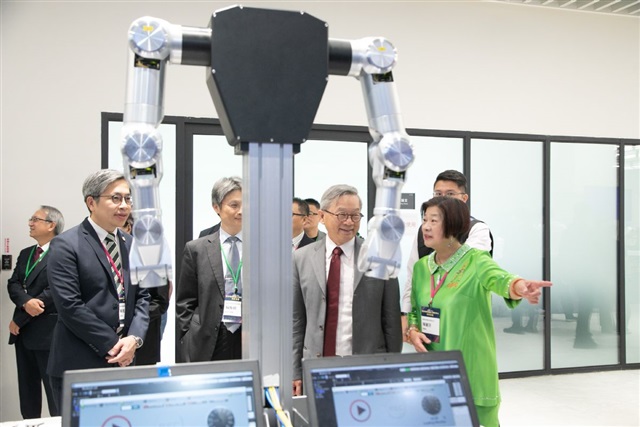
Taiwan Invests in AI Robotics with a New National Center
Taiwan has announced the launch of a national center focused on robotics and artificial intelligence. The primary goal of this initiative is to stimulate the growth of local startups, thereby consolidating the country's technological ecosystem. This strategic move reflects a global trend where nations are heavily investing in developing internal AI capabilities, with a particular focus on creating proprietary solutions and strengthening their technological autonomy.
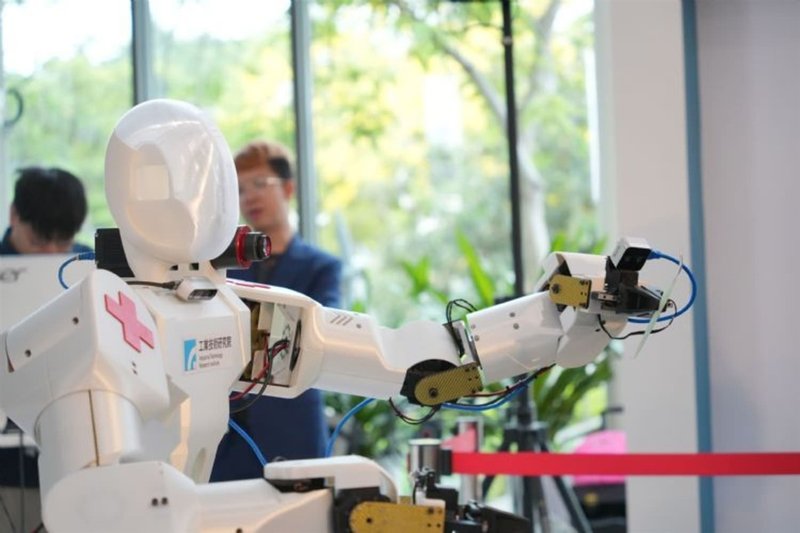
Establishing a hub of excellence for AI robotics aims not only to generate innovation but also to train specialized talent and create fertile ground for the commercialization of new technologies. For companies and institutions operating in the sector, such a center represents a benchmark for research, development, and collaboration, with significant implications for the adoption and deployment of advanced AI solutions.
Infrastructural Implications for AI Robotics
The development of startups in the field of AI robotics entails specific and often demanding infrastructural requirements. Large Language Models (LLMs) and other artificial intelligence models used for robotic perception, planning, and control demand significant computing resources. This includes high-performance GPUs with ample VRAM, essential for both intensive training phases and real-time inference, which is critical for robotic applications operating in dynamic environments.
Deployment decisions, ranging from self-hosted to cloud, become fundamental. A national center promoting "homegrown" development might favor the adoption of on-premise or hybrid infrastructures, ensuring greater control over data and operations. This approach allows for optimizing throughput and reducing latency, crucial factors for robotic systems that require immediate and reliable responses. The choice of hardware, such as NVIDIA A100 or H100 GPUs, and network architecture are key elements to support complex workloads, from simulation to managing robot fleets.
Data Sovereignty and Technological Control
Taiwan's emphasis on creating "homegrown" startups in the AI robotics sector underscores the growing importance of technological sovereignty and data control. For many organizations, particularly those handling sensitive information or operating in regulated sectors, keeping data and AI models within national borders or on controlled infrastructures is a priority. This approach mitigates risks related to compliance, security, and dependence on external providers.
On-premise deployment offers advantages in terms of complete control over the entire AI pipeline, from data collection to model fine-tuning and inference. While it may involve higher initial CapEx, a long-term Total Cost of Ownership (TCO) analysis often reveals that self-hosted solutions can be more cost-effective, especially for consistent and predictable workloads. For those evaluating on-premise deployments, AI-RADAR offers analytical frameworks on /llm-onpremise to assess the trade-offs between costs, performance, and control.
Future Prospects and Impact on Innovation
Taiwan's new national center for AI robotics has the potential to significantly accelerate innovation within the country. By fostering a collaborative environment and providing dedicated resources, the center can help startups overcome initial barriers, from prototyping to large-scale deployment. This strategic investment not only strengthens Taiwan's position in the global technological landscape but also contributes to creating a pool of expertise and technologies that can be applied across various sectors, from manufacturing to healthcare.
The Taiwanese initiative highlights a clear vision for the future of AI and robotics, laying the groundwork for technological autonomy that will become increasingly crucial in an interconnected global economy. The ability to develop, control, and protect one's own AI innovations will be a decisive factor for national competitiveness and security in the decades to come.







💬 Comments (0)
🔒 Log in or register to comment on articles.
No comments yet. Be the first to comment!