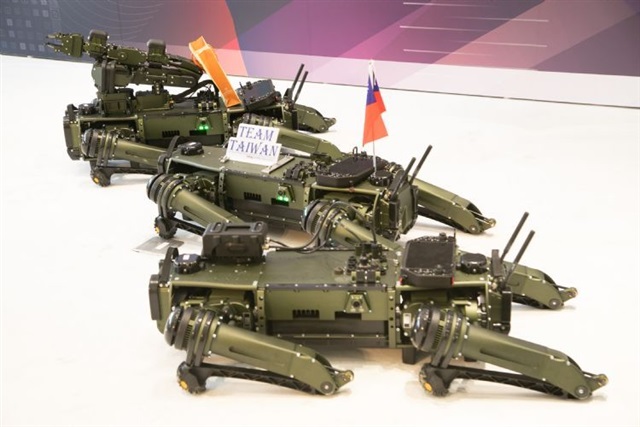
Taiwan Deploys Robotic Dogs for Unmanned Reconnaissance
Taiwan's Ministry of National Defense has announced plans to integrate robotic dogs into its unmanned reconnaissance operations. This move underscores a growing trend in the adoption of autonomous systems for tasks requiring precision, endurance, and the ability to operate in environments potentially hazardous to human personnel. The deployment of advanced robotic platforms represents a significant step towards modernizing defense capabilities, enabling more efficient and secure data collection.
The introduction of these robotic systems reflects the evolution of global military strategies, which increasingly rely on technology to enhance operational effectiveness and reduce risks to troops. Robotic dogs, known for their agility and ability to navigate complex terrains, can be equipped with a variety of sensors, including high-resolution cameras, thermal imagers, and radar. These capabilities make them ideal for surveillance, mapping, and inspection missions in hard-to-reach or observed areas.
Technical Details and Operational Implications
The effectiveness of such systems heavily depends on their autonomy and the robustness of their processing capabilities. For reconnaissance missions, robotic dogs must be able to process data in real-time, make rapid decisions, and securely communicate critical information. This often requires the integration of AI and Machine Learning capabilities directly on board the device, an approach known as "edge computing." Local processing minimizes latency and reduces reliance on external network connections, which could be compromised or nonexistent in operational scenarios.
Data management is another crucial aspect. Sensitive information acquired during reconnaissance missions requires strict security protocols and, in many cases, the assurance of data sovereignty. This implies that data processing, storage, and analysis occur on infrastructure directly controlled by the Ministry, often in air-gapped environments to prevent unauthorized access. The choice of a self-hosted or edge deployment is therefore a priority to ensure compliance and information protection.
Deployment Context and Strategic Considerations
The deployment of robotic systems for defense raises important considerations regarding Total Cost of Ownership (TCO). Beyond the initial investment in hardware, maintenance costs, software updates, personnel training, and support infrastructure management must be considered. For organizations evaluating self-hosted alternatives versus cloud-based solutions, AI-RADAR offers analytical frameworks on /llm-onpremise to assess the trade-offs between initial, operational costs, and the benefits in terms of control and security.
The decision to adopt robotic dogs for reconnaissance reflects a strategy that prioritizes direct control over critical technologies. This approach is particularly relevant for military applications, where reliance on external providers or public cloud infrastructures could introduce vulnerabilities or limit operational flexibility. The ability to customize AI models, perform fine-tuning, and manage the entire data pipeline in a controlled environment is fundamental for rapidly adapting to changing scenarios and emerging threats.
Future Prospects of Automation in Defense
The integration of robotic dogs into Taiwan's armed forces is a clear example of increasing automation in the defense sector. This trend is set to continue, with the development of increasingly autonomous and intelligent robots capable of performing a wider range of tasks, from logistics to tactical support. The main challenge will lie in balancing technological innovation with ethical considerations and the need to maintain significant human control over critical decisions.
Ultimately, the adoption of these robotic platforms not only enhances reconnaissance capabilities but also positions Taiwan at the forefront of using advanced technologies for national security. This type of deployment underscores the importance of robust and secure infrastructures, capable of supporting complex AI workloads in critical contexts, while ensuring data sovereignty and integrity.









💬 Comments (0)
🔒 Log in or register to comment on articles.
No comments yet. Be the first to comment!