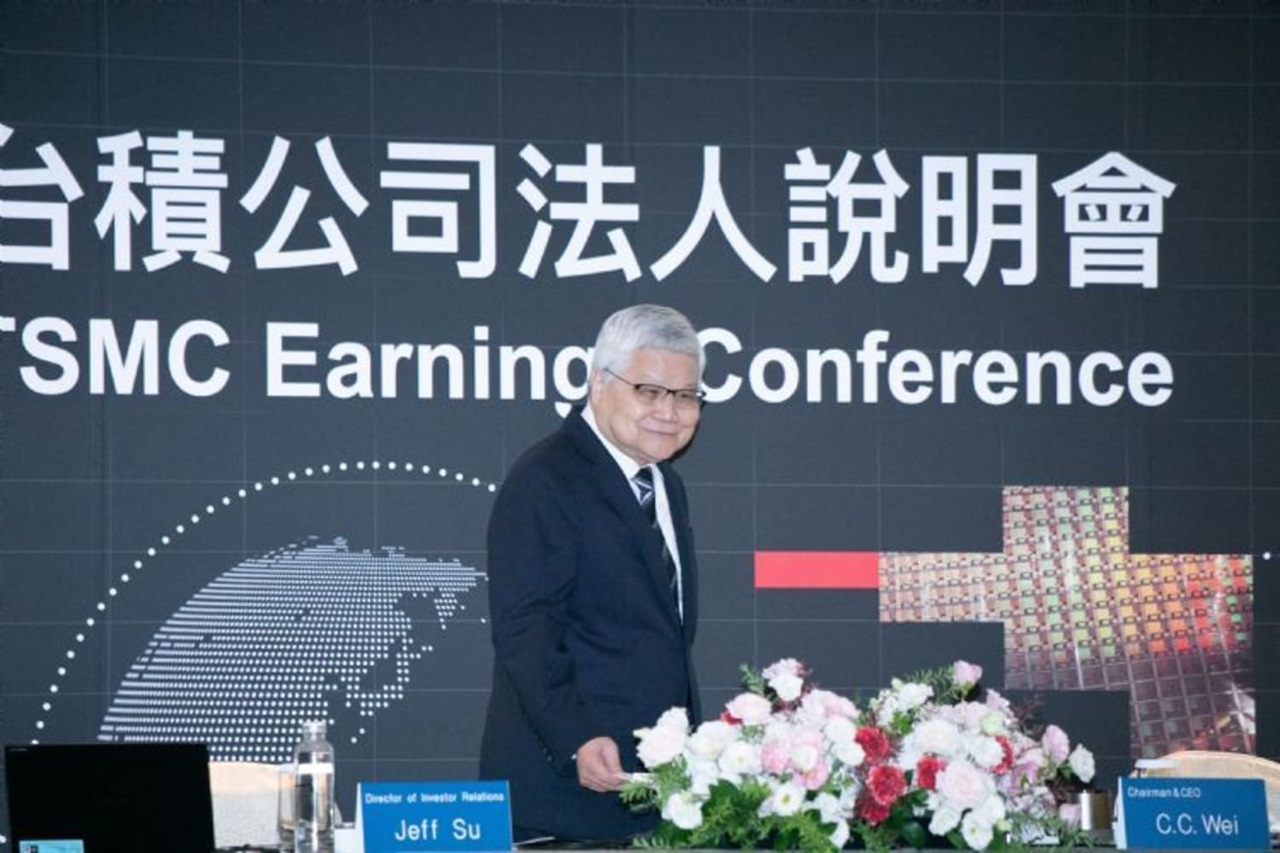
Taiwan's government recently gave political backing to TSMC's expansion in the United States, while stressing that the country's leadership in advanced chip manufacturing remains firmly at home. A classic balancing act that, seen from the perspective of those designing, buying, and running on-premise compute infrastructure for AI workloads, takes on very practical dimensions: supply contracts, lead times, total cost of ownership, and dependence on single logistical nodes.
The news, reported by DIGITIMES, is thin on operational details but thick with systemic meaning. TSMC manufactures the chips that power almost all top-performing AI accelerators: from NVIDIA H100s and upcoming B100s to AMD Instinct GPUs and the custom silicon of hyperscalers. When a company decides to bring a large language model onto bare-metal servers in-house, the journey of those GPUs and their interposers almost always runs through Taiwan. Having some production, even on slightly less advanced nodes, on US soil introduces a buffer against extreme geopolitical events, but it won't simplify life for procurement managers: advanced packaging technologies – CoWoS, InFO – and pilot lots for 3nm and 2nm processes remain concentrated in Taiwan, creating a gravitational center that no overseas fab can replicate quickly.
Behind Taipei's statement, a strategic repositioning looms that speaks directly to enterprises managing self-hosted training and inference workloads. Two lines of tension intersect. On one side, the demand for on-premise compute is driven by the need to keep data under direct control – for compliance, latency, or sheer data sovereignty. On the other, the supply of advanced silicon is a geographically concentrated oligopoly that turns every deployment decision into a bet on the stability of trade routes and the absence of escalation in the Taiwan Strait. Government endorsement of TSMC's expansion in Arizona (and perhaps soon in Japan) is not charity: it is an insurance policy to keep the global customer base locked in, while preserving the unreproducible tech edge of the Hsinchu cluster.
For CTOs setting up AI labs, the signal is twofold. First: additional US-based production capacity could, in the medium term, ease the pressure on mid-to-high-end GPU deliveries for the enterprise market, cutting the waiting times that currently throttle many self-hosting projects. Second: that capacity will likely be earmarked for large volumes and multi-year contracts, leaving smaller buyers to fight for the scraps of wafer starts that remain constrained. TCO calculations, already complicated by energy costs and the maintenance of high-density racks, will now have to factor in an availability premium: how much is it worth to have 32 GPUs in six months rather than twelve?
Seen through this lens, the affair reveals a structural shift: the chip is no longer just a technical commodity, but a quasi-diplomatic asset. Anyone doing on-premise deployment today must think not only in teraflops and memory bandwidth, but also about the physical origin of the silicon and the resilience of the supply chain. Once the exclusive domain of telecoms and defense, this concern is spreading to banks, manufacturing, and healthcare – anywhere data cannot cross uncontrolled borders. Taiwan knows this, and by backing TSMC's internationalization without ceding a nanometer of leadership, it is writing the rules for the next phase of the AI market.






💬 Comments (0)
🔒 Log in or register to comment on articles.
No comments yet. Be the first to comment!