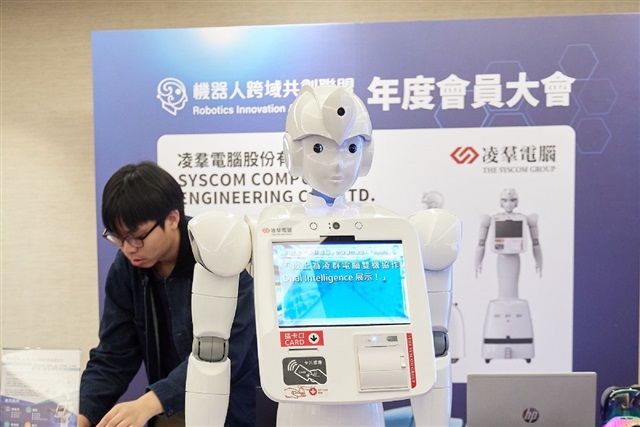
Taiwan’s government has turned the spotlight on care robots, as reported by DIGITIMES, against a backdrop of understaffed nursing homes making local headlines. The push is no technological whim: Taiwan is one of the world’s fastest-aging societies, and its healthcare workforce is struggling to keep up. The administration sees robotics as a lifeline, but the regulatory framework lags behind, tangled in two critical knots — civil liability in the event of an accident, and the protection of the health data these machines will collect.
Precisely this legal vacuum is triggering an unexpected side effect: it is steering the sector toward AI that runs locally, directly on the device, and away — at least at the design stage — from purely cloud-based solutions. The reason is straightforward. If a care robot sends video streams, physiological traces, or voice recordings to a remote server for inference, cross-border data flows arise that complicate any attempt at compliance, even future compliance. With no clear rules in place, manufacturers prefer to minimize risk by keeping sensitive data inside the machine’s physical perimeter, processing them with locally run AI models.
This preference, almost imposed by legal caution, is already reshaping the technical specifications of eldercare robotics. Onboard hardware becomes strategic: system integrators are beginning to seek low-power inference accelerators — embedded GPUs, dedicated NPUs, even FPGAs — capable of running compact LLMs or neural networks for activity recognition, fall detection, and behavioral anomaly spotting. This isn’t about brute-force data-center performance; it’s about thermal efficiency, predictable latency, and, above all, full control over data residency. The total cost of ownership (TCO) shifts away from the cloud subscription model and onto hardware CapEx, a calculation that many care-facility managers find more predictable and easier to justify to privacy auditors.
There is a second-order lesson that reaches beyond Taiwan. The demographic crisis and staffing shortages will push other jurisdictions to open the door to care robots, and with them will come the same legal dilemmas. The most likely outcome is not only a rush to write new laws but a parallel rush to equip robots with enough on-device computing power to avoid depending on external value chains every time a piece of personal data is processed. It’s a structural signal: data sovereignty, so far debated mainly in enterprise data centers, is about to move into the mechanical bodies that inhabit hospital corridors and living rooms.
For those designing or evaluating AI deployment solutions in health and care settings, the Taiwanese case makes plain that the real trade-off won’t be between cloud and on-premise at the traditional IT-infrastructure level, but between on-device inference and dependence on remote servers. Whoever today bets on edge-optimized models — with aggressive quantization, efficient architectures, and local orchestration tools — is preparing for a landscape where still-uncertain compliance requirements will reward those who can prove they never moved data outside their control. Not a bet on the future, but a design choice that the legal void is already endorsing.








💬 Comments (0)
🔒 Log in or register to comment on articles.
No comments yet. Be the first to comment!