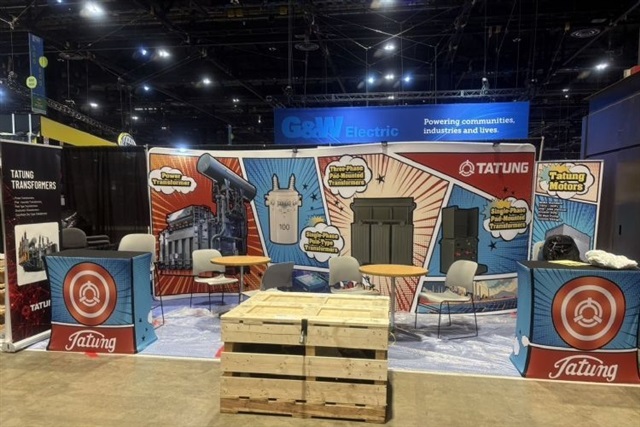
Tatung and the Expansion in North American Renewables
Tatung, a key player in the manufacturing sector, is strengthening its presence in the North American renewable energy market. The company has announced new contracts for transformer supply and a strategy focused on mass production, solidifying its position in a rapidly growing sector. This expansion is crucial for supporting the region's energy transition, providing essential components for energy distribution and management.
Tatung's push towards large-scale transformer production responds to increasing demand, fueled by investments in wind farms, solar plants, and other clean energy infrastructures. A company's ability to meet such needs with efficient deliveries is an indicator of its resilience and strategic importance in the global energy landscape.
The Role of Energy Infrastructure for On-Premise AI
While Tatung's announcement specifically concerns electrical transformers for renewables, it highlights a fundamental aspect for any large-scale technological infrastructure: the need for robust and reliable power supply. This is particularly true for artificial intelligence deployments, especially Large Language Models (LLMs), which require a significant amount of energy for inference and training.
Modern GPUs, the beating heart of AI workloads, are notoriously power-hungry. Their efficient operation depends not only on the available power but also on the stability of the electrical grid and the infrastructure's ability to manage consumption peaks and ensure continuous power. Transformers, in this context, are critical components that ensure the safe and efficient conversion and distribution of energy within data centers and self-hosted facilities.
Implications for On-Premise Deployments
For organizations evaluating on-premise LLM deployments, the availability and quality of energy infrastructure represent a primary constraint. Choosing to host AI workloads locally, rather than relying on the cloud, implies direct management of all infrastructural aspects, including power. Inadequate electrical infrastructure can lead to higher operational costs, unforeseen downtime, and limitations in the scalability of AI operations.
The Total Cost of Ownership (TCO) of an on-premise deployment is strongly influenced not only by compute hardware (GPUs, servers) but also by costs associated with energy, cooling, and physical infrastructure maintenance. The ability to access stable and, ideally, sustainable energy sources becomes a distinguishing factor for companies aiming for data sovereignty and complete control over their AI stacks. For those evaluating on-premise deployments, analytical frameworks are available at /llm-onpremise to assess the trade-offs between costs, performance, and infrastructure requirements.
Future Prospects and Sustainability in AI
Tatung's expansion in the North American renewable energy sector aligns with a broader trend towards sustainability in the technology industry. Data centers, and particularly those dedicated to AI, are among the largest energy consumers. Integrating renewable sources into the energy supply of these facilities is not only a matter of environmental responsibility but also of long-term TCO optimization and regulatory compliance.
The availability of modern and resilient energy infrastructures, supported by components like Tatung's transformers, is fundamental to enabling the next generation of on-premise AI workloads. Ensuring a stable and scalable power supply, possibly from clean sources, will be a key factor for companies aiming to build and manage their artificial intelligence stacks efficiently, securely, and sustainably, maintaining control over their data and operations.






💬 Comments (0)
🔒 Log in or register to comment on articles.
No comments yet. Be the first to comment!