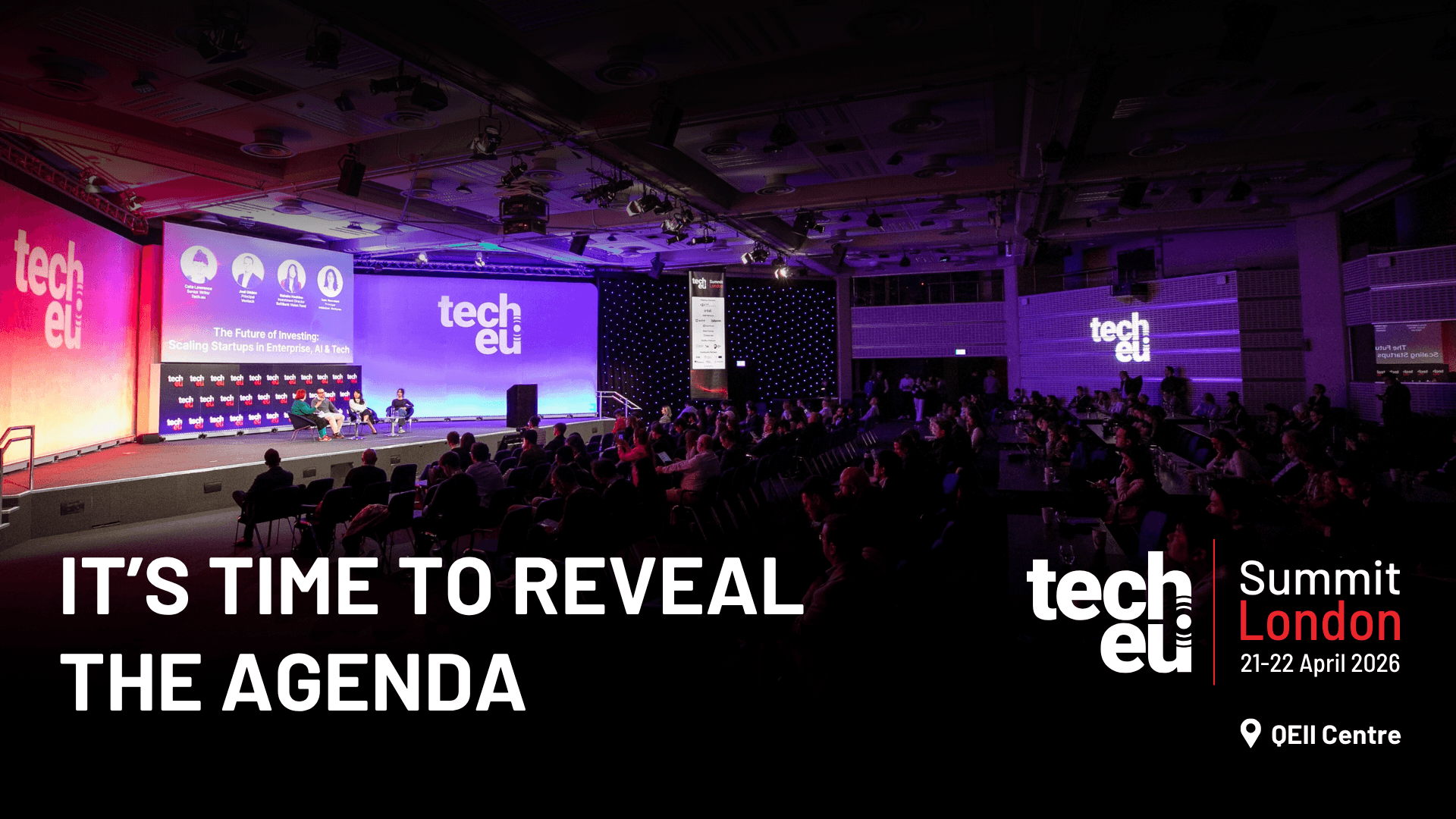
The Future of Innovation at Tech.eu Summit London 2026
The Tech.eu Summit London 2026 is set to welcome the European tech community on April 21st and 22nd at the Queen Elizabeth II Centre in London. The event, poised to be one of the most significant gatherings in the continent's tech calendar, has recently unveiled its full agenda, outlining a rich program of sessions and debates featuring prominent industry figures. Participants include representatives from influential organizations such as OpenAI, NATO Innovation Fund, Morgan Stanley, Mastercard, Notion Capital, and the Competition and Markets Authority.
The summit will focus on four main thematic pillars: artificial intelligence (AI), fintech, deeptech, and climate tech. These topics will be explored through a pragmatic lens, analyzing execution dynamics, market realities, and the strategic decisions shaping the future of European technology in 2026. The approach aims to provide attendees with a deep understanding of the challenges and opportunities facing the sector.
Artificial Intelligence: From Hype to Commercial Reality
Day one of the summit will open with a fireside chat dedicated to value creation in the AI stack, featuring Wulfie Bain, International Applied AI Lead for Startups at OpenAI, and Payton Dobbs of Hoxton Ventures. This session will examine the market's evolution from initial hype to commercial reality, focusing on areas where builders and developers are seeing real momentum. For decision-makers evaluating self-hosted Large Language Models (LLM) deployments, understanding where value is generated in the AI stack is crucial for optimizing Total Cost of Ownership (TCO) and ensuring data sovereignty.
Further sessions will delve into AI applications beyond software, exploring its impact in physical industries and its role in rewriting enterprise software. Discussions will also cover how early-stage AI startups can effectively compete against larger players, a relevant topic for those choosing between proprietary and Open Source solutions. The discussion on AI hardware, scheduled for day two, will be particularly interesting for infrastructure architects who must balance VRAM, throughput, and latency requirements for inference and training workloads.
Markets, Investments, and Regulation: Europe's Challenges
On the investment front, a panel will address strategies for building and financing climate and deeptech companies at scale. Sanghamitra Karra, Global Co-Head of Inclusive and Sustainable Ventures at Morgan Stanley, will offer a perspective on impact investing across the healthcare and environmental sectors. The fintech track will examine why Europe represents a particularly complex yet defensible market for the growth of financial technology businesses. Day one will conclude with a debate on Europe's ability to win the "AI race," featuring Kamil Mieczakowski, General Partner at Notion Capital, alongside voices from venture capital and regulatory advocacy.
Day two will open with an analysis of the UK fintech landscape, followed by a session on AI in healthtech. Axel Kalinowski of the London Stock Exchange Group will present the role of European capital markets in supporting tech growth. Subsequently, Jessica Lennard, Chief Strategy and External Affairs Officer at the Competition and Markets Authority, will discuss competition as a driver of scaling, setting the stage for debates on regulation, AI, and the rules of growth. These topics are fundamental for companies operating in air-gapped environments or requiring compliance and data sovereignty.
Autonomous AI and the Future of Enterprises
The afternoon of day two will focus on "agentic commerce," exploring the implications of AI when it begins to transact autonomously. A panel, moderated by Alexandra Edmonds, Vice President of Emerging Fin Tech & Agentic AI, Startup Investments & Partnerships at Mastercard, will analyze this emerging scenario. AI's ability to operate independently raises critical questions regarding security, auditability, and control, aspects that often drive organizations towards self-hosted solutions to maintain full mastery over their systems.
Other sessions will cover exit dynamics, how the next generation of "AI-native" startups can build defensible businesses, the future of creative production in an "AI-first" world, and a closing panel on deeptech founders scaling across Europe in quantum computing, autonomous systems, and AI hardware. For those evaluating on-premise deployments, AI-RADAR offers analytical frameworks on /llm-onpremise to assess trade-offs between control, performance, and TCO, providing tools for informed decisions in a rapidly evolving technological landscape. The event thus positions itself as a benchmark for understanding future directions in innovation and strategies for navigating this complex landscape.




💬 Comments (0)
🔒 Log in or register to comment on articles.
No comments yet. Be the first to comment!