Tenstorrent Launches Galaxy Blackhole AI Servers for On-Premise Deployments
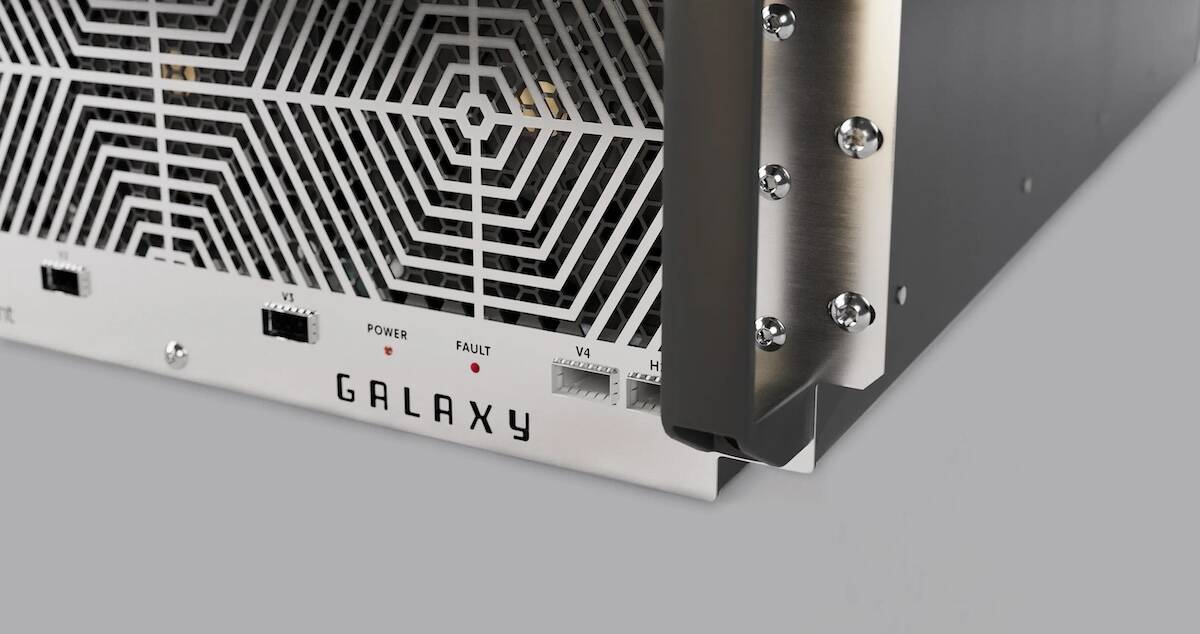
Tenstorrent has announced the general availability of its Galaxy Blackhole AI compute platform, an offering strategically positioned in the growing market for dedicated artificial intelligence hardware solutions. The company aims to provide robust infrastructure for AI workloads, addressing the needs of organizations seeking high performance and control outside traditional cloud environments.
The Galaxy Blackhole platform stands out for its integration of 32 Blackhole accelerators, all based on the RISC-V architecture. These systems are housed in a 6U chassis, a configuration that balances compute density and physical footprint within a data center. Priced at $110,000, Tenstorrent offers a CapEx solution for companies intending to invest in proprietary AI infrastructure.
Technical and Architectural Details
At the core of the Galaxy Blackhole platform are its 32 accelerators, specifically designed to optimize inference operations and, potentially, the training of Large Language Models (LLM) and other AI models. The adoption of the RISC-V architecture represents a significant choice, as this open and flexible instruction set architecture (ISA) is gaining traction as an alternative to dominant proprietary architectures in the semiconductor industry.
The 6U form factor of the chassis indicates a solution designed for integration into standard data center racks, offering considerable compute density. This configuration is crucial for companies that need to maximize space and power utilization within their self-hosted infrastructures. The combination of an open architecture like RISC-V with a high number of accelerators suggests an approach aimed at providing flexibility and scalable performance for various AI applications.
Implications for On-Premise Deployments
The availability of systems like Tenstorrent's Galaxy Blackhole is particularly relevant for organizations prioritizing on-premise deployments. The initial investment of $110,000 for a 6U system fits into a Total Cost of Ownership (TCO) logic that considers not only the purchase cost but also long-term operational expenses, data sovereignty, and regulatory compliance.
Self-hosted solutions offer distinct advantages in terms of complete control over infrastructure, security, and the management of sensitive data—crucial aspects for sectors such as finance, healthcare, or public administration. The ability to operate in air-gapped environments or with specific data residency requirements makes these platforms a strategic alternative to consuming cloud-based AI resources. For those evaluating on-premise deployments, there are significant trade-offs between CapEx and OpEx, as well as between flexibility and control, which AI-RADAR explores in detail at /llm-onpremise.
Outlook and Market Positioning
Tenstorrent's entry with the Galaxy Blackhole platform enriches the landscape of AI hardware solutions, offering CTOs and infrastructure architects additional options for building their artificial intelligence pipelines. The choice of RISC-V, while still maturing compared to other architectures, positions Tenstorrent as an innovative player, potentially capable of offering greater transparency and customization in the long term.
This offering is aimed at those seeking not only computing power but also a high degree of customization and control over the entire technology stack. The ability to directly manage the underlying hardware and software can translate into specific optimizations for unique workloads and greater operational resilience. The Galaxy Blackhole thus represents a concrete proposal for companies wishing to bring AI within their infrastructural boundaries, maintaining full control over their digital assets.





💬 Comments (0)
🔒 Log in or register to comment on articles.
No comments yet. Be the first to comment!