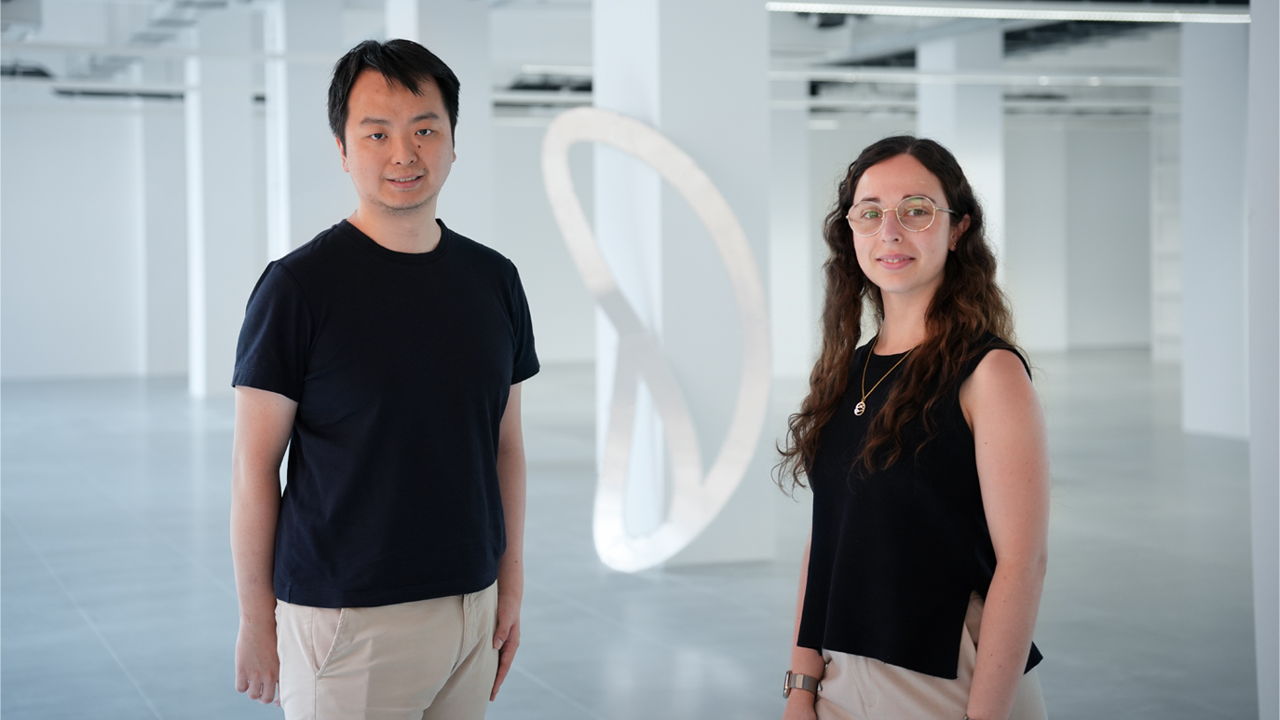
Theker Raises $85 Million for Industrial AI Robotics
Barcelona-based AI robotics startup Theker has announced the closing of an $85 million Series A funding round. According to the company, this represents the largest Series A round ever recorded in Europe for the robotics sector. The investment was led by US VC firm CRV, with participation from prominent investors including Samsung, LVMH, Cathay Innovation, 20VC, and Henkel Ventures. Existing investors Inditex and Kobo Ventures also contributed to the round.
This significant investment comes less than a year after Theker, founded in 2022, secured $18 million in seed funding. The rapid succession of financing rounds underscores the market's interest in the innovative solutions the company offers in advanced robotics, highlighting a growing confidence in the potential of AI-driven robotics to transform industrial processes.
"AI-Native" Robotics for Dynamic Environments
Theker aims to redefine the industrial robotics landscape by developing a new category of "AI-native" generalist robots, specifically designed to operate in complex industrial environments. Unlike traditional industrial robots, which are often rigid, task-specific, and costly to reconfigure, Theker's solutions are autonomous and capable of adapting in real-time to changing contexts. This adaptability is crucial for sectors such as logistics, retail, food and beverage, and waste management, where operational conditions can vary rapidly.
The "AI-native" approach implies that artificial intelligence is deeply integrated into the design and operation of the robots, allowing them to learn and react dynamically. For companies evaluating the adoption of such technologies, this translates into a need for robust infrastructures capable of supporting AI inference at the edge or directly on-premise. Managing a proprietary AI stack for robotics requires careful planning in terms of hardware, VRAM, latency, and throughput, which are fundamental elements for ensuring smooth and responsive operations in often critical industrial settings.
Deployment Strategies and Market Impact
The funds raised will be utilized by Theker to accelerate deployments with industrial operators globally. The objective is to address the growing labor shortages in key sectors like manufacturing and retail by offering robotic solutions that enhance efficiency and operational flexibility. Concurrently, the company intends to deepen its proprietary AI and robotics stack, investing further in research and development to improve its systems' capabilities and maintain a competitive edge.
Team expansion is another pillar of the strategy, with hires planned across software, electronics, mechanical engineering, and deployment operations. For companies considering the integration of advanced robotics, the choice between self-hosted and cloud-based solutions for AI management and orchestration represents a significant trade-off. Factors such as data sovereignty, compliance requirements, and Total Cost of Ownership (TCO) become central to the decision, especially in industrial contexts where security and reliability are paramount and reliance on external services can present risks.
Future Outlook and Infrastructure Challenges
Carla Gómez Cano, co-founder of Theker, emphasized how this funding round accelerates the company's vision: making intelligent, adaptable robotics a practical reality for industrial operations on a global scale. This vision implies not only the development of advanced robots but also the creation of an infrastructural ecosystem capable of supporting them efficiently and securely.
For CTOs and infrastructure architects, the adoption of AI-native robotics in industrial environments raises critical questions regarding local computing capacity, the management of data generated by robots, and integration with existing IT/OT systems. The need to process large volumes of data in real-time, often in air-gapped environments or with limited connectivity, drives the demand for on-premise or edge computing solutions. AI-RADAR offers analytical frameworks on /llm-onpremise to evaluate the trade-offs between different deployment architectures, helping to navigate the complexities related to performance, costs, and control, which are essential elements for the success of such implementations.






💬 Comments (0)
🔒 Log in or register to comment on articles.
No comments yet. Be the first to comment!