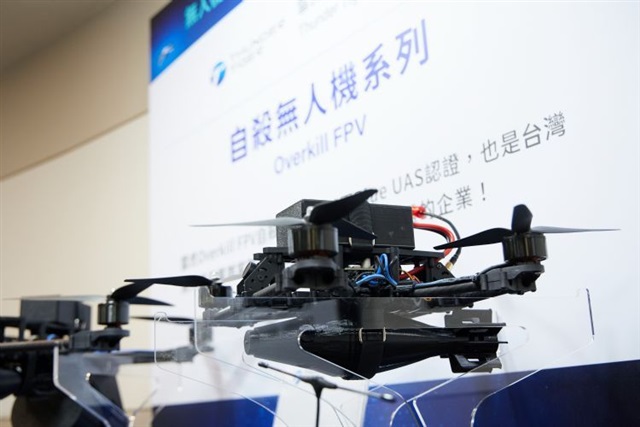
Thunder Tiger and the Drone Dominance Program
Taiwanese company Thunder Tiger recently announced a significant step forward, advancing to Phase II of the US 'Drone Dominance' program. This development comes at a time of increasing global scrutiny over technology supply chains, particularly those involving complex geopolitical actors. Thunder Tiger's participation in such a strategic defense program highlights its position as a key supplier in the drone technology sector.
Concurrently, the company has firmly rejected allegations regarding alleged ties of its production supply chain to China. Supply chain transparency and integrity have become absolute priorities for governments and organizations operating in sensitive sectors, where national security and technological sovereignty are at stake. A supplier's ability to guarantee the origin and reliability of its components is a decisive factor for access to high-profile programs.
Supply Chain Security and Data Sovereignty
The debate surrounding Thunder Tiger's supply chain reflects a broader concern in the technology sector: the security and provenance of hardware components. For companies and institutions considering the deployment of Large Language Models (LLM) and other artificial intelligence solutions, ensuring that the hardware used is free from vulnerabilities or external influences is crucial. This is particularly true for workloads handling sensitive or strategic data, where data sovereignty and regulatory compliance are non-negotiable requirements.
Reliance on complex global supply chains can introduce significant risks, from security compromises to potential supply disruptions. For technical decision-makers, evaluating these risks is an integral part of analyzing the Total Cost of Ownership (TCO) of an AI infrastructure. TCO is not limited to initial and operational costs but also includes implicit costs related to geopolitical, security, and compliance risks.
Implications for On-Premise Deployments
The context highlighted by the Thunder Tiger case has direct implications for on-premise deployment strategies. Organizations that choose self-hosted solutions for their LLMs and AI workloads often do so precisely to maximize control over hardware, software, and data. In air-gapped environments or those with stringent security requirements, the provenance of every single component, from the silicon of GPUs to bare metal servers, becomes a critical factor.
An company's ability to demonstrate a robust and reliable supply chain is a significant competitive advantage. For CTOs and infrastructure architects, the choice of hardware suppliers is not just a matter of performance or price, but also of trust and supply chain resilience. AI-RADAR offers analytical frameworks on /llm-onpremise to evaluate these complex trade-offs, helping to balance performance needs with security, sovereignty, and control requirements.
Future Perspectives in Technological Control
Thunder Tiger's progress in the 'Drone Dominance' program and its stance on the supply chain underscore a global trend towards greater scrutiny and control over strategic technologies. In an era where AI and autonomous systems are redefining security and competitiveness, a country's or company's ability to protect its innovation and supply chains is fundamental. This scenario pushes companies to invest in diversification and resilience, reducing dependence on single regions or suppliers.
For the AI sector, this means a growing emphasis on supply chain transparency for inference and training hardware, and a preference for solutions that offer maximum control at the infrastructure level. The decision of a company like Thunder Tiger to openly address supply chain issues is indicative of a landscape where trust and security have become as valuable currencies as technological innovation itself.




💬 Comments (0)
🔒 Log in or register to comment on articles.
No comments yet. Be the first to comment!