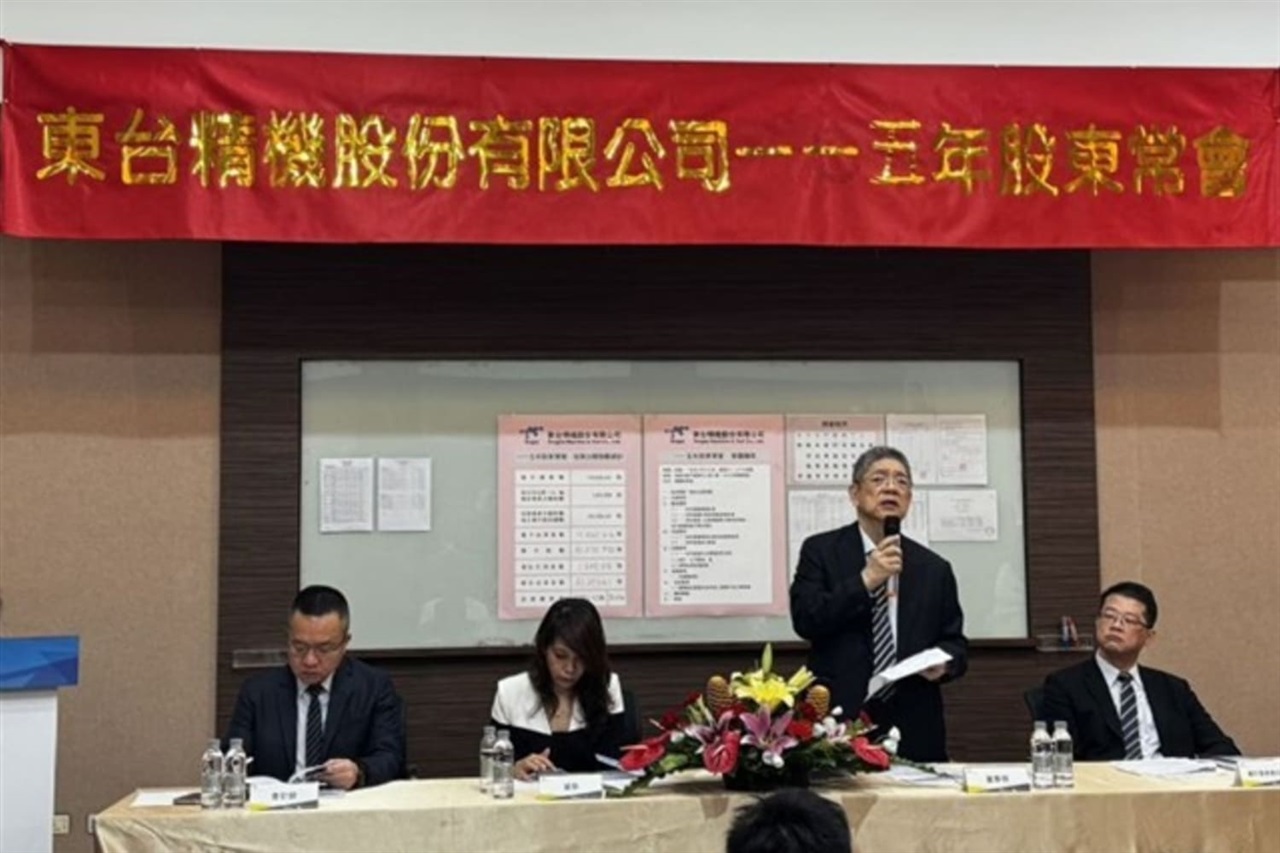
Tongtai is not a name that appears in data centers or language model roadmaps. Yet the Taichung-based company, specialized for decades in precision machine tools, has just announced a strategic shift that deserves attention from those building local AI stacks. Under a new board of directors, the group is betting heavily on three axes: aerospace, AI, and semiconductors.
The news, reported exclusively by DIGITIMES, is not a simple industrial diversification. It’s a symptom of a broader movement: as demand for inference and training hardware intensifies, the supply chain is expanding to include ultra-precision mechanical players. And this has direct implications for those designing on-premise deployments, where every component — from server chassis to cooling systems — affects total cost of ownership and infrastructure reliability.
From milling machines to wafers: the precision AI needs
Tongtai is known for machining centers, lathes, and drilling machines used in heavy industry. But the same ability to work materials with micrometer tolerances is becoming indispensable for high-density server components, GPU enclosures, and chip production equipment. Entering the semiconductor space means building tools for lithography, metrology, or advanced packaging. For AI, the company can supply critical parts for liquid cooling systems, reinforced frames, and precision connectors — all elements that, in an on-premise cluster with dozens of GPUs, make the difference between acceptable MTBF and constant downtime.
This expansion is not a bolt from the blue. Over the past two years, several Asian mechanical manufacturers have retooled production lines to catch the growth of the AI ecosystem. Tongtai’s competitive edge lies in vertical metalworking know-how that pure IT companies lack, potentially translating into cheaper, more customizable components for system integrators.
Why the mechanical supply chain matters for on-premise deployment
Those who decide to bring large language models behind the corporate firewall face choices that go far beyond the GPU board. The availability of quality mechanical parts — anti-vibration brackets, hot-swap rails, custom heat sinks — determines assembly times and cluster scalability. If a company like Tongtai ramps up production of these items, the entire supply chain becomes more elastic and less dependent on a few specialized vendors. In a context of sanctions, export controls, and logistical crises, this diversification is an asset for anyone wanting to maintain sovereignty over their data and workloads.
Moreover, a deeper push into semiconductors touches the core problem: the shortage of advanced chips. Although Tongtai does not produce silicon, its machinery can speed up the setup of packaging or testing fabs, easing downstream bottlenecks. For the IT manager calculating the TCO of a self-hosted infrastructure, greater production capacity for chips and components means more stable prices in the medium term and reliable delivery times.
Cooling and density: the hidden role of precision machining
Latest-generation inference servers push power densities close to 2 kW per rack unit. Without efficient cooling, GPU VRAM throttles and component lifespan drops. Here, precision mechanics come into play with cold plates, manifolds, and fittings that must withstand high pressures and extreme thermal cycles. Tongtai’s aerospace experience — where materials face far greater stress — can be transferred directly to the design of these subsystems, lowering the cost of liquid cooling kits and making them accessible even to mid-sized deployers.
Beyond the news: what the Tongtai case signals
The Taiwanese manufacturer’s pivot is an early indicator of how AI hardware is reshaping traditional industrial chains. We are no longer talking only about GPUs, but about a mechanical and thermal ecosystem that can tip the scales in the race to localize inference. For industry insiders, monitoring these transformations means anticipating availability, costs, and innovations that will make on-premise deployment cheaper and more resilient. As companies assess whether to bring their LLMs in-house, the answer may depend, in part, on those who until yesterday built machine tools.





💬 Comments (0)
🔒 Log in or register to comment on articles.
No comments yet. Be the first to comment!