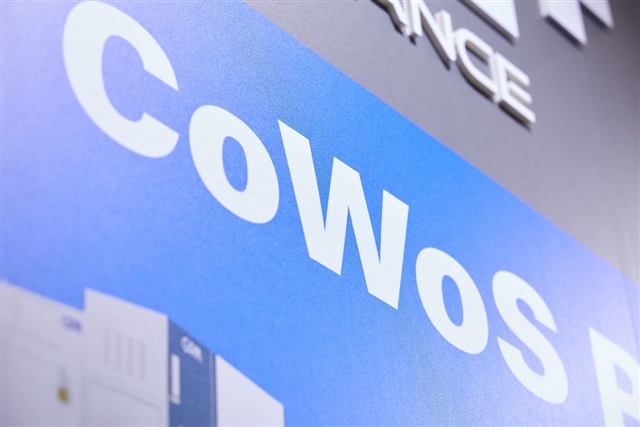
The packaging of artificial intelligence shows no signs of slowing. According to a report published today by DIGITIMES, TSMC is on track to reach an annual production capacity of at least 200,000 wafers by 2027 for its advanced CoWoS (Chip-on-Wafer-on-Substrate) packaging technology. The number points to an unprecedented industrial expansion and signals the profound transformation the semiconductor sector is undergoing to feed the colossal computational hunger of Large Language Models and generative AI.
CoWoS is no ordinary assembly step. It enables logic chips—such as Nvidia GPUs—to be integrated with stacks of high-bandwidth memory (HBM) on a silicon interposer, cutting latency and power consumption while multiplying bandwidth. It is the physical foundation for chips like Nvidia’s H100 and B200, AMD’s offerings, and the custom accelerators designed by cloud operators. Without CoWoS, inference and training performance would plummet, and energy efficiency would regress by a generation.
The urgency is undeniable: over the past two years, TSMC’s CoWoS capacity has been the main bottleneck for GPU availability in the enterprise market. Cloud providers booked entire production lines, while organizations evaluating on-premise deployments faced absurd lead times and a Total Cost of Ownership that was often crippling. Could 200,000 wafers change the equation? Yes, but perhaps not in the way one might hope.
Doubling—or more—the output means TSMC and its customers are betting on AI demand that keeps growing through the end of the decade. That doesn’t automatically translate into a democratization of on-premise hardware, however. Hyperscalers like AWS, Microsoft, and Google have repeatedly shown they have the capital and volume commitments to absorb any new capacity, locking up multi-year contracts. The demand side remains oligopolistic, and the CoWoS expansion might simply let them accelerate datacenter build-outs, rather than opening breathing room for local deployers.
There is, though, a deeper structural implication. Such a large supply of advanced packaging could lower the barrier for new AI chip makers. Startups and companies developing specialized accelerators—perhaps optimized for specific workloads or for data-sovereignty contexts—might finally find production slots that are non-existent today. If access to CoWoS broadens, the hardware landscape for on-premise inference could diversify in a healthy way, offering alternatives to dominant Nvidia systems and reducing single-vendor dependency. That’s a scenario public administrations and regulated industries watch with keen interest, because it would multiply the options for building self-hosted architectures compliant with GDPR and data residency requirements.
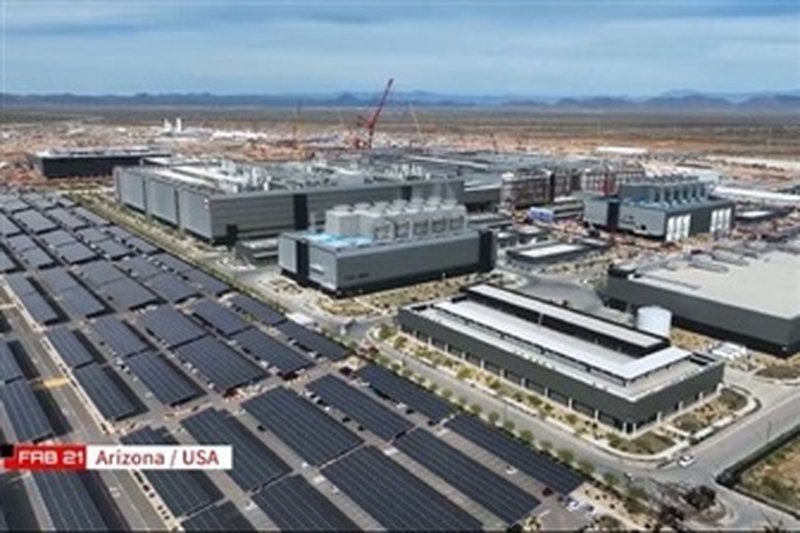
The downside is geographic concentration. TSMC remains the only provider of CoWoS at such scale. A 200,000-wafer capacity concentrated in one region amplifies systemic risk for global supply chains. For those factoring sovereignty and business continuity into their equations, the reliance on a single manufacturing node may encourage exploration of alternative packaging technologies or supplier diversification (Samsung and Intel are investing in similar solutions, but on a smaller scale). In any case, the report confirms that the AI industry is gearing up for long-term growth and that advanced packaging will be as strategic as lithography nodes.
The path toward genuinely distributed, locally controlled AI infrastructure runs through these developments. Numbers matter, but what matters more is how that capacity gets allocated. Without market mechanisms that give non-hyperscale players a fair shot at access to leading-edge chips, the dream of accessible on-premise AI could remain out of reach for quite some time.




💬 Comments (0)
🔒 Log in or register to comment on articles.
No comments yet. Be the first to comment!