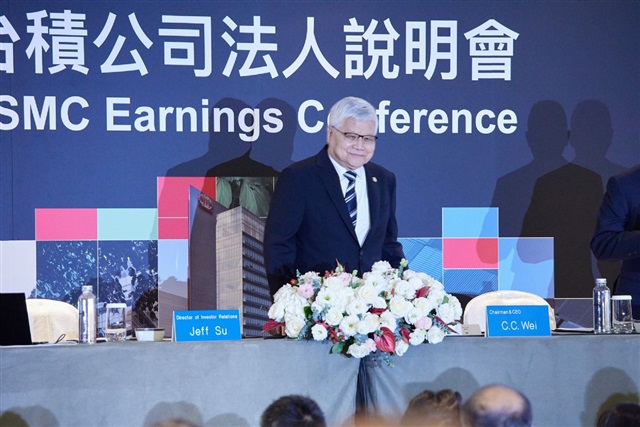
When TSMC holds its quarterly call with analysts, the semiconductor industry stops dead. But this time it won’t be just about margins or process nodes: the upcoming call could offer the most concrete answer to the question that everyone — from cloud providers to enterprise system integrators — is asking: how long will this hardware gold rush for artificial intelligence last?
The premise is simple yet loaded with consequences. TSMC is the physical crossroads of all modern AI: without its fabs, there would be no NVIDIA GPUs, no AMD FPGAs, no custom chips for the big hyperscalers. Every quarter, its guidance on orders and fab capacity becomes the most reliable gauge of the market’s confidence in the AI investment cycle.
But the real issue is no longer just the insatiable appetite of the cloud giants. The question that’s starting to surface, and that this earnings call can help decode, is whether spending is democratizing: are enterprises that want to run models on-premise on their own hardware now entering the game, or are we still trapped in a bubble fueled exclusively by hyperscalers? The answer changes everything.
For those considering moving LLM inference and fine-tuning to their own data centers, the sustainability of silicon demand isn’t just a macroeconomic curiosity. If TSMC were to signal strong growth still concentrated among a handful of strategic buyers, the implicit message would be that GPU supply for on-premise projects will remain tight and expensive, with long lead times and high prices. If, instead, capacity expansion were justified by broader demand — including mid-sized players — the scenario would flip: self-hosted LLM architectures could benefit from easing supply constraints, lowering TCO and accelerating deployment decisions.
There’s a second layer. The promise of on-premise models hinges on data sovereignty and latency control, but without stable access to compute hardware, the very idea of “bringing AI in-house” becomes fragile. Any caution from TSMC about AI demand growth would send a structural signal: the market is moving from the euphoric phase of announcements to a reality check, where projects are scrutinized one by one and the marginal cost of silicon matters more than declarations of intent.
It’s worth remembering that the entire AI chip supply chain rests on physical bottlenecks — advanced packaging, leading-edge lithography, high-bandwidth memory — that TSMC controls almost exclusively. Any shift in its outlook is amplified downstream. For the on-premise ecosystem, this means that compute resource planning cannot ignore a careful reading of these quarterly calls: not for speculation, but to understand whether today’s constraints will ease or become structural.
In a landscape where the race for models is a given, the real differentiator is no longer who has the best LLM, but who can afford to serve, train, and maintain it within their chosen operational context. TSMC’s call, at its core, will tell us whether that privilege remains concentrated or begins to spread.
Against this backdrop, AI-RADAR continues to offer analytical perspectives at /llm-onpremise for those navigating the trade-offs between cloud and bare metal, bringing the real architectural choices into focus.





💬 Comments (0)
🔒 Log in or register to comment on articles.
No comments yet. Be the first to comment!