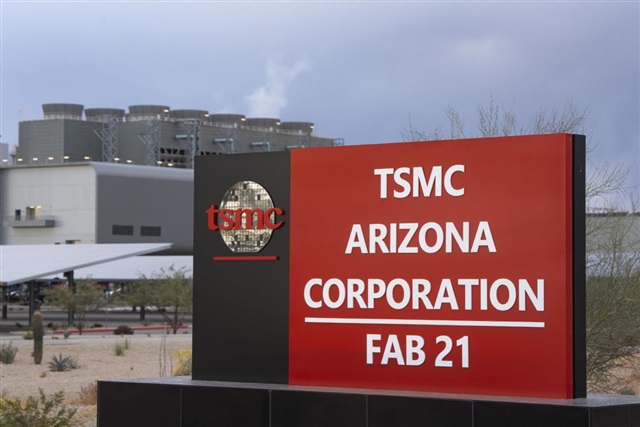
TSMC: AI Demand Drives Q1 2026 Profit Up 58%, Gross Margin to All-Time High
Taiwanese giant TSMC, a global leader in semiconductor manufacturing, has announced exceptional financial results for the first quarter of 2026. The company reported a 58% increase in profits, simultaneously achieving a gross margin that stands as the highest in its history. These figures, reported by Digitimes, unequivocally highlight how the growing and relentless demand for artificial intelligence solutions is the primary driver of this extraordinary performance.
TSMC confirms its position as a strategic and irreplaceable player in the global supply chain, serving as the technological foundation for AI innovation. Its ability to produce advanced chips is crucial for companies developing and deploying Large Language Models (LLM) and other artificial intelligence applications, both in cloud and self-hosted environments.
The Crucial Role of Silicio in the AI Ecosystem
The explosion of artificial intelligence, particularly with the advent and widespread adoption of LLMs, has generated unprecedented demand for specialized hardware. The training and Inference operations of these models require massive computational power and a significant amount of VRAM, elements that only the latest generation semiconductors can efficiently provide. TSMC, with its cutting-edge process technologies, is the primary supplier of this essential "silicio."
The production of chips with increasingly smaller geometries and architectures optimized for parallel computing is fundamental to improving Throughput and reducing latency in AI applications. This directly impacts companies' ability to develop more complex models, perform Fine-tuning on proprietary datasets, and Deploy AI solutions at scale, whether in hyperscale cloud infrastructures or on-premise deployments.
Implications for On-Premise Deployments and Data Sovereignty
The intense demand for AI chips, as evidenced by TSMC's results, has significant repercussions for organizations evaluating on-premise deployments for their AI workloads. Hardware availability, particularly high-performance GPUs with ample VRAM, can become a limiting factor and influence the overall Total Cost of Ownership (TCO). Companies opting for self-hosted solutions often do so for reasons of data sovereignty, regulatory compliance (such as GDPR), or the need to operate in Air-gapped environments, where physical control over the infrastructure is paramount.
In this scenario, the ability to access stable supplies of advanced silicio becomes a competitive advantage. For those evaluating on-premise deployments, complex trade-offs exist between initial CapEx, operational costs, energy consumption, and the flexibility offered by direct hardware ownership. AI-RADAR offers analytical Frameworks on /llm-onpremise to evaluate these trade-offs, helping decision-makers navigate the complexities of infrastructure choices.
Future Outlook and the Race for Innovation
TSMC's results are not just an indicator of its financial health but also a barometer of the current state and future prospects of the AI sector. The race for innovation in artificial intelligence will continue to drive demand for increasingly powerful and efficient semiconductors. This trend poses significant challenges in terms of supply chain stability, energy sustainability, and the need for continuous investment in research and development.
Companies that successfully balance access to cutting-edge hardware with flexible and TCO-aware deployment strategies will be best positioned to capitalize on the opportunities offered by AI. The reliance on a limited number of silicio manufacturers like TSMC underscores the centrality of these players in enabling the next generation of technological innovation.





💬 Comments (0)
🔒 Log in or register to comment on articles.
No comments yet. Be the first to comment!