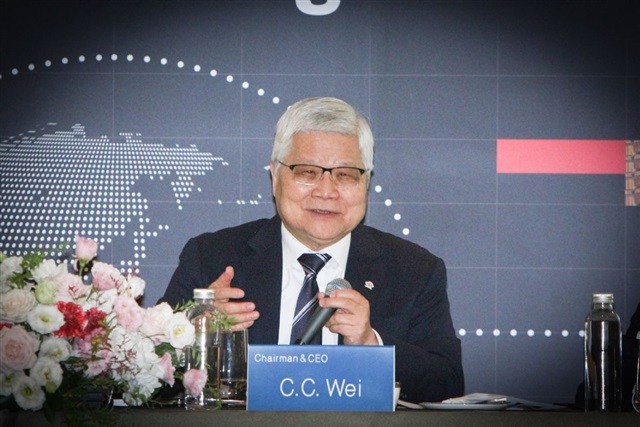
When a giant like TSMC puts a figure like $100 billion on the table, the message is clear: artificial intelligence is not a temporary bubble, and control over its physical infrastructure has become a global strategic priority. The bet announced by the Taiwanese manufacturer — a multi-year investment plan to expand production capacity and accelerate the most advanced process nodes — is framed by a dual thrust. On one side, the explosive growth of Large Language Models and the workload for training and inference; on the other, explicit pressure from the United States to bring chip manufacturing onto its own soil, reducing dependence on a single island.
The most immediate aspect for those operating in the AI ecosystem is the structural fragility that this announcement highlights. Virtually every high-end GPU on the market today — from NVIDIA H100s to the upcoming B200 generation — comes out of TSMC's fabs. Self-hosting LLMs, whether for data sovereignty or TCO reasons, rests on a steady flow of hardware passing through 3-nanometer nodes, soon to be 2, where geometries determine not only computing power but also energy efficiency. A demand surge, a geopolitical snag, or a natural disaster concentrated at that single point in the chain can translate into months of delivery delays and soaring costs for anyone planning on-premise deployments.
Beyond supply risk, the investment signals an endless race toward miniaturization, which carries an exorbitant physical and financial cost. For organizations evaluating local deployment of ever-larger models, the question is not only "when will GPUs arrive?" but also "at what price." The second-order effect is that concentration of production at TSMC ties the entire sector to its roadmap: every software optimization, every quantization technique or fine-tuning method fits into a hardware ecosystem shaped by a single player. This makes genuine diversification hard to imagine in the short term, even though alternatives like Intel Foundry or Samsung are trying to close the gap.
US pressure — embodied by the CHIPS Act and subsidies for building fabs in Arizona — adds long-term dynamics. Bringing advanced manufacturing out of Taiwan could, in the future, create redundant production nodes and reduce supply vulnerability. In the short term, however, the move introduces complexity and additional costs that ripple through the entire supply chain, potentially slowing the availability of new capacity. Those who have already invested in on-premise infrastructure for inference must now monitor not only GPU price curves but also the political balance between Washington, Beijing, and Taipei.
In this scenario, TSMC's bet becomes a litmus test for the entire industry. The ability to absorb such massive investment without creating an oversupply — or, conversely, failing to keep up with exponentially growing demand — will determine whether on-premise AI can scale without becoming economically prohibitive. It is a game in which milliseconds of latency and tokens per second are ultimately measured on the silicon wafers coming out of a handful of facilities.







💬 Comments (0)
🔒 Log in or register to comment on articles.
No comments yet. Be the first to comment!