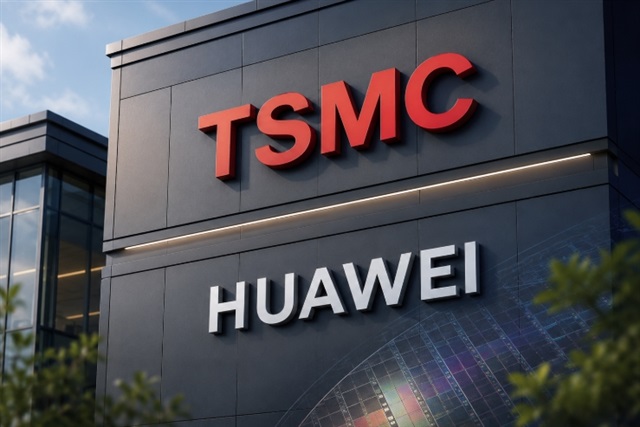
TSMC's Role and the New Frontiers of AI Packaging
The semiconductor industry, a driving force behind artificial intelligence innovation, is constantly evolving, with key players defining technological trajectories. Among these, TSMC (Taiwan Semiconductor Manufacturing Company) stands as a fundamental pillar, particularly with its System-on-Integrated Chips (SoIC) technology. This innovation not only enhances chip performance but also introduces new dynamics into the supply chain, potentially strengthening AI chipmakers' dependence on TSMC's advanced packaging capabilities.
The adoption of SoIC represents a significant step forward in 3D packaging, enabling the vertical integration of various chip components. This approach is crucial for meeting the growing demands for computing power and memory bandwidth required by Large Language Models (LLMs) and other complex AI applications. For CTOs and infrastructure architects, understanding these evolutions is essential for planning on-premise deployments, where hardware efficiency and performance are critical factors.
SoIC Technology and its Implications for AI Chips
TSMC's SoIC technology focuses on integrating chiplets and dies into a single package, using advanced 3D stacking techniques. This reduces the distances between components, drastically improving communication speed and energy efficiency. For AI-dedicated chips, such as high-performance GPUs, this means being able to integrate more VRAM or compute units into a more compact space, overcoming the physical limits imposed by traditional 2D architectures.
However, this technological sophistication brings increased production complexity and a deeper reliance on foundries like TSMC, which possess the know-how and capabilities to implement such solutions. This technological "lock-in" can influence the strategic decisions of AI chipmakers, limiting supply chain diversification options and potentially impacting the Total Cost of Ownership (TCO) for those acquiring these components. The choice of hardware for on-premise LLM inference or training thus becomes linked not only to technical specifications but also to the resilience of the supply chain.
Huawei and Process Limits: A Context of Sovereignty and TCO
In this global scenario, Huawei's situation offers a complementary perspective. The Chinese company is facing a "process wall," meaning significant difficulties in accessing and developing advanced semiconductor manufacturing process technologies. This limitation is largely due to geopolitical restrictions and controls on the export of critical technologies, which prevent Huawei from utilizing the most cutting-edge foundries for its chips.
For organizations evaluating on-premise deployment strategies, the Huawei case underscores the importance of technological sovereignty and supply chain resilience. Relying on a single vendor or technologies subject to restrictions can introduce significant risks in terms of availability, costs, and long-term innovation capabilities. TCO evaluation for a self-hosted AI infrastructure must therefore consider not only the initial hardware cost but also its sustainability and upgradeability over time, in a context of potential disruptions or technological limitations.
Future Scenarios and On-Premise Deployment Strategies
The dynamics between TSMC's innovation and Huawei's challenges outline a complex future for the AI chip market. For decision-makers operating in environments where data sovereignty, compliance, and security are paramount, choosing an on-premise AI infrastructure requires in-depth analysis. It's not just about selecting GPUs with the highest VRAM or throughput but understanding the upstream implications of the supply chain.
A company's ability to maintain control over its data and AI workloads, often in air-gapped environments, directly depends on the availability of reliable hardware not subject to unforeseen disruptions. For those evaluating on-premise deployments, AI-RADAR offers analytical frameworks on /llm-onpremise to assess the trade-offs between different hardware architectures and procurement strategies, helping to build resilient and high-performing infrastructures for LLMs and other AI applications.






💬 Comments (0)
🔒 Log in or register to comment on articles.
No comments yet. Be the first to comment!