The deal that redraws the chip map
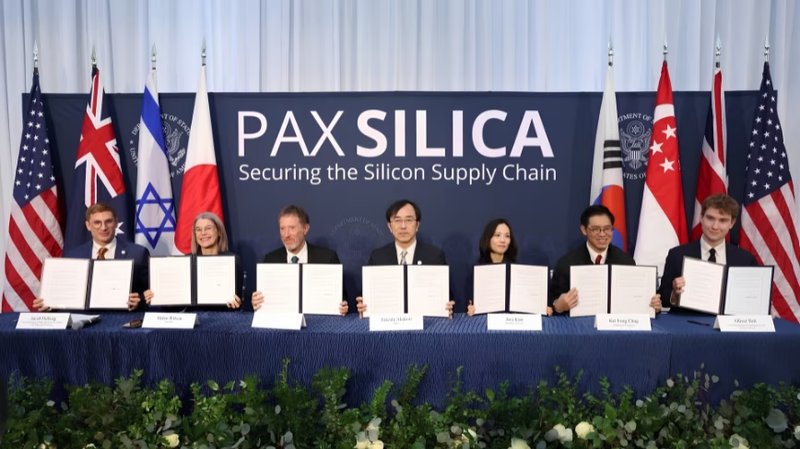
The news has rippled through the corridors of the global tech industry: the United States has formally brought the Netherlands into the so-called ‘Pax Silica Alliance,’ a strategic pact aimed at securing the Western semiconductor supply chain. The agreement, months in the making, marks a critical step in Washington’s effort to contain China’s technological expansion, but it also highlights an open nerve: the restrictions imposed by the MATCH Act (Manufacturing and Advanced Technology Competitiveness Act), which risk creating friction with key partners like Amsterdam.
Why the Netherlands matters more than it seems
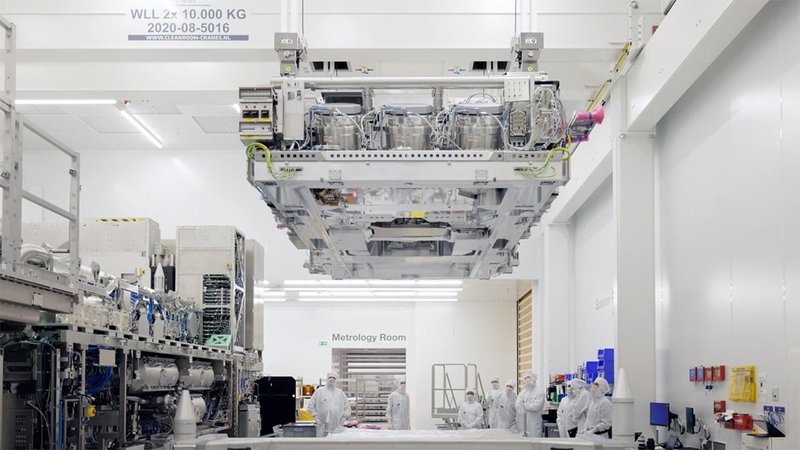
It is no secret that the Netherlands houses ASML, the only company in the world capable of producing extreme ultraviolet (EUV) lithography machines, essential for manufacturing the most advanced chips. Without those machines, no foundry – from TSMC to Samsung to Intel – could etch circuits at 5 nanometers or below, the ones powering the latest LLMs and the most demanding training infrastructures. Bringing the Netherlands into the US orbit, therefore, means exerting direct control over the most delicate technological bottleneck of the entire production chain.
Ripples for on-prem AI hardware
For organizations evaluating on-prem deployments of language models, the move carries dual-edged implications. On one side, a more solid political alignment could stabilize the supply flows of top-tier GPUs (A100, H100 and beyond), reducing uncertainty on pricing and delivery timelines. On the other, the shadow of MATCH Act restrictions – designed to hamper Chinese access to sensitive technologies – may translate into new export controls that, as a side effect, limit overall Silicon availability even for the Western enterprise market. In a landscape where the total cost of ownership (TCO) of an inference or fine-tuning cluster is also measured by supply chain volatility, every geopolitical tremor must be weighed carefully.
The sovereignty-technology equation
When it comes to self-hosted LLMs, data sovereignty is the guiding star for many corporate decisions. Being able to train and serve models on proprietary servers, without data traversing public clouds, meets regulatory requirements like GDPR and industrial confidentiality needs. But if hardware becomes hostage to international tensions, the desire for control clashes with the reality of a globalized, fragile production chain. That is why agreements like Pax Silica, while signaling a step toward stability, do not resolve the underlying ambivalence: the tighter the political restrictions, the more organizations investing in local infrastructure must contend with intermittent supplies and unpredictable costs.
What to watch in the coming months
As the details of the MATCH Act remain under negotiation, the newly sealed alliance could accelerate a realignment of power in the semiconductor market. For those tracking the evolution of on-prem AI technologies, the sticking point is not the agreement itself, but whether the resulting regulatory framework will avoid stifling access to hardware innovation. At stake is the concrete ability to build private data centers powerful enough to handle generative AI workloads, without ceding sovereignty to third-party providers. It is a delicate balance, requiring up-to-date assessment tools. AI-RADAR, for instance, offers analytical frameworks to compare on-prem deployment scenarios, weighing costs, performance, and the risks of dependency on chip geopolitics.






💬 Comments (0)
🔒 Log in or register to comment on articles.
No comments yet. Be the first to comment!