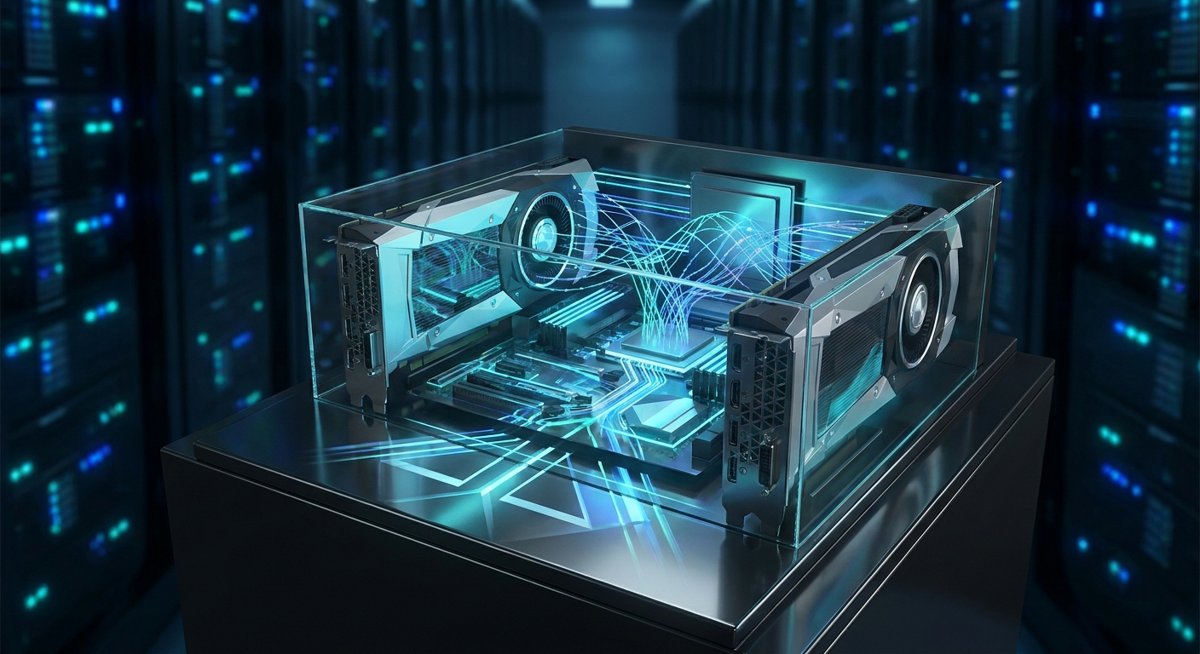
An isolated data point, a crack in the cloud/on-premise boundary
The report published on Reddit does not have the solidity of a benchmark, but it carries a detail that deserves attention: Qwen3.8-27B with Q6 quantization sustained a speed of 60–63 token/s for nearly twenty hours on an RTX 3090 and an RTX 3060. This is not a demonstration of superiority, but a symptom of a possible shift: the mid-range of local LLMs is reaching a stability threshold that agentic coding makes visible.
Agentic coding is not a chat. The model must not only complete a response, but stay coherent in a pipeline of actions: reading code, invoking tools, updating context and producing patches. Session duration matters because it exposes limits not only in the quality of a single output, but in infrastructural resilience: VRAM management, thermals, driver stability, cooperation between two different GPUs.
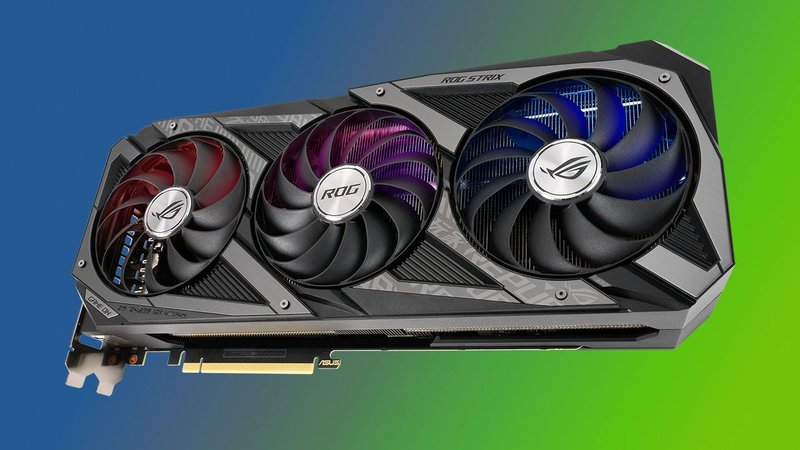
The fact that this involves consumer hardware, not data center accelerators, is the key point. An RTX 3090 and an RTX 3060 are cards built for gaming; seeing them cooperate on a continuous twenty-hour workload shifts the discussion from 'is it possible' to 'under what conditions is it worth it'.
Q6 quantization and the geography of VRAM
Q6 quantization is the technical detail that holds the experiment together. It reduces the model's memory footprint compared to full precision, making it possible to distribute weights across two GPUs with different amounts of VRAM. This is not an exotic trick: it is how a 27-billion-parameter model fits into hardware that was not designed for that task.
The trade-off is known: quantization reduces numerical precision and can introduce quality losses, especially in long reasoning chains or tasks that require exact computation. But for agentic coding the practical benefit can outweigh the cost when the alternative is sending code to a cloud API. The report says nothing about patch quality, so the data point should be taken as a signal of feasibility, not of qualitative parity.
There is a second-order implication: if aggressive but non-extreme quantization is enough to stabilize a long workload, the hardware barrier for local inference lowers. Those who already own consumer GPUs can experiment without investing in specialized machines. And those who own nothing can look at the second-hand market with different eyes, evaluating TCO over a wider horizon.
Agentic coding: a more severe stress test than single generation
Agentic coding is a severe test bench because it forces the model to stay inside an operational loop. Each step generates tokens, updates context and calls external tools; latency and stability are not accessories, but part of perceived quality. A twenty-hour session at 60–63 token/s means the system sustained a consistent rhythm without interruptions, at least from a generation standpoint.
This workload is different from batch inference: it is not about serving thousands of isolated requests, but about powering an agent that interacts with repositories and development environments. For those working with private codebases, the ability to keep the entire pipeline on local machines is not a detail: it avoids sharing secrets, keys and proprietary logic with external services. Data sovereignty here is not a slogan, but an operational variable.
The boundary between what requires cloud and what can remain self-hosted shifts when continuous workload becomes sustainable on mid-range hardware. The report alone does not prove that all quantized 27B models can do the same, but it signals that the problem is no longer only theoretical: long-duration endurance is possible with relatively common configurations.
TCO, energy and the marginal cost of local inference
For those who already own one or two consumer GPUs, the marginal cost of local inference is mostly electricity. There are no API calls that grow with the number of tokens generated in an agentic loop, nor hourly rates for persistent cloud machines. This changes the TCO calculation for long workloads with low concurrent intensity, where cloud variable costs accumulate silently.
The point is not the price of a single request, but accumulation. A coding agent working for hours produces a much larger amount of tokens than an occasional chat. On a pay-as-you-go cloud service, that volume translates into recurring and often unpredictable costs. On local hardware, the cost is partly amortized and partly tied to the electricity bill, with greater predictability.
Of course TCO does not reduce to electricity. Consumer GPUs do not offer the same guarantees as a data center: cooling, power, drivers and wear are variables. But for small teams or individual developers working on sensitive repositories, hardware control can be worth more than cloud flexibility. The choice is organizational before technical.
Limits and blind spots: what the report does not say
A single unverified data point does not replace a benchmark. The report does not specify the complexity of the changes requested from the model, the success rate of interventions, the context size used or the number of tools called. Generation speed alone does not measure the quality of agentic reasoning: a model can produce fast tokens but useless patches.
Stability at 60–63 token/s is a signal of infrastructural endurance, not proof of competence. Those evaluating on-premise deployment must separate the planes: the ability to run without crashes is a necessary condition, but not sufficient. Task success metrics, evaluations on real repositories and comparisons with cloud or self-hosted alternatives are needed.
There is also a risk of undue generalization. The described configuration works for that model and that GPU combination; we do not know whether it would hold with similar workloads on different hardware or with longer context windows. The value of the report lies in posing a question, not in providing a definitive answer.
What to watch now: signals for those evaluating on-premise
The next step is not to look for isolated confirmations, but to observe reproducibility. If more users report prolonged sessions with quantized mid-range models on consumer GPUs, the signal becomes a trend. Weight distribution frameworks across multiple cards become a critical variable: their maturity determines how easy it is to replicate hybrid configurations like the one described.
Another signal to monitor is the evolution of quantization. Model compression techniques are not static: new methods can further reduce VRAM consumption without sacrificing quality. For those working in agentic coding, this means larger models could fit into already available consumer hardware, expanding the self-hosted perimeter.
Finally, it is worth observing the behavior of cloud vendors and GPU manufacturers. If long-duration local inference becomes common for development workloads, demand for consumer GPUs with more VRAM and better multi-GPU management could grow. At the same time, cloud services could respond with more aggressive pricing for agentic workloads. The boundary is not drawn once and for all: it shifts based on hardware, software and energy costs.







💬 Comments (0)
🔒 Log in or register to comment on articles.
No comments yet. Be the first to comment!